Rivian achieves record profitability while developing the $45,000 R2 SUV, securing Volkswagen investment and expanding manufacturing to challenge Tesla in the affordable EV market.

Drivetech Partners
Rivian's strategic shift into the mainstream electric vehicle market is gaining momentum with record-breaking profitability and the continued development of its eagerly anticipated R2 SUV. The company's strong financial performance has unlocked a major investment from Volkswagen, while its innovative manufacturing approach and advanced technology integration position it to challenge Tesla's dominance in the affordable EV segment.
Key Takeaways
- Rivian achieved a record $206 million gross profit in Q1 2025, triggering a $1 billion investment from Volkswagen
- The upcoming R2 SUV's $45,000 price point represents a dramatic shift from Rivian's premium-only strategy
- Revolutionary die-casting manufacturing techniques enable significant cost reduction and production efficiency
- A $1.5 billion expansion in Normal, Illinois will boost annual production capacity to 215,000 vehicles
- Rivian's software-driven approach generated $114 million in Q1 revenue, creating recurring income beyond vehicle sales
Record-Breaking Financial Performance Unlocks Major Investment
Rivian has reached a financial turning point, posting its highest-ever quarterly gross profit of $206 million in Q1 2025. This impressive figure includes $92 million from automotive operations and $114 million from software and services, highlighting the growing importance of Rivian's digital ecosystem. The achievement marks Rivian's second consecutive profitable quarter, a milestone that triggered a $1 billion investment from Volkswagen as part of a larger $5.8 billion joint venture expected to finalize by June 30, 2025.
The company's operational efficiency continues to improve, with cash flow from operations increasing by 85% year-over-year. Rivian delivered 8,640 R1S and R1T vehicles during the quarter and has set an updated 2025 delivery target of 46,000–51,000 EVs. Perhaps most impressively, the cost of goods sold has decreased by $22,600 per vehicle compared to Q1 2024, demonstrating significant manufacturing improvements that will be crucial for the company's mainstream market expansion.
R2: The Vehicle Poised to Transform Rivian's Market Position
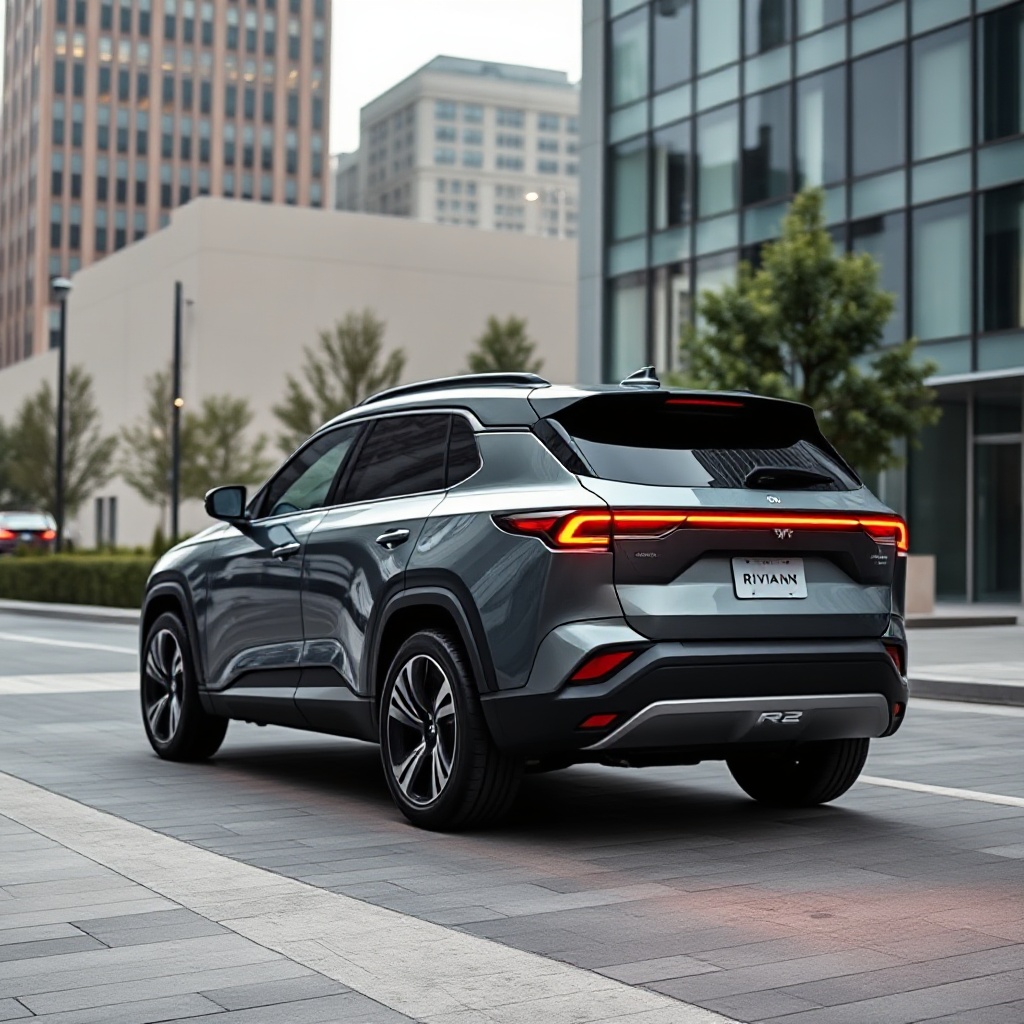
The upcoming R2 midsize SUV represents Rivian's bold entry into mass-market electric vehicles with a starting price of $45,000—a dramatic decrease from the R1 models' $77,000+ entry point. Development has progressed through extensive winter validation testing in snow, ice, and freezing temperatures, confirming the vehicle's reliability in extreme conditions.
Rivian has completed sourcing for the R2 and finished tooling trials for major body panels, moving closer to its confirmed 2026 production launch. The family-friendly design targets the volume segment currently dominated by Tesla's Model Y and traditional automakers. Rivian is backing its mainstream push with a warranty that outpaces many competitors: five years/60,000 miles bumper-to-bumper and an impressive eight years/175,000 miles for battery and drivetrain components.
Revolutionary Manufacturing Approach Enables Lower Pricing
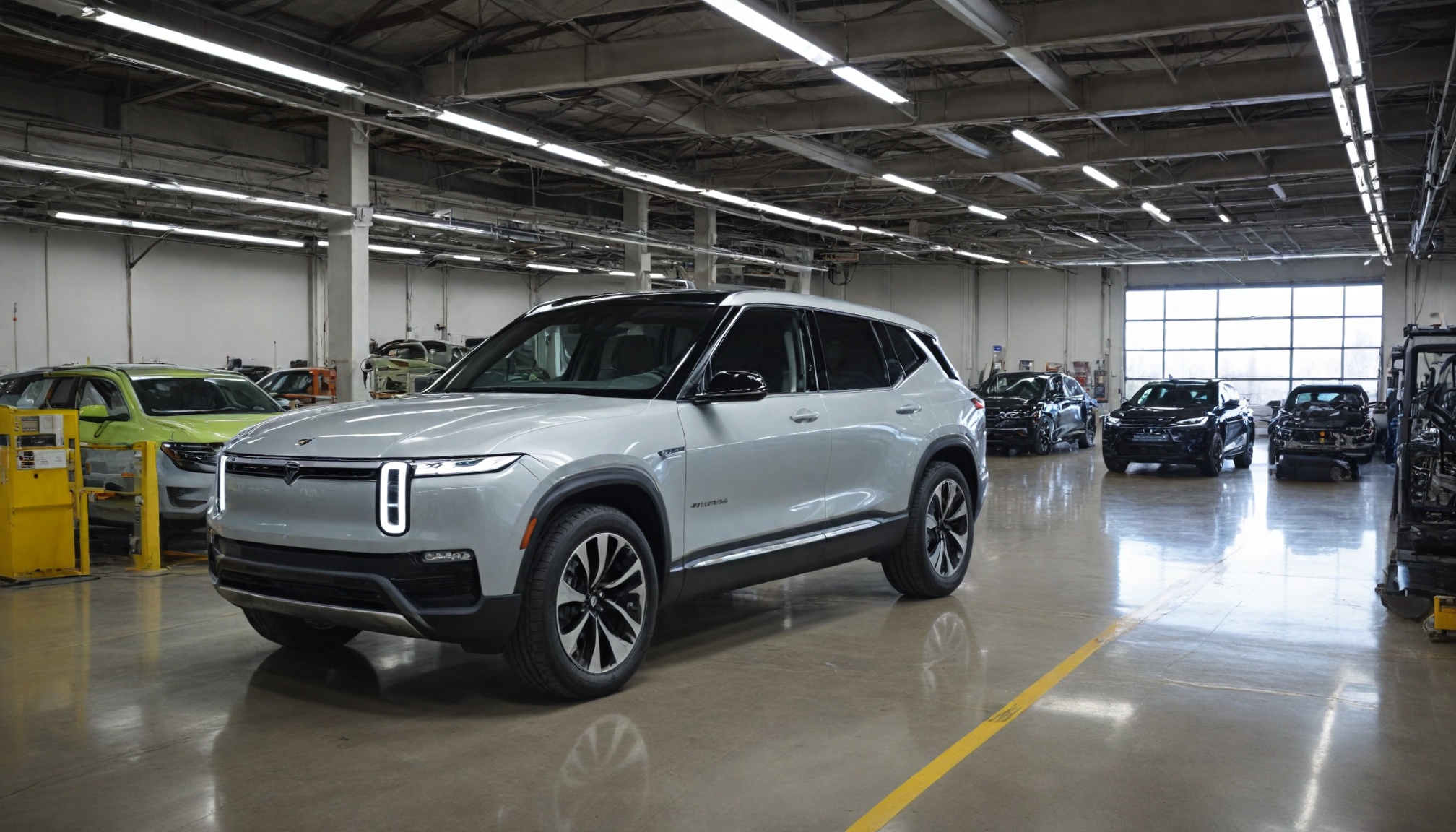
At the heart of Rivian's mainstream strategy is a revolutionary manufacturing approach that directly enables the R2's accessible price point. The new midsize platform features high-pressure die castings that replace dozens of smaller parts, dramatically reducing assembly complexity and material costs. This approach mirrors Tesla's giga-casting strategy but incorporates Rivian-specific engineering improvements.
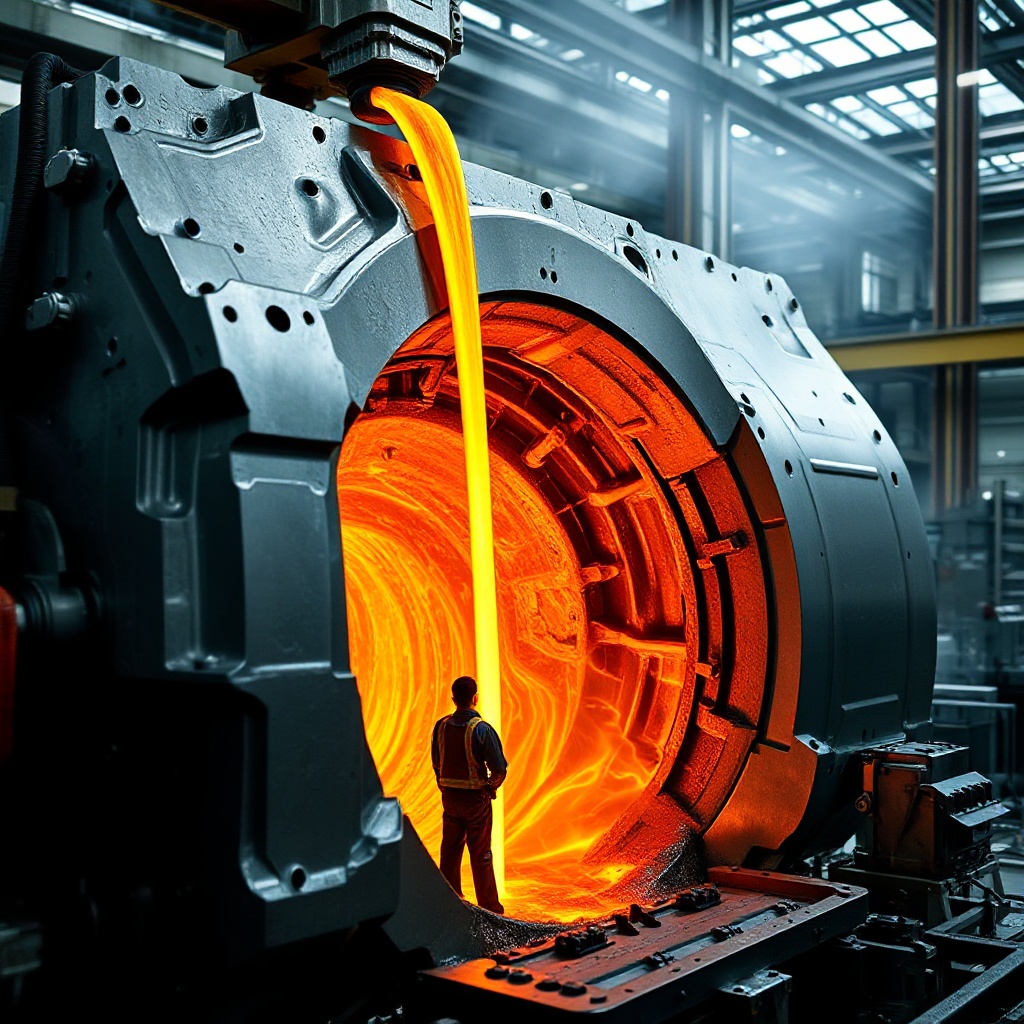
The platform's design focuses on modularity and simplified manufacturing across multiple future models. Key improvements include:
- Streamlined builds with fewer overall parts
- Optimized material sourcing to reduce costs
- Increased automation throughout the production process
- Reduced connection points and assembly steps
These cost-saving innovations are essential for Rivian to compete with established manufacturers and reach price-sensitive buyers who previously couldn't afford the company's premium offerings.
$1.5 Billion Illinois Manufacturing Expansion Creates Jobs and Capacity
Rivian is doubling down on American manufacturing with a $1.5 billion expansion of its Normal, Illinois facility. This investment will increase total production capacity to 215,000 vehicles annually, creating over 550 new full-time jobs that pay at least 120% of McLean County's average wage (minimum $51,174).
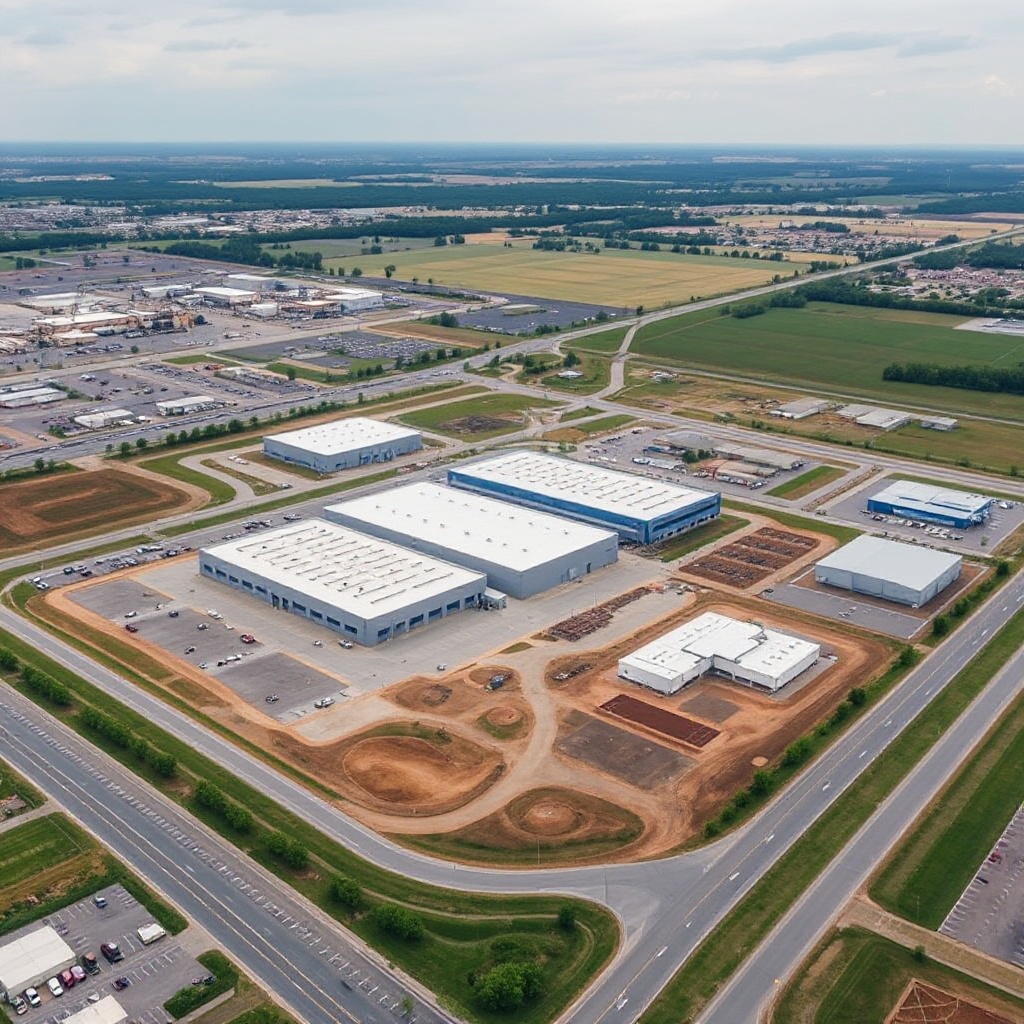
A key component of the expansion is a new 1.2 million-square-foot supplier park currently under construction. Set for completion in 2026, this facility will streamline component delivery with an underground tunnel connecting it directly to the main plant for efficient logistics. State and local incentives, combined with a skilled local workforce and robust infrastructure, influenced Rivian's decision to continue investing in Illinois.
The U.S.-based manufacturing approach provides Rivian with strategic advantages amid growing global trade tensions and potential tariffs that could affect competitors relying heavily on international production.
Advanced Software and Technology Drive Revenue Beyond Vehicle Sales
Rivian's software segment has emerged as a powerful revenue generator, contributing $114 million in Q1 2025—more than half of the company's total gross profit. This highlights the growing importance of Rivian's technology ecosystem as a business driver beyond traditional vehicle sales.
The R2 will feature a comprehensive driver-assistance package with 11 cameras and five radar sensors, enabling capabilities such as automated emergency braking with pedestrian detection, adaptive cruise control, and lane-keeping assist. Rivian's over-the-air update capability and "digital-first" approach aim to ensure long-term value retention while creating recurring revenue streams beyond the initial vehicle purchase.
This strategy acknowledges that connected vehicle features are becoming increasingly important purchase factors for mainstream buyers, who expect their vehicles to integrate seamlessly with their digital lives and improve over time through software updates.
Direct Challenge to Tesla's Model Y and Other Mass Market EVs
With the R2's $45,000 price point, Rivian is directly targeting Tesla's Model Y market—currently the bestselling EV globally. Rivian's manufacturing advances and software integration aim to match Tesla's performance while offering a more accessible entry point for many buyers.
The company is transitioning from premium adventure-focused models to versatile mainstream vehicles that can serve as primary family transportation. This strategy represents Rivian's bet that combining premium features with mainstream pricing will accelerate EV adoption, particularly among first-time electric vehicle buyers who previously found Rivian products too expensive.
Rivian's U.S. manufacturing expansion with local supplier integration provides potential advantages in the current climate of global trade tensions, especially as tariffs and trade policies continue to shift. The company's ability to quickly adapt its supply chain and production methods could prove crucial in this competitive landscape.
Broader Impact on EV Accessibility and Market Competition
Rivian's R2 platform could accelerate broader EV adoption by bringing premium features to lower price points. The $45,000 starting price represents a middle ground between economy EVs ($25,000-35,000) and premium offerings ($65,000+), potentially creating a sweet spot that appeals to a wide range of consumers.
The manufacturing innovations pioneered for the R2 could pressure other automakers to accelerate their own cost-reduction strategies, potentially benefiting consumers across the industry. Volkswagen's $1 billion investment signals strong confidence in Rivian's mainstream strategy from one of the world's largest automotive companies.
If successful, the R2 would establish Rivian as only the second U.S.-based EV maker to achieve mass-market scale, reshaping a competitive landscape currently dominated by Tesla and increasingly by Chinese manufacturers. This potential shift comes at a critical time when EV adoption is accelerating globally but still faces price barriers for many consumers.
Sources
MarketScreener: Rivian Automotive: Q1 Earnings Snapshot
Seeking Alpha: Rivian unlocks an $1B investment from Volkswagen by recording another gross profit quarter
Electrek: Rivian's (RIVN) Q1 2025 report details highest gross profits to date, R2 validations underway
RivianTrackr: Rivian Shares R2 Updates: Cost Optimization, Winter Testing, and Factory Expansion
AutoConnectedCar: Rivian EV Supplier Park Locates to Normal IL for American Built Future
Car and Driver: 2026 Rivian R2: What We Know So Far
DCEO Illinois: Gov. Pritzker and Rivian Announce $1.5 Billion Investment