Hyundai deploys HCloud platform in global data centers to power connected car services with ultra-low latency for autonomous driving features and software-defined vehicles.

Drivetech Partners
Hyundai Motor Group is revolutionizing the automotive landscape by deploying its proprietary HCloud platform in Equinix's global data centers to power next-generation connected car services across Asia, North America, and Europe. This strategic move represents a profound shift in automotive infrastructure, positioning the company at the forefront of software-defined vehicles (SDVs) while enabling real-time data processing and ultra-low latency needed for autonomous driving capabilities.
Key Takeaways
- Hyundai currently serves over 10 million connected car subscribers with plans to reach 20 million by 2026
- HCloud deployment in Seoul, Los Angeles, and Frankfurt data centers creates a global infrastructure backbone for next-gen vehicle services
- The hybrid multicloud architecture enables seamless integration with AWS and other partners while maintaining control of core systems
- Ultra-low latency connections are critical for autonomous driving functions requiring millisecond response times
- This infrastructure represents a strategic shift to software-defined vehicles, supporting continuous updates and personalized experiences

Connected Car Revolution: Scaling to Millions of Subscribers
Hyundai Motor Group has established itself as a leader in the connected car revolution with over 10 million active subscribers across its Hyundai, Kia, and Genesis brands. The company's ambitious goal of reaching 20 million subscribers by 2026 highlights the rapid growth trajectory in connected vehicle adoption. Industry forecasts predict that 95% of new vehicles will be connected by 2030, making Hyundai's infrastructure investment perfectly timed.
The HCloud platform was specifically designed to support the unique demands of software-defined vehicles (SDVs), which require fundamentally different infrastructure than traditional automobiles. These modern vehicles depend on continuous software updates, remote diagnostics, and new feature deployments that conventional IT systems simply cannot efficiently support.
Connected cars generate enormous amounts of data that must be processed and analyzed in real-time. The HCloud platform enables Hyundai to handle this massive data volume while ensuring reliability and responsiveness for critical vehicle functions. This capability forms the foundation for increasingly sophisticated autonomous features and personalized in-car experiences that will define the next generation of mobility.
Global Data Center Strategy: Enabling Ultra-Low Latency

Hyundai's global data center strategy involves deploying HCloud in Equinix International Business Exchange (IBX) data centers in three strategically selected locations: Seoul, Los Angeles, and Frankfurt. This deployment provides comprehensive coverage across Asia, North America, and Europe, ensuring consistent performance for connected vehicle services worldwide.
The choice of Equinix's carrier-dense locations offers several key advantages:
- Robust service-level agreements (SLAs) ensuring maximum uptime
- Close proximity to network ecosystem partners
- Distributed, edge-proximate data processing capabilities
- Optimized network routes for minimal latency
- Extensive connectivity options to cloud and service providers
The strategic positioning of these data centers enables edge-proximate data processing — a critical requirement for safety applications that need millisecond response times. Ultra-low latency connections are essential for autonomous driving functions such as object detection, path planning, and emergency response systems where even small delays could have serious consequences.
Hybrid Multicloud Architecture: Seamless Integration with AWS
Hyundai's implementation leverages Equinix Fabric to create secure, ultra-fast interconnections between HCloud and major public cloud providers, including AWS. This hybrid multicloud approach allows Hyundai to maintain control of core systems while leveraging public cloud resources for scalability and specialized workloads.
The architecture enables seamless integration with a wide range of digital partners in the automotive ecosystem. Cloud-native applications, AI/ML workloads, and analytics can be deployed across the hybrid environment to support connected and autonomous car functions. This flexible approach facilitates rapid global scaling without compromising on performance or reliability.
By maintaining its proprietary HCloud while connecting to public cloud services, Hyundai achieves the perfect balance between customization and standardization. The company can develop specialized automotive applications in-house while taking advantage of the innovation, scale, and specialized services available from cloud providers like AWS. This hybrid strategy also provides flexibility to adapt as technology evolves and new requirements emerge.
Real-Time Vehicle Data Processing: The Foundation for Next-Generation Mobility
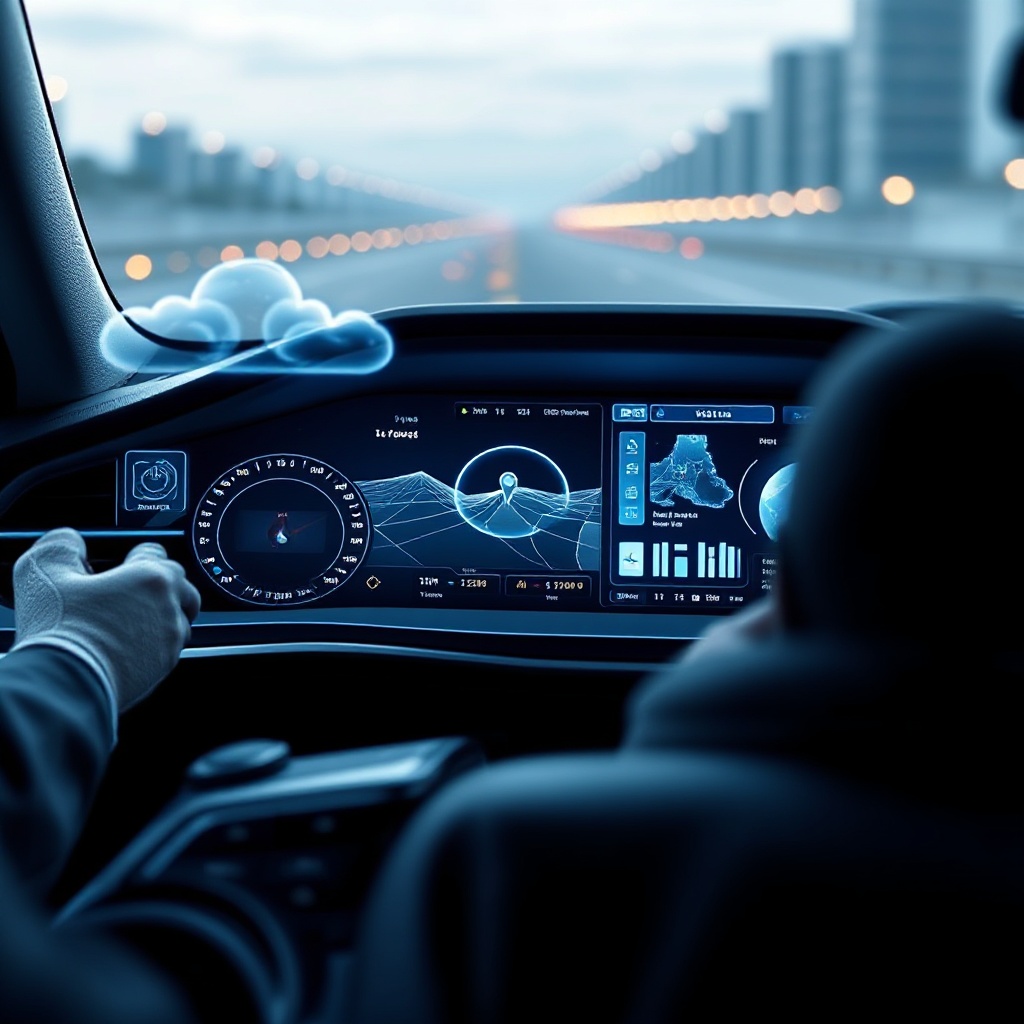
HCloud was developed specifically to address soaring demands for real-time data processing from millions of vehicles. The platform continuously collects and processes vehicle sensor data and user interactions to enable safety enhancements and predictive maintenance. This real-time stream processing supports context-aware infotainment and personalized driver experiences that adapt to individual preferences.
The infrastructure handles massive volumes of data from multiple sources:
- Vehicle telemetry (speed, location, fuel consumption)
- Environmental sensors (temperature, road conditions, obstacles)
- User preferences and interaction patterns
- Diagnostic information from vehicle systems
- Traffic and navigation data
Edge computing capabilities enable immediate processing of time-sensitive data while optimizing bandwidth usage. Critical information that requires instant decisions — such as collision avoidance or emergency braking — can be processed locally, while less urgent data can be sent to the cloud for deeper analysis. This tiered approach ensures both responsiveness for safety-critical functions and rich data analysis for continuous improvement of vehicle systems.
Creating a Digital Automotive Ecosystem: Collaboration Across Industries
The Hyundai-Equinix partnership exemplifies how automakers, cloud providers, and network operators can collaborate to create powerful digital ecosystems. This cross-industry collaboration accelerates innovation in mobility services and connected vehicle features by bringing together expertise from multiple domains.
The infrastructure supports regulatory compliance and data privacy requirements as vehicle data travels across borders. Security protocols are implemented across the entire network to protect sensitive vehicle and user data, addressing one of the most important concerns in connected vehicle technologies.
This ecosystem approach enables faster development cycles and responsive updates for vehicles in the field. Rather than waiting for model-year releases to introduce new features, Hyundai can now deploy software updates that enhance functionality throughout a vehicle's lifecycle. The collaborative environment also facilitates partnerships with third-party developers who can create innovative services and applications for Hyundai vehicles, further enriching the customer experience.
From Connected to Autonomous: How HCloud Enables the Evolution of Mobility

AI-driven edge processing facilitated by ultra-low latency connections is crucial for autonomous driving functions. The HCloud platform supports the transition from basic connectivity to advanced autonomous capabilities through its scalable infrastructure. Stream processing of sensor data allows for real-time decision making in complex driving scenarios, enabling vehicles to navigate safely even in challenging conditions.
Continuous software updates enable vehicles to improve functionality throughout their lifecycle, effectively becoming better and smarter over time. The infrastructure supports the increased data demands of Level 3+ autonomous driving features that require substantial processing power and connectivity. As vehicles progress toward higher levels of autonomy, the data requirements grow exponentially — a challenge that Hyundai's HCloud platform is specifically designed to meet.
The evolution from connected to autonomous vehicles isn't simply a matter of adding more sensors or computing power. It requires a fundamental shift in how vehicle data is collected, processed, and acted upon. Hyundai's infrastructure investment creates the foundation for this evolution, supporting increasingly complex autonomous features while maintaining the reliability and responsiveness that safety-critical systems demand.
Future-Proofing Automotive Technology: Scaling For a Software-First Approach
Hyundai's deployment allows for rapid scaling of connected car services even as subscriber and data volumes surge. The architecture is designed to evolve as automotive technology advances toward fully autonomous vehicles. Equinix's global platform enables consistent performance regardless of geographic location or market, ensuring that Hyundai can deliver high-quality connected services worldwide.
The infrastructure accommodates the growing complexity of in-vehicle software that will define the next generation of automobiles. By building this foundation now, Hyundai is positioning itself at the forefront of the industry's shift to software-defined mobility. This forward-thinking approach ensures that the company can quickly adapt to emerging technologies and changing customer expectations without requiring fundamental changes to its infrastructure.
As vehicles become increasingly defined by their software rather than hardware, the ability to develop, deploy, and update that software efficiently becomes a critical competitive advantage. Hyundai's investment in HCloud and its partnership with Equinix demonstrates a clear understanding of this shift and a commitment to leading the transition to a software-first automotive industry.
Sources
Stocktitan.net - Hyundai Motor Group Delivers Enhanced In-Car Experience Through Equinix Data Centers Globally
itbrief.asia - Hyundai deploys HCloud in global Equinix centres for car services
emqx.com - Data Stream Processing for Software-Defined Vehicle