Explore how visionary auto industry leaders from Henry Ford to Elon Musk transformed transportation beyond corporate success, revolutionizing how society moves through different eras.

Drivetech Partners
From Henry Ford's revolutionary assembly line to Elon Musk's high-tech electric vehicles, the automotive industry has been transformed by visionary leaders who redefined transportation beyond mere corporate success. These pioneering CEOs not only reshaped their companies through various leadership styles but fundamentally altered how society moves, responding to economic challenges, technological shifts, and evolving consumer preferences throughout automotive history.
Key Takeaways
- Visionary leadership styles have ranged from Ford's efficiency-focused approach to Musk's innovation-driven disruption, each transforming transportation in their era
- Henry Ford's assembly line democratized automobile ownership by reducing production costs and time, making cars accessible to middle-class Americans
- Elon Musk's Tesla changed public perception of electric vehicles from novelty items to mainstream alternatives through performance innovation
- Carlos Ghosn demonstrated the power and challenges of cross-cultural management in global automotive alliances
- Today's automotive leaders face unprecedented challenges including autonomous driving, software integration, and carbon neutrality regulations
Henry Ford's Assembly Line: Democratizing the Automobile
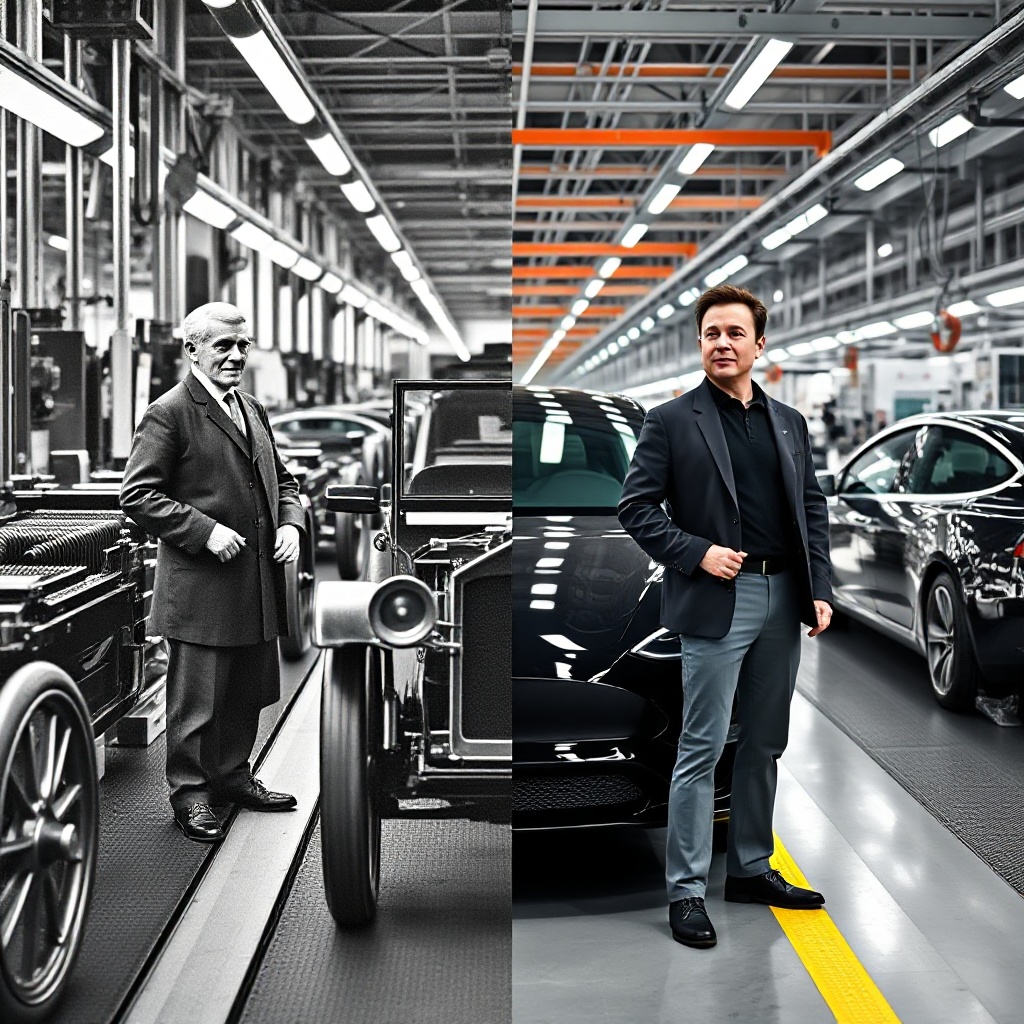
In the early 20th century, Henry Ford revolutionized not just car manufacturing but industrial production as a whole with his innovative assembly line approach. Before Ford's methods, automobiles were luxury items handcrafted for the wealthy. His introduction of mass production and standardized parts transformed manufacturing economics.
Ford broke down vehicle assembly into specialized tasks, dramatically reducing production time from 13 man-hours to just 93 minutes per vehicle. This efficiency allowed Ford to slash prices repeatedly while increasing production volumes:
- 1909: $950 (18,664 units)
- 1913: $600 (248,307 units)
- 1917: $360 (785,432 units)
The Model T's 19-year production run from 1908 to 1927 resulted in 15 million vehicles sold, making car ownership accessible to ordinary Americans. Ford's leadership style emphasized standardization and relentless efficiency, creating a template for mass production that extended far beyond the automotive industry.
Elon Musk's Tesla: Revolutionizing Electric Mobility
Nearly a century after Ford's revolution, Elon Musk founded Tesla in 2003 with a clear mission to accelerate sustainable energy adoption. While electric vehicles existed before Tesla, they were widely considered impractical with limited range, poor performance, and uninspiring design.
The 2008 launch of the Tesla Roadster changed this perception fundamentally. As the first mass-market production car using lithium-ion battery cells, it achieved over 200 miles per charge and accelerated from 0-60 mph in under 4 seconds—performance comparable to high-end sports cars.
Tesla's subsequent vehicles expanded its market reach:
- Model S (2012): Premium sedan that won Motor Trend Car of the Year
- Model X (2015): SUV featuring distinctive falcon-wing doors
- Model 3 (2017): Mass-market sedan making electric vehicles more affordable
- Model Y (2020): Compact SUV becoming Tesla's best-selling vehicle
Musk's leadership approach centered on disruptive innovation and vertical integration—controlling everything from battery technology to software development. This strategy transformed public perception of electric vehicles from eco-friendly compromises to desirable, cutting-edge technology products.
Carlos Ghosn and Cross-Cultural Leadership
Carlos Ghosn represented a different model of automotive leadership focused on global alliances and cultural integration. In 1999, he created the Renault-Nissan Alliance, bringing together French and Japanese automotive giants in an unprecedented partnership.
After successfully turning around Renault, Ghosn implemented the "Nissan Revival Plan" following a comprehensive six-month company-wide consultation. His approach to leadership transcended traditional boundaries, demonstrating exceptional interpersonal and communication skills across cultural divides.
The Alliance initially benefited both companies financially through shared resources, technology, and market access. However, the partnership faced significant challenges after Ghosn's controversial 2018 arrest in Japan on embezzlement charges. His departure led to strained relations between Nissan and Renault with reduced cooperation, highlighting the vulnerability of cross-cultural partnerships without strong leadership continuity.
Akio Toyoda: Balancing Tradition with Electrification
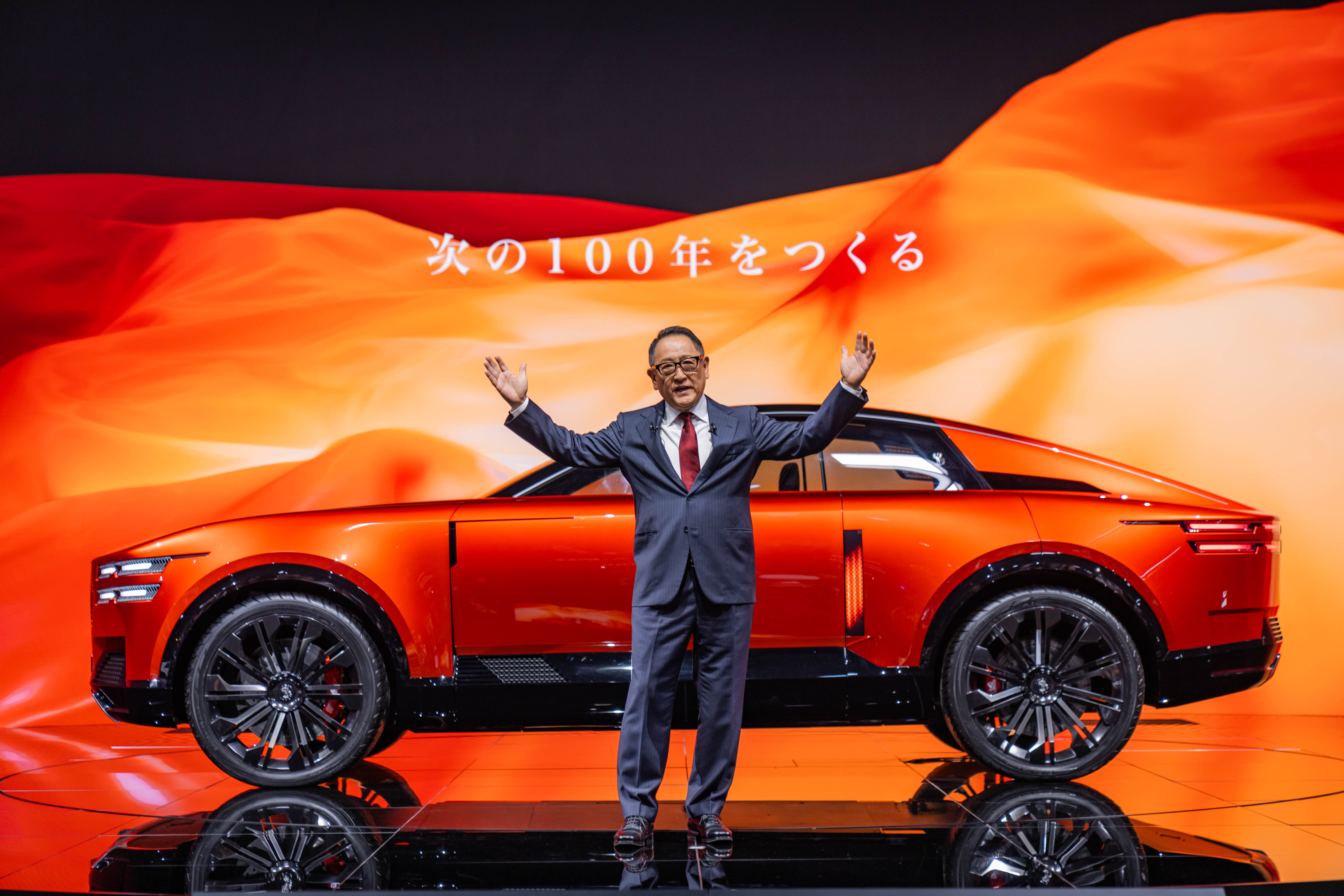
As the grandson of Toyota's founder, Akio Toyoda brought a unique perspective to automotive leadership—maintaining Toyota's core strengths while adapting to market shifts toward electrification. Unlike some competitors who went all-in on battery electric vehicles, Toyoda advocated for a diversified approach to achieving carbon neutrality.
In December 2021, Toyota announced a comprehensive electrification strategy including:
- $70 billion global investment in electrified vehicles
- $35 billion specifically allocated to battery electric vehicles (BEVs) from 2022-2030
- Target of 3.5 million annual BEV sales globally by 2030
- Development of 30 BEV models across Toyota and Lexus brands by 2030
- For Lexus: 100% BEV sales in North America, Europe, and China by 2030
Toyoda's leadership demonstrated how traditional automakers can embrace innovation while leveraging their manufacturing scale and reliability reputation. This balanced approach recognized that different markets and consumers have varying needs and readiness for full electrification.
Leadership Styles Across Automotive Eras
Automotive leadership styles have evolved dramatically in response to the technological and economic conditions of each era:
The Ford era (1900s-1920s) featured authoritarian leadership focused on efficiency and standardization. Ford's famous quote about offering cars in "any color so long as it is black" exemplified this approach centered on mass production rather than customization.
Mid-century leaders (1950s-1980s) like Alfred Sloan at General Motors operated as corporate executives balancing shareholder interests with mass-market appeal. They created the annual model change concept to drive sales and developed brand hierarchies targeting different market segments.
The modern era (1990s-2010s) saw global strategists like Ghosn managing international alliances and guiding companies through economic downturns. These leaders focused on cost optimization and platform sharing across global markets.
Today's generation features tech-oriented leaders integrating software, connectivity, and sustainability into their core strategies. They increasingly view cars as technology platforms rather than mechanical products, with software capabilities often determining competitive advantage.
The Future of Automotive Leadership
Automotive leaders now face unprecedented challenges requiring new skills and perspectives. Autonomous driving technology is transforming the fundamental relationship between humans and vehicles. Mobility-as-a-service models are challenging the traditional car ownership paradigm, while carbon neutrality regulations are accelerating the shift to electric propulsion.
Software expertise has become essential for automotive executives. Modern vehicles contain millions of lines of code controlling everything from safety systems to entertainment options. Leaders must understand both traditional manufacturing and digital product development methodologies.
The competitive landscape is also changing dramatically with Chinese manufacturers expanding globally and technology-driven startups challenging established players. Traditional hierarchical leadership models are being tested by more agile approaches from these new competitors.
The decisions made by today's automotive leaders will shape transportation infrastructure for decades. Their choices about charging networks, battery technology, and autonomous systems will influence not just their companies but how cities develop and people move in the future.
Legacy and Impact on Modern Society
Throughout automotive history, leadership decisions have extended far beyond corporate boundaries to shape society itself. The affordable vehicles produced through Ford's manufacturing innovations enabled suburban development and commuter culture that defined 20th-century American life.
More recently, leadership decisions regarding fuel efficiency and alternative powertrains have significant environmental implications. The industry's gradual shift toward electrification, championed by leaders like Musk and increasingly embraced by traditional automakers, will play a crucial role in addressing climate challenges.
The automotive industry continues to drive economic impact through global manufacturing and employment. Despite increasing automation, vehicle production remains a critical source of manufacturing jobs and drives demand across multiple supply chains.
Perhaps most profoundly, automotive leadership has transformed personal mobility and freedom. The ability to travel independently revolutionized social patterns, commerce, and recreation. As the industry undergoes its most significant transformation since Ford's assembly line, today's leaders are redefining what mobility means for future generations.
Sources: Quartr: Tesla Leading the EV Revolution, Ecobnb: Revolutionary Impact of Tesla on the Automotive World, Mobility Friendly: Elon Musk Sustainable Mobility Visionary or Car Enthusiast, Investopedia: The Story Behind Tesla's Success, IndustryWired: Tesla's Electric Revolution Future of High-Tech Transportation, Toyota Newsroom: Akio Toyoda Shares Toyota's Strategy for Achieving Carbon Neutrality Through Battery Electric Vehicles, Bill of Rights Institute: Henry Ford and Alfred P. Sloan Industrialization and Competition