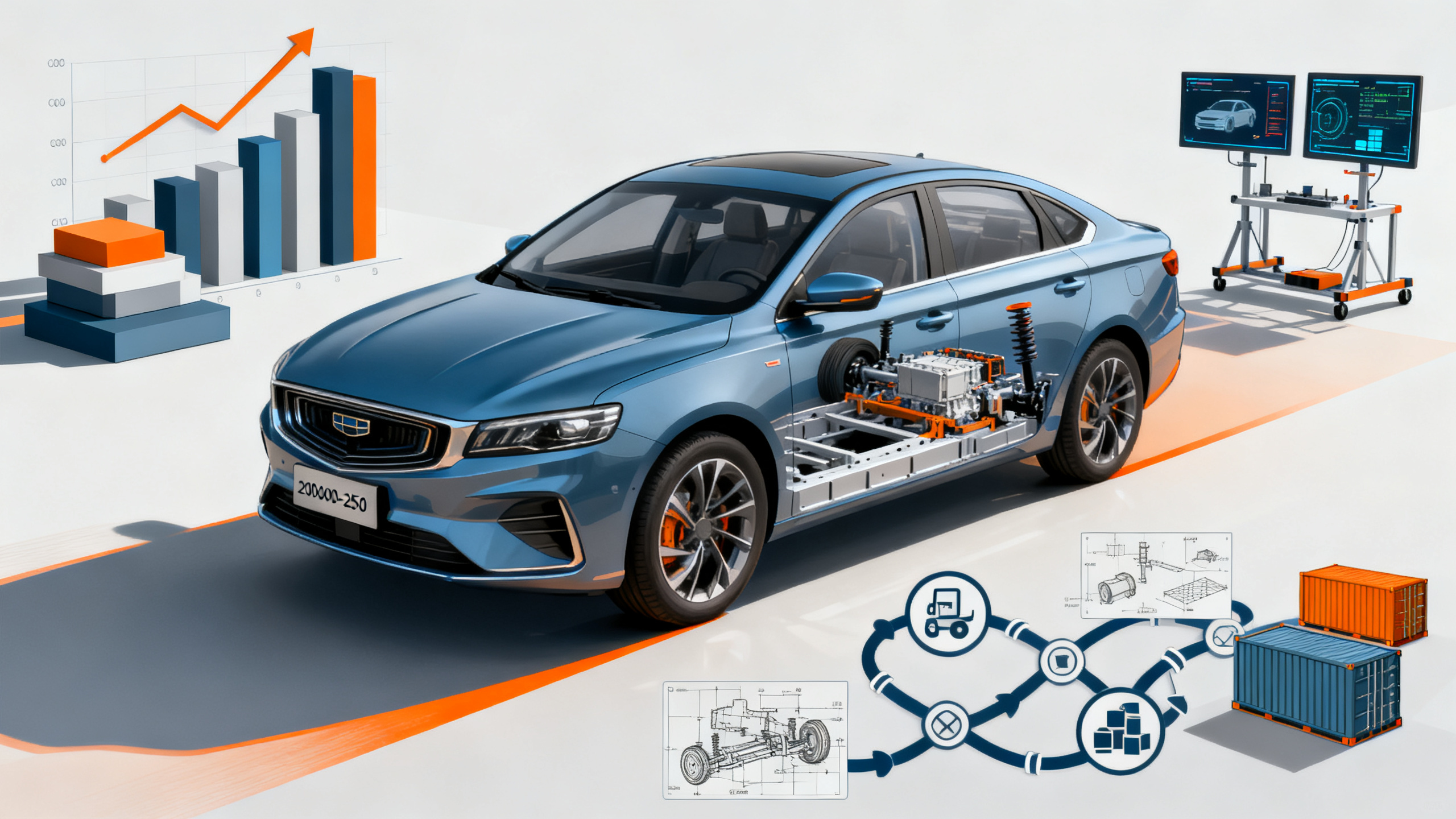
Drive-by-wire is moving from luxury to mainstream. See how white-box engineering, shared platforms, and reusable safety validation can bring steer-by-wire to 200,000-yuan cars.

Drive-by-wire chassis technology has mostly stayed in cars above 300,000–400,000 yuan, yet IM Motors' LS6 reportedly reached 197,900 yuan with standard steer-by-wire, according to Gasgoo. Automakers can bring it to the 200,000-to-250,000-yuan band by cutting cost through white-box engineering, reusing safety validation across one shared platform, and managing supplier risk on purpose.
Key Takeaways
Platform-standard design matters most: build redundancy into one low-cost architecture and share it across SUVs, sedans and export models.
White-box engineering lets the automaker own software, steering feel and diagnostics while buying standardized hardware.
Fail-operational behavior needs proof. Publish fault-injection results and define metrics like FIT and response time clearly.
Validation reuse and a three-layer sourcing model cut both cost and supplier lock-in.
A staged path works best: steer-by-wire plus mature one-box EHB first, then rear-wheel steering, then EMB later.
Drive-by-wire must move from flagship hardware to platform-standard architecture
Steer-by-wire has mostly sat in cars priced above 300,000–400,000 yuan. BigGo Finance reports that smart-chassis cars made up under 2% of China's 2026 passenger-car sales. The technology clearly hasn't gone mainstream yet.
The LS6 shows the price barrier is within reach. Gasgoo reports a 197,900-yuan price with steer-by-wire fitted as standard. I see that as a benchmark, not proof that the problem is solved.
Maturity also differs by subsystem. BigGo Finance notes that:
One-box EHB (electro-hydraulic braking) is nearing standard in new-energy vehicles.
Steer-by-wire is costlier and less mature.
Electro-mechanical braking (EMB) remains a premium technology.
Buyers at this price won't pay extra for a missing steering column. They'll value easier parking, consistent steering feel and better driver-assistance integration. Automakers should back those claims with measured evidence, such as turning radius and parking time.
Cost: white-box engineering and platform amortization
BigGo Finance reports that steer-by-wire costs about 30% more than electric power steering. Foreign black-box sets run about 7,000–9,000 yuan. Domestic white-box sets cost about 4,000–6,000 yuan at current scale.
A roadmap cited in the research targets under 4,000 yuan by 2025 and roughly 2,500–3,000 yuan by 2030, with about 30% penetration. The research doesn't list a source for those targets, so I'd treat them as directional.
White-box means the automaker owns architecture, algorithms, steering feel and diagnostics. It buys standardized hardware and avoids the supplier software premium. IM Motors credits this approach, in part, for reaching the 200,000-yuan range.
I'd split the work like this:
Buy from suppliers: safety-certified microcontrollers, motors, inverters and sensors.
Build in-house: functional-safety engineering, calibration and fault-diagnosis software.
Redundancy adds motors, controllers, sensors and wiring, so volume decides the economics. One architecture shared across SUVs, sedans and export models spreads software, tooling and validation cost. When I compare programs, I'd separate three numbers: hardware cost, development cost and per-vehicle amortized cost. A cheap component can still sit inside an expensive program.
Safety validation: proving failure tolerance
Without a mechanical link, safety depends on redundancy and diagnostics. RNG Strategy Consulting names the principal failure modes: power loss, communication loss and actuator failure.
Countermeasures are well understood. They include:
Independent backup power.
Multiple communication paths.
Redundant actuator channels.
Sensor cross-checks and watchdogs.
The goal is fail-operational behavior. After one fault, the driver can still steer and stop safely. ISO 26262 and ASIL-D are the relevant frameworks.
IM Motors offers a useful reference point. Gasgoo reports more than 10,000 steer-by-wire test cases, about 1 million km of by-wire chassis testing and eight years to production. These are company-reported benchmarks, not industry requirements.
The company's 10 FIT target means failures per 10⁹ operating hours. That number says little without a mission profile, a confidence level and a field-data method. The roughly 20 ms response claim has the same problem. Gasgoo's coverage of both claims shows why they need a clear definition, and I'd measure response time end to end, from driver input to tire response.
I'd also push automakers to publish fault-injection results. Show what happens after:
A failed controller.
An interrupted power feed.
A disconnected bus.
A stopped motor.
Implausible sensor data.
Frozen software.
Tests in extreme locations make good stories, but they need standardized protocols behind them.
Cutting validation cost and supply-chain risk
Any hardware, software or supplier change can trigger revalidation. A stable platform lets teams reuse hazard analyses, safety mechanisms, diagnostics and test automation across derivatives.
Digital tools help here. Hardware-in-the-loop rigs, digital twins and automated regression testing all cut cost. I'd keep calibration separate from the safety-critical base layer, so teams can tune steering feel without rewriting safety logic. Over-the-air updates need safety-controlled release governance, not a consumer-electronics process.
Supplier concentration adds risk. Future Market Insights says switching suppliers mid-program is hard because of validation complexity. It also reports that Bosch, ZF and Nexteer held 57% of the 2025 global steer-by-wire market, with Bosch near 22.8%.
I recommend a three-layer sourcing model:
Long-term agreements for sole-source safety processors.
Dual sourcing where safety equivalence is proven.
In-house system integration to reduce dependence on one Tier 1.
Localized suppliers must still meet PPAP, traceability and change-control standards. Cheaper shouldn't mean looser.
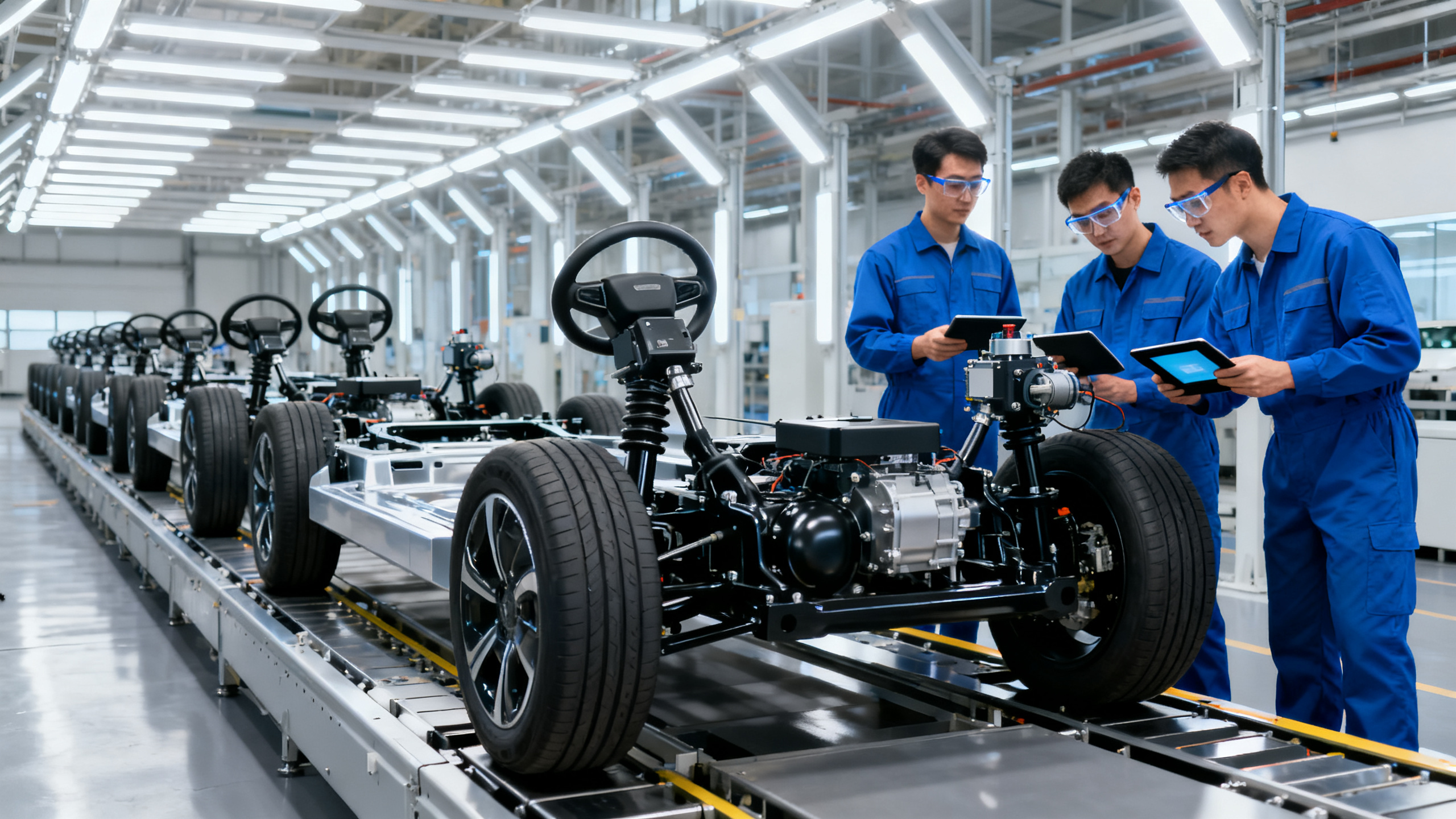
The factory floor matters too. Production variation can change steering feel, so end-of-line calibration and redundancy checks are essential. I'd store calibration data by VIN and link it to field failures. That loop tells engineers which batches and settings cause trouble.
A staged path, anchored by regulation
I'd start with the most mature pairing: steer-by-wire plus one-box EHB. BigGo Finance puts EHB at about 1,500–2,000 yuan per set. Add rear-wheel steering and coordinated chassis control as volume grows. Introduce EMB only once reliability, thermal and cost targets are proven.
Regulation will help set the pace. Gasgoo's coverage reports that China's GB17675-2025 steering standard takes effect July 1, 2026, with steer-by-wire requirements and test methods. Compliance isn't the same as complete real-world validation, though. Automakers still need their own evidence.
Industry-wide definitions would speed things up. Standardized interfaces and shared terms for fault response, redundancy and response-time measurement would shorten supplier qualification and ease platform reuse.
Cybersecurity belongs in the same plan as functional safety. A steering system that accepts unauthorized commands isn't safe, however redundant it is. I'd expect secure boot, signed firmware, network segmentation and disclosed software-support periods.
The core thesis is simple. Drive-by-wire goes mainstream when redundancy is designed into a low-cost platform, validation is reused across models, and the automaker owns the software and safety architecture. No single breakthrough gets a 200,000-yuan car there. Steady platform discipline does.
Sources
BigGo Finance: China's Smart Chassis Rollout Accelerates in 2026
Gasgoo: How Did IM Motors Bring 400,000-Yuan-Class By-Wire Tech to 200,000-Yuan Cars?
Gasgoo: From Flagship to Standard: Drive-by-Wire Chassis on a "Long Run"
Future Market Insights: Global X-by-Wire Market Accelerates Toward USD 325.5 Billion