Independent testing reveals Avatr 12's drag coefficient is 0.28, not 0.21 as claimed, sparking debate about transparency and standards in China's competitive EV market.

Drivetech Partners
The Avatr 12 aerodynamic drag coefficient controversy has exposed a critical gap between manufacturer claims and independently verified performance metrics in China's highly competitive electric vehicle market. When popular automotive blogger "苏黎世贝勒爷" conducted professional wind tunnel testing that revealed a drag coefficient of 0.28—not the 0.21 officially claimed by Avatr—the discrepancy sparked a heated debate about honesty, testing standards, and corporate accountability in an industry where technical specifications directly impact consumer trust.
Key Takeaways
- A 33% discrepancy exists between Avatr's claimed drag coefficient (0.21) and independent test results (0.28)
- Every 0.01 reduction in drag coefficient can extend EV range by approximately 10km at highway speeds
- The controversy highlights critical issues of transparency and verification in China's rapidly growing EV sector
- Independent testing was conducted at the respected Tianjin CATARC wind tunnel using standard protocols
- The incident may lead to stricter industry standards for performance claims as Chinese EVs face global scrutiny
The Critical Role of Drag Coefficient in Electric Vehicle Performance
Aerodynamic drag coefficient (Cd) isn't just a technical specification—it's a fundamental performance indicator that directly impacts how efficiently an electric vehicle can convert battery power into range. At highway speeds, air resistance becomes the dominant force a vehicle must overcome, making aerodynamic efficiency crucial for extending driving range.
The difference between Avatr's claimed 0.21 Cd and the independently measured 0.28 Cd isn't a minor discrepancy. In practical terms, this 33% higher drag would significantly reduce real-world range compared to marketing claims. Industry data suggests that each 0.01 improvement in drag coefficient can extend an EV's range by approximately 10km at 120 km/h, meaning this disparity could translate to a 70km reduction in expected range.
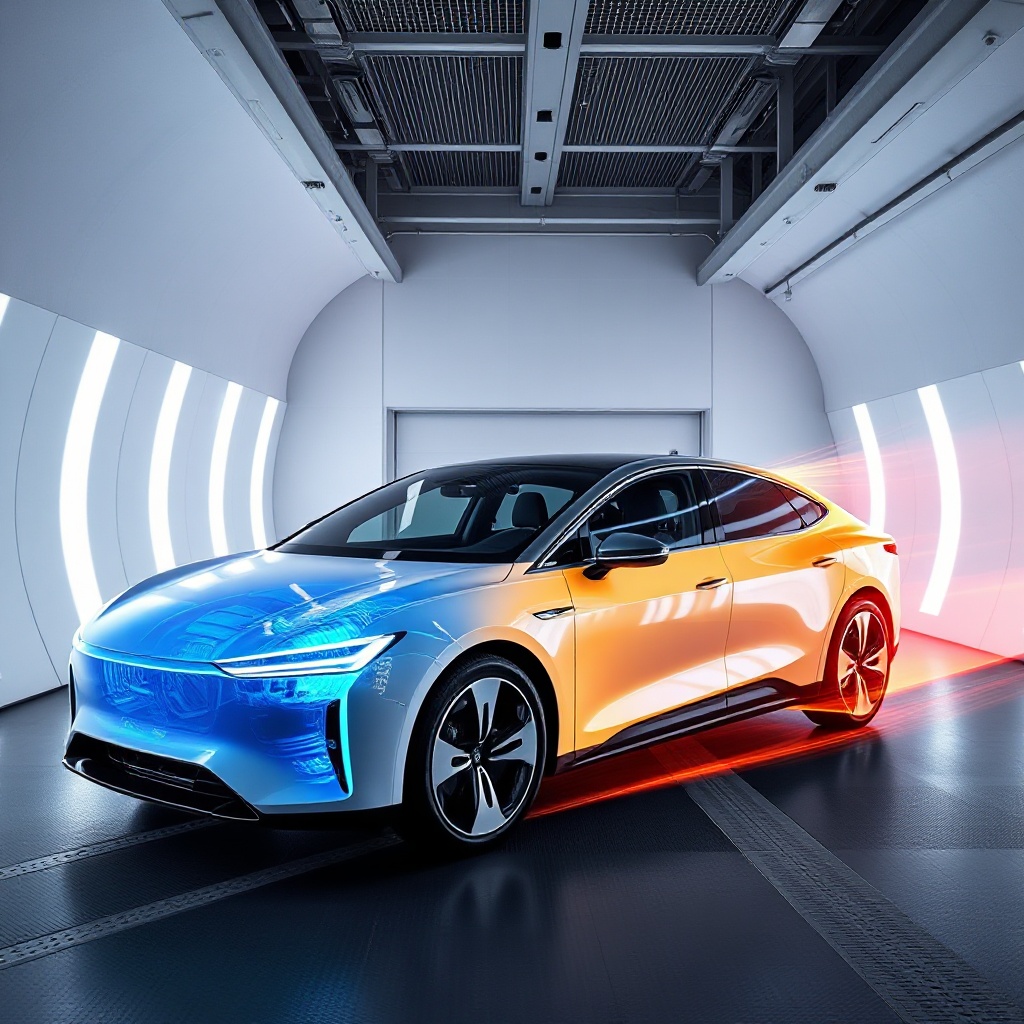
For consumers, these numbers matter. The tested 0.28 Cd is comparable to much older gasoline vehicles like the Passat B5 from the early 2000s—not the cutting-edge aerodynamic marvel suggested by Avatr's marketing. In a market where technical specifications drive purchasing decisions and potentially affect eligibility for government subsidies, accurate information becomes essential for fair competition.
The Confrontation: Blogger's Challenge Meets Corporate Defense
The controversy began when automotive blogger "苏黎世贝勒爷" (Zurich Bei Le Ye), who has over one million followers, arranged for professional testing of the Avatr 12 at the respected Tianjin CATARC facility. The test followed the CSAE 146-2020 standard—China's official protocol for aerodynamic testing—and was conducted by experienced technicians.
Avatr's response was swift and defensive. The company immediately labeled the findings "completely false" and announced a 5 million yuan reward (approximately $694,400) for evidence of what they termed "black PR" against their brand. They also promised to conduct a public wind tunnel test with a production vehicle and third-party witnesses to validate their original 0.21 Cd claim.
The blogger countered by challenging Avatr to produce their original test report documenting the 0.21 Cd figure and to allow him to observe the promised public verification test. Industry observers noted that Avatr subsequently removed references to the 0.21 Cd from their marketing materials, further fueling speculation about the accuracy of their claims.
China's EV Market: High Stakes in Global Competition
The controversy unfolds against the backdrop of China's booming electric vehicle market, where new energy vehicles (NEVs) now account for 40-50% of new passenger vehicle sales nationally. This represents not just a domestic shift but a global competitive advantage that Chinese manufacturers are eager to maintain and expand.
Domestic brands like BYD, NIO, XPeng, and Geely are locked in fierce competition with international manufacturers such as Tesla and Volkswagen. Performance credibility has become vital for maintaining consumer trust, especially as Chinese EVs face intensified scrutiny in international markets.
The stakes are particularly high given recent protectionist trade measures in Western markets and mounting questions about technical standards. As Chinese EV manufacturers push for global recognition, specifications like drag coefficient are increasingly scrutinized by international consumers, regulatory bodies, and competing manufacturers.
Testing Standards and Verification Challenges
The Avatr controversy has highlighted significant challenges in the verification of manufacturer claims. While the CSAE 146-2020 provides the Chinese standard for automotive aerodynamic testing, questions remain about how consistently these standards are applied and reported.
Industry observers have advocated for random production vehicle selection for testing, noting that current practices might allow manufacturers to prepare special vehicles optimized specifically for certification tests. The scientific principle of reproducibility—that test results should be consistent regardless of who conducts them—stands at the center of this debate.
Authoritative, transparent, and observable wind tunnel trials would significantly increase consumer confidence in manufacturer claims. The development of standardized testing protocols that allow fair comparison across the industry could help resolve such controversies before they escalate to public disputes.
Consumer Trust in an Era of Technical Marketing
As technical specifications become key differentiators in EV marketing, consumers increasingly rely on manufacturer claims when making purchasing decisions. Discrepancies between claimed and real-world performance can severely damage brand reputation, especially in the age of social media where controversies like the Avatr incident can rapidly trend across platforms.
Chinese consumer advocacy groups have called for more transparent reporting of test conditions and methodologies. The Avatr incident has prompted broader questions about other technical claims in vehicle marketing throughout the industry.
The potential erosion of trust could impact not just individual brands but the entire Chinese EV sector's credibility internationally. As Chinese manufacturers seek to expand globally, establishing and maintaining consumer confidence in their technical claims becomes essential for long-term success.
Regulatory Implications and Industry Standards
The Chinese government actively supports high-efficiency EVs through subsidies and favorable policies. Drag coefficient figures influence both regulatory compliance and marketing positioning, making them commercially and politically significant.
This incident may trigger tighter oversight of manufacturer performance claims as regulatory bodies seek to protect consumer interests and maintain industry credibility. The EV industry might need to develop new norms for performance disclosure and verification to rebuild trust.
Global standards organizations are closely watching how this controversy resolves, as it could influence the development of standardized third-party verification processes. The outcome may significantly impact how Chinese EVs are perceived in international markets where they already face intensive scrutiny.
Future of Verification in the Age of Technical Competition
As the EV marketplace matures, transparency is becoming a competitive advantage. Companies with independently verified claims may gain a significant trust advantage over competitors with unsubstantiated marketing assertions.
Advanced technologies like digital twins and computational fluid dynamics are enabling more accurate predictions of vehicle performance, potentially complementing traditional wind tunnel testing. Public verification events might become standard practice for significant technical claims as manufacturers recognize the value of demonstrable transparency.
The role of media and influencers in verification is expanding beyond traditional certification bodies, creating a new ecosystem of accountability. Industry-wide standards for testing and reporting may emerge from this controversy, helping to balance competitive marketing with technical accuracy in China's rapidly evolving EV sector.
The Avatr 12 controversy represents more than just a dispute over numbers—it has become a watershed moment for China's EV industry as it balances aggressive marketing with the need for technical credibility in both domestic and international markets.
Sources
Car News China - Avatr 12 drag coefficient under fire: blogger's test challenges official claim