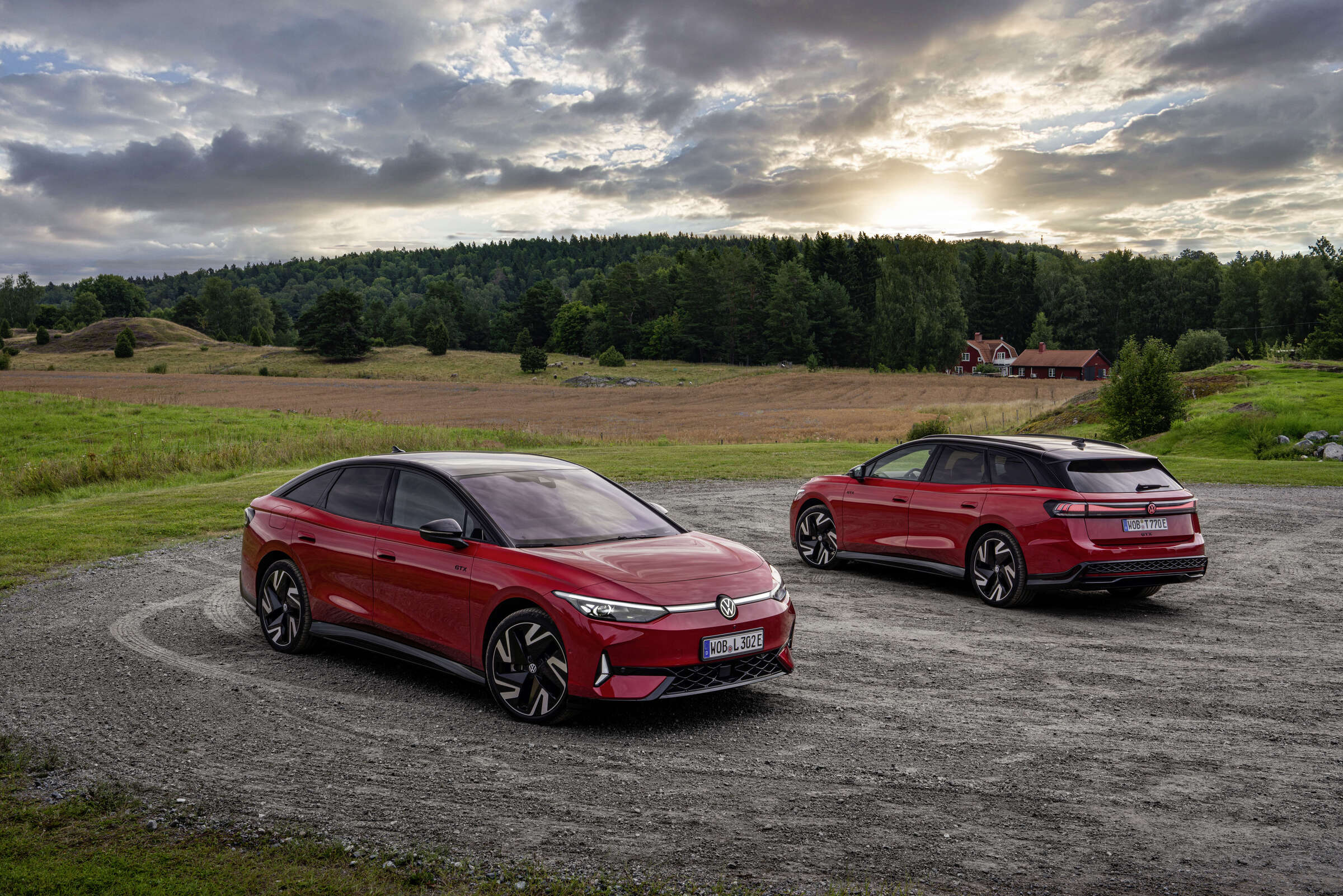
VW delivers 983,100 EVs (+32%) in 2025 but profits crash 53% amid tariffs and China struggles. Can electric surge restore margins by 2026?

Drivetech Partners
Volkswagen Group (VWG) delivered 983,100 battery electric vehicles worldwide in 2025—a striking 32% surge from 2024—even as operating profits crashed 53% to €8.9 billion under pressure from U.S. tariffs, Porsche's restructuring costs, and market contractions across China and North America. This dramatic juxtaposition positions Europe's leading EV manufacturer at a critical crossroads: can aggressive electric expansion and a 55% jump in BEV order intake compensate for luxury brand struggles and propel the automaker back to its 2026 recovery target of 4-5.5% returns?
Key Takeaways
BEV deliveries surged 32% to 983,100 units globally, with Europe driving a 66% increase and propelling VW's share from 8% to 11% of total portfolio
Operating profits plunged 53% to €8.9 billion despite stable €322 billion revenues, driven by U.S. tariffs, Porsche's near-zero margins, and steep declines in China
VWG has announced plans to cut about 50,000 jobs in Germany by 2030 across its brands as part of a wider restructuring in response to falling profits, tariffs, and EV-transition costs.
Within that, according to The Handelsblatt, CARIAD will shed around 1,600 positions—about 30 percent of its roughly 5,900-strong workforce—while additional thousands of non‑production jobs, including administration and development/R&D roles at brands like Audi and Porsche, will also be eliminated.
Europe now commands 68% of EV sales with a 27% market share, while China (20%) faces a planned 44% contraction amid fierce local competition
- Order intake jumped 55% for BEVs, representing 22% of total orders versus 11% current delivery share—signaling accelerating customer demand
Over 20 new models launching in 2026 (half electric), including the €25,000 ID. Polo targeting mass-market accessibility
BEV Delivery Surge Defies Financial Headwinds
VWG's delivery of 983,100 BEVs worldwide in 2025 represents a remarkable 32% jump from the previous year, standing in stark contrast to the company's financial struggles. Europe emerged as the undisputed bright spot, surging 66% and establishing the region as VW's electric stronghold. The first half of 2025 alone saw 465,500 units delivered—a 47% year-over-year acceleration that underscored mounting momentum.
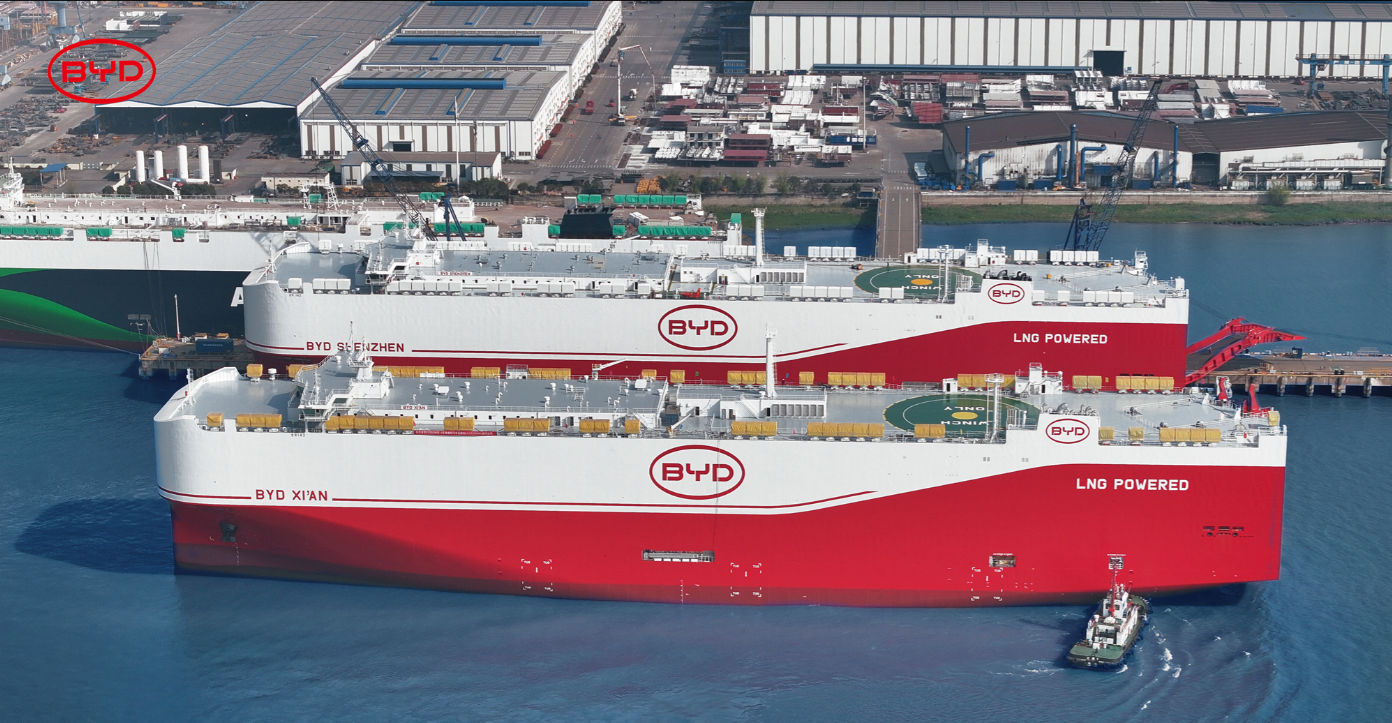
The automaker's global BEV share climbed from 8% to 11% of its total portfolio, demonstrating meaningful progress in electrification. Volkswagen's core brand contributed 382,000 BEVs, essentially flat at -0.2% but showing considerable regional strength that masked global volatility. This performance cements VWG's position as Europe's top EV manufacturer, though the company still trails global leaders BYD (2.2 million) and Tesla (1.65 million) by substantial margins.
Analysts find this divergence between production momentum and profitability particularly telling. While competitors struggled with demand softening, VWG managed to increase deliveries substantially, suggesting its product lineup resonates with European buyers even as financial headwinds batter the bottom line. The question remains whether this operational success can translate to restored margins.
The Financial Turmoil Behind the Electric Success
Operating profits collapsed 53% to €8.9 billion in 2025, creating one of the most challenging financial years in recent VWG history. Three primary pressures drove this decline: escalating U.S. tariffs hammered export profitability, Porsche's strategic restructuring added substantial costs, and sales slumps across China and North America eroded revenue quality. Yet revenues remained remarkably stable near €322 billion, demonstrating underlying business resilience.
Net cash flow held firm at €6.4 billion, providing a critical cushion against operational turbulence. This liquidity position gives management breathing room to execute its electric transition without compromising investment capacity. The luxury brand crisis proved particularly acute—Porsche's near-zero margins dragged group performance significantly, transforming what should be a premium profit contributor into a restructuring liability.
The contrast between 2024 and 2025 tells the story clearly:
- Operating profit: €18.9 billion (2024) → €8.9 billion (2025), down 53%
- Revenues: ~€322 billion (relatively stable year-over-year)
- Net cash flow: €6.4 billion (maintaining liquidity strength)
VWG management's 2026 recovery target of 4-5.5% returns hinges on reversing these margin pressures while sustaining electric volume growth. U.S. tariff policy remains uncertain, Porsche's turnaround timeline extends into late 2026, and China's competitive landscape grows fiercer monthly. While the stable revenue base and strong cash position are encouraging signs, profit restoration depends on factors partially beyond VWG's control.
Regional Winners and Losers Shaping the VWG EV Strategy
Europe dominates VWG's electric strategy, accounting for 68% of all EV sales with 247,900 Volkswagen brand deliveries and a commanding 27% BEV market share. Germany achieved a milestone +60.7% growth to 93,800 units, contributing to the country's broader achievement of 2 million BEVs registered by early 2026. Popular models like the T-Roc and Tayron SUVs drove strong demand, offsetting weakness elsewhere.
China presents a starkly different picture, comprising just 20% of sales with a planned -44% decline due to fierce competition from local manufacturers like BYD. North America remains subdued at 8% of sales, with the USA showing +46% growth but hampered by ongoing tariff uncertainty that chills both consumer confidence and dealer ordering. These three regions concentrate 95% of VW's EV sales, creating geographic vulnerability.
The regional split reveals VW's strategic challenge clearly:
- Europe: 68% of EVs, 27% market share, Germany +60.7% to 93,800 units
- China: 20% of EVs, facing -44% contraction amid local competition
- USA: 8% of EVs, +46% growth offset by tariff headwinds
Europe's EV strength may be seen as both asset and risk. The 27% market share demonstrates product-market fit and brand strength, but over-concentration in a single region exposes VWG to European policy shifts and economic cycles. The China trajectory particularly concerns me—losing nearly half the business in the world's largest EV market while competitors gain share suggests fundamental competitive disadvantages that product refreshes may not overcome.
Brand and Model Stars Leading the Charge
Škoda exploded with +120% growth, while Volkswagen Commercial Vehicles surged +103%, demonstrating that VW's electric success extends well beyond the core passenger car brand. The Group reached a cumulative milestone of 4 million EVs delivered, with the MEB platform powering approximately 3 million units across the ID. family—a testament to the architecture's scalability and cost efficiency.
Top cumulative performers showcase which models resonate with buyers:
- ID.4/ID.5: 901,000 units (crossover/SUV leadership)
- ID.3: 628,000 units (compact hatchback stronghold)
- Škoda Enyaq: 352,000 units (brand breakout success)
ID.7: 132,000 units (sedan segment, Germany's top BEV seller in 2025)
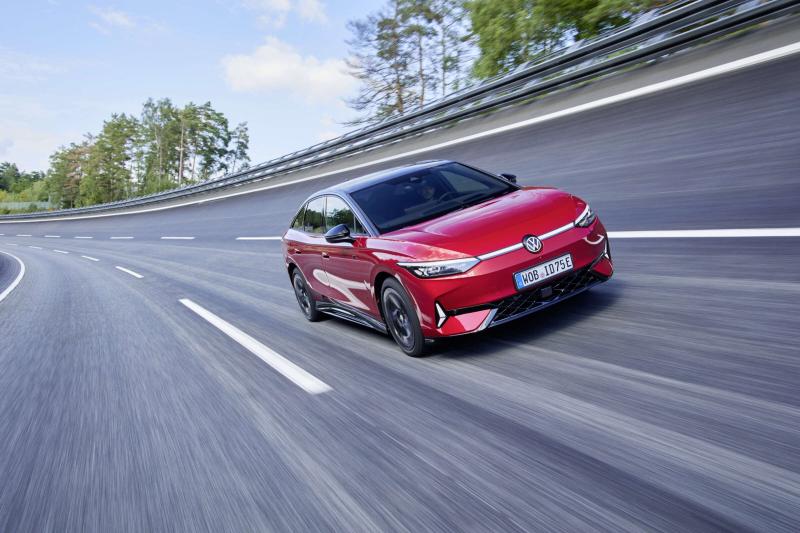
The ID.7's achievement as Germany's top BEV seller in 2025 is particularly impressive, given traditional German preference for premium brands. Five Group vehicles ranked in Europe's top 10 BEVs, demonstrating portfolio breadth that competitors struggle to match. This contrasts sharply with early efforts like the e-up! and e-Golf, which sold in modest volumes but proved the concept.
Škoda's 120% surge deserves particular attention—the Czech brand has become VWG's electric growth engine, proving that affordable positioning and practical design trump luxury aspirations in mass-market electrification. Observers are watching Škoda's trajectory closely as a leading indicator of whether VWG's strategy can scale globally beyond Europe's regulatory-driven market.
Order Books Signal Strong Future Demand
BEV order intake surged 55% with BEVs now representing 22% of total orders—double the current 11% delivery share and signaling accelerating customer preference for electric powertrains. Europe's BEV order book grew +21% to over 200,000 units, providing visibility into sustained volume growth through at least mid-2026. Total order intake increased 13% across all powertrains, indicating broader brand health.
PHEVs jumped 72% in Europe, serving as critical bridge technology with 143 km electric range that addresses consumer range anxiety while building familiarity with plug-in infrastructure. New models like the Škoda Elroq and Audi A6 e-tron drove orders, demonstrating that fresh product introductions convert browsing to commitments. The 22% BEV order share versus 11% current deliveries creates a natural growth trajectory without requiring dramatic market share gains.
One interpretation of this order momentum is validation of VW's product strategy and pricing. Customers vote with deposits, and a 55% surge indicates the current lineup hits key purchase criteria around range, charging, pricing, and design. The challenge shifts from generating demand to fulfilling orders profitably—a manufacturing and supply chain test rather than a marketing problem. European buyers appear ready to embrace electric mobility faster than VW can scale production, a favorable position compared to competitors discounting inventory.
The Affordable E-Mobility Pivot: 2026 Product Offensive
Over 20 new models are scheduled for launch in 2026, with approximately half electric, representing VWG's most aggressive product offensive in a decade. The ID. Polo targets a €25,000 price point for mass-market accessibility—critical for moving beyond early adopters to mainstream buyers prioritizing value. The Electric Urban Car Family expands affordable options, with a smaller electric Polo arriving end-2026 to compete directly with city-focused EVs from Asian manufacturers.
Production milestones underscore scale: VW's 2 millionth EV rolled off the line in February 2026, while Wolfsburg produced its 49 millionth car overall, blending historic manufacturing legacy with electric transformation. The ID. Cross enters production, adding another crossover to capitalize on Europe's SUV preference. Over 10 new EVs specifically target China to combat local competition, though success remains uncertain given entrenched rivals.
These launches contrast with past targets that missed the 3 million/year mark, suggesting management learned from over-optimistic forecasting. The €25,000 ID. Polo price point particularly matters—it approaches combustion parity in total cost of ownership and unlocks buyer segments previously priced out of electric options. This affordable pivot is essential for maintaining European leadership, though execution risks around battery costs, charging infrastructure, and dealer readiness could derail timing.