Discover how data-driven fleet management transforms safety, costs, and operations with real examples showing 73% safety improvement and $356,000 in savings.

Drivetech Partners
Across various industries, data-driven fleet management systems have revolutionized how companies track, maintain, and optimize their vehicle operations while substantially improving safety metrics and financial outcomes. From private fleets in Illinois to healthcare organizations in Oregon, the implementation of analytics-based technologies has consistently demonstrated the transformative power of moving from reactive to proactive fleet management approaches.
Key Takeaways
- Advanced telematics and AI dashcams have improved driver safety by 73% while reducing accident costs by 48%
- Organizations have achieved dramatic cost reductions, with the City of Stamford saving $356,000 in just two years by optimizing fleet size
- An Illinois private fleet decreased accidents by 52% despite growing their driver count by 59%
- Integration of real-time data analysis enables better route planning, driving behavior monitoring, and predictive maintenance
- Healthcare provider Adapt Integrated Health Care successfully scaled operations from 200 to 500 employees through effective fleet management software

The Evolution of Data-Driven Fleet Management
Fleet management has undergone a fundamental transformation in recent years, shifting from paper-based systems and reactive maintenance to sophisticated digital platforms that anticipate problems before they occur. This evolution has been powered by the integration of technologies like telematics, GPS tracking, and AI-powered analytics that collect and interpret vast amounts of vehicle and driver data.
According to the 2024 Fleet Technology Trends Report, 41% of GPS tracking users report positive return on investment after implementation. These solutions protect both company assets and driver safety while significantly improving operational efficiency across the board. The transition from reactive to proactive management represents a paradigm shift in how fleets are managed today.
Modern fleet management systems combine hardware components installed in vehicles with cloud-based software platforms that analyze data in real-time, providing actionable insights to fleet managers. This data-centric approach enables companies to make informed decisions based on concrete evidence rather than gut feeling or historical patterns alone.
Dramatic Safety Improvements Through Technology
Safety improvements represent one of the most compelling benefits of data-driven fleet management. In Illinois, statistics show a 5% decrease in both fatal crashes and fatalities from 2021 to 2022, partly attributable to better vehicle monitoring and driver behavior analysis.
AI dashcams have proven particularly effective, improving driver security by 73% and reducing accident costs by 48%. These systems don't just record incidents – they actively alert drivers to potential hazards and capture critical data when incidents do occur.
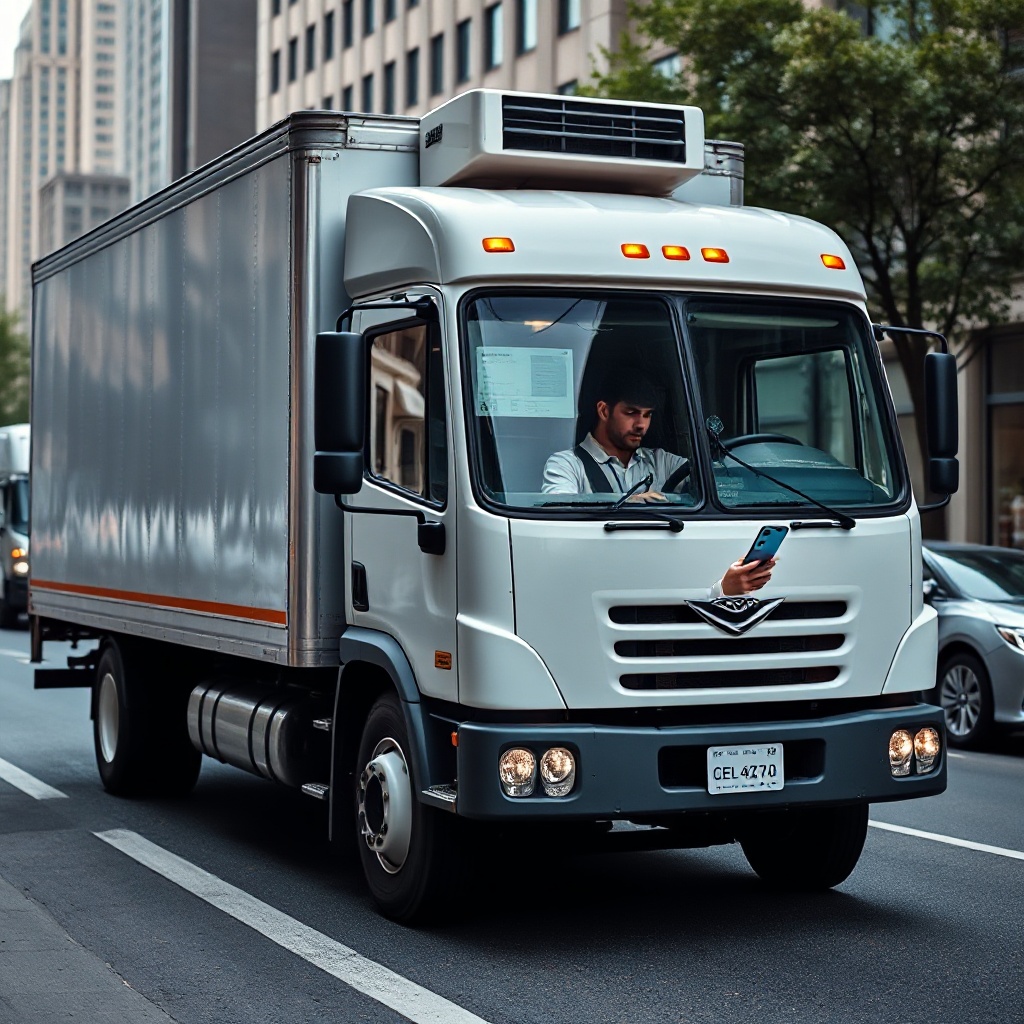
One Illinois private fleet achieved remarkable results, decreasing accidents by 52% despite growing their driver count by 59%. This counterintuitive outcome demonstrates how technology can scale safety benefits even as operations expand. Advanced AI-powered systems with telematics monitor driver behavior in real-time, detecting conditions like harsh braking, rapid acceleration, or drowsiness that indicate potential safety issues.
Behind the scenes, machine learning models process this data to predict safety risks and automate regulatory reporting, creating a proactive safety ecosystem that prevents incidents rather than simply documenting them after they occur.
Cost Reduction Success Stories
The financial benefits of data-driven fleet management are equally impressive. The City of Stamford provides a compelling example, having reduced their vehicle fleet from 80 to 29 vehicles. This optimization resulted in savings of $356,000 within two years and projected 5-year savings exceeding $1 million.
Alliance Leasing achieved a 15% reduction in insurance premiums through comprehensive driver monitoring systems. With estimated annual per vehicle savings of $1,029, the financial impact across their entire fleet was substantial. These results align with broader industry findings – 52% of fleet managers agree that AI's ability to cut operational costs is the most compelling reason for investment.
Research from MIT found that AI integration reduces fuel consumption by up to 18% and carbon dioxide emissions by 25%, creating both financial and environmental benefits. At the cutting edge, Amazon's Automated Vehicle Inspection technology identifies anomalies in delivery vans within seconds, preventing small issues from becoming major repairs.
Operational Efficiency Transformations
Beyond safety and cost savings, data-driven fleet management dramatically improves operational efficiency. A significant 62% of fleet managers report that AI helps optimize route planning and logistics, enabling better resource allocation and improved service delivery.
Real-time data analysis enables smarter route planning based on traffic patterns, delivery schedules, and weather conditions. This not only reduces fuel consumption but also improves customer satisfaction through more reliable delivery windows. Analytics also identify driving habits considered risky and unsafe, such as speeding, continuous driving, and harsh braking.
Fleet size optimization through analysis of vehicle utilization rates ensures companies maintain the right number of vehicles for their operational needs. Meanwhile, predictive maintenance scheduling based on vehicle performance trends extends vehicle lifespan and reduces downtime, keeping more vehicles on the road generating revenue rather than sitting in repair shops.
Alliance Leasing: Comprehensive ROI Through Driver Behavior Monitoring
Alliance Leasing offers a detailed case study in how comprehensive driver monitoring can deliver measurable ROI. By implementing Zubie Fleet Connect software, the company was able to improve driver behavior and transform business operations simultaneously.
The system used "driver score" metrics to identify employees with risky behaviors, specifically measuring hard stops and speeding incidents. This data-driven approach allowed for targeted training and intervention where it was most needed. Fuel costs were reduced by analyzing idle time and mileage data, creating immediate operational savings.
Integration with GPS tracking improved maintenance scheduling by ensuring vehicles received service based on actual usage rather than arbitrary timelines. It also enhanced driver accountability, as employees knew their driving patterns were being monitored. This comprehensive approach resulted in both safety improvements and significant cost savings across multiple aspects of fleet operations.
Adapt Integrated Health Care: Scaling Operations Through Technology

Adapt Integrated Health Care provides a compelling example of how fleet management technology can support organizational growth. This nonprofit healthcare organization serving four counties in southwest Oregon transformed their operations through smart technology implementation.
Prior to implementing FleetCommander, Adapt relied on error-prone Excel spreadsheets to manage their 85-vehicle fleet. This system caused significant driver frustration and administrative headaches. The implementation of digital fleet management eliminated chaos around vehicle availability and key management, creating a more efficient system.
Perhaps most impressively, this technology enabled Adapt to successfully scale from 200 to 500 employees without corresponding increases in administrative overhead. The automation of previously manual processes reduced staff workload while improving service quality, allowing the organization to focus on its core mission of providing healthcare rather than managing vehicles.
Implementation Strategies for Maximum ROI
Achieving maximum ROI from fleet management solutions requires strategic implementation. Based on successful case studies, several best practices have emerged:
- Deploy solutions across the entire fleet for consistent data collection and analysis
- Engage drivers in the training process to ensure technology adoption and reduce resistance
- Conduct regular data analysis to identify inefficiencies and areas for improvement
- Integrate multiple data streams for comprehensive visibility (GPS tracking, fuel cards, maintenance records)
- Focus on measurable metrics: fuel efficiency, reduced maintenance costs, lower insurance premiums, and accident rates
The most successful implementations take a holistic approach that considers both technical and human factors. Technology alone cannot transform fleet operations – it requires buy-in from drivers, mechanics, administrators, and leadership to fully realize the potential benefits.
Companies that approach fleet management with a clear understanding of their specific challenges and measurable goals tend to see the fastest and most significant returns. Starting with a pilot program on a subset of vehicles can help build momentum and demonstrate value before expanding implementation across the entire fleet.
Sources
AgileFleet - Fleet Management Success Stories
Verizon Connect - Fleets Report Positive ROI With Fleet Tracking Technology
Zubie - Case Study: How Zubie Delivers ROI to Small and Medium-Sized Businesses
AgileFleet - Resources Case Studies
Llumin - How Fleet Management Analytics Can Transform Your Operations