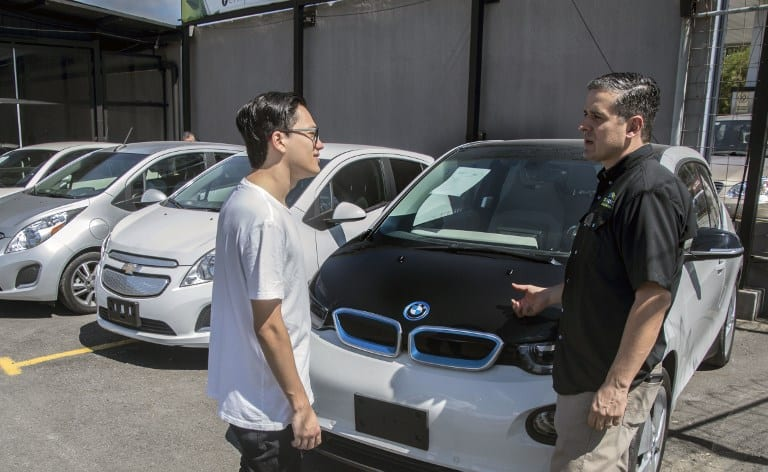
Costa Rica leads the Americas with 15.4% EV market share, driven by Chinese brands and tax incentives, offering insights into rapid decarbonization tradeoffs.

Drivetech Partners
Costa Rica's electric vehicle market reached a 15.4% battery-electric share of new sales in 2024—the highest in the Americas—driven largely by an open-door policy that allowed low-cost Chinese brands to capture over 70% of the market and strong tax incentives that made EVs nearly price-competitive with gasoline cars. This small Central American nation's rapid embrace of Chinese automakers offers a real-world laboratory for understanding the trade-offs between accelerated decarbonization, consumer affordability, and long-term dependence on foreign technology, raising critical questions about whether other countries should replicate the strategy or hedge against geopolitical and supply-chain risks.
Key Takeaways
- Costa Rica sold 11,373 all-electric vehicles in 2024 (up 80% year-on-year), achieving a 15.4% BEV market share that exceeds Canada and the United States despite having just over 19,000 EVs on the road.
- Chinese brands command roughly 70% of Costa Rica's EV market, led by BYD, which exported 3,200 units in 2025—nearly one-third of total imports—enabled by an open trade policy and lack of domestic auto industry protection.
- Aggressive tax incentives launched in 2018 (full exemptions on import duties, VAT, and consumption taxes) supercharged adoption, but a mid-2025 rollback added ~10% to prices and trimmed growth forecasts to 8.4% CAGR through 2030.
- Costa Rica's 98–99% renewable electricity grid amplifies climate benefits, delivering the lowest well-to-wheel emissions in the Americas, yet charging infrastructure and public transport electrification lag behind private EV sales.
- The model reveals a fundamental trade-off: rapid emissions cuts and consumer affordability versus strategic dependence on Chinese supply chains, data security concerns, and limited domestic value capture in manufacturing.
Costa Rica's EV Explosion: Leading the Americas Despite Being a Small Player
Costa Rica has emerged as the EV leader of the Americas not by volume, but by market share. According to CleanTechnica, the country sold 11,373 new all-electric passenger vehicles in 2024, representing an 80% jump from the previous year. That translated into a BEV market share of 15.4% in 2024, up from 11.6% in 2023.
BloombergNEF pegs Costa Rica's 2024 EV share at roughly 16% of new car sales and projects it will reach one in five (20%) by 2025. This tiny nation of five million people now outpaces larger markets: Canada achieved 10.9% BEV share in 2024, while the United States managed just 7.8%.
Yet the paradox is striking. Despite leading in new-sale penetration, Costa Rica had just over 19,000 electric cars and light-duty vehicles on the road at the end of 2024—representing only 1.3% to 2.5% of the total fleet depending on vehicle categories counted. That's roughly one electric car for every 77 residents, compared to one per 1,000 in Brazil and one per 1,500 in Mexico, according to Focus2Move.
This difference between EV share of new sales and total fleet share matters enormously for both climate impact and system planning. A 15.4% market share means Costa Rica is nearing the end of the "early adopters" phase and approaching the "chasm" around 16.5%, where adoption must cross into the early majority to sustain momentum. For a small, middle-income country with no domestic auto industry, reaching this inflection point first in the region is remarkable.
Why Chinese Brands Dominate 70% of Costa Rica's EV Market
Costa Rica has no domestic automaker lobby and pursues relatively open trade in vehicles. As Randall Zúñiga, director of the energy department, told Dialogue Earth, the government doesn't promote specific origins—priority is compliance with technical and safety standards. Roughly 70% of EVs in Costa Rica now come from Chinese manufacturers.
Major Chinese brands on Costa Rican roads include BYD, Geely, MG, Chery, Geometry, and Great Wall. BYD alone exported 3,200 electric cars to Costa Rica in 2025, nearly one-third of all EV imports that year. Cori Motors, a major importer, brings in four Chinese brands including BYD. BloombergNEF notes that Chinese brands have boosted EV adoption across Latin America, with Costa Rica serving as the regional standout.
The affordability breakthrough has been transformative. Some Chinese models are priced low enough to open car ownership to middle- and lower-income households for the first time. These vehicles pack high-tech features—large touchscreens, advanced driver-assistance systems—at competitive prices. "Letting the cheapest, most capable product win" has become Costa Rica's de facto strategy.
Brand perception has shifted dramatically. Early skepticism about Chinese quality gave way to recognition of value and technology. Local YouTubers like Manuel Delgado promote EVs and Chinese brands to growing audiences. The 2021 sponsorship of Alajuelense football club by BYD created strong brand visibility and aspirational appeal. Costa Rican consumers, as one observer put it, "know a bargain when they see one."
Tax Incentives That Supercharged Adoption—and What Happened When They Changed
Starting in 2018, Costa Rica introduced broad tax incentives for electric vehicles: full or partial exemptions from import duties, value-added tax (VAT), and consumption taxes. EVs also received exemption from San José's driving restrictions ("restricción vehicular"), free municipal parking in some areas, and reduced annual circulation taxes.
The market response was dramatic. EV imports jumped from just 611 units in 2020 to around 10,300 in 2025, according to data from the Electric Mobility Association (Asomove) cited by Dialogue Earth. Key milestones included:
- 2021: First time annual sales exceeded 1,000 units, triggering visible marketing campaigns and sponsorships
- 2022: More than 1,800 EVs registered, over 40% increase versus 2021
- July–August 2024: Over 2,400 EVs registered in just two months, with EVs reaching 14% of new registrations
Then came the 2025 tax shock. By mid-2025, Costa Rica implemented a tax overhaul that removed or reduced several EV incentives. A new 7.5% VAT layer on EVs and the rollback of exemptions increased prices by roughly 10%, according to BestSellingCarsBlog.
May 2025 BEV registrations spiked to 1,081 units (up 13.5% year-over-year) as importers rushed to beat the tax change. After the shift, the growth forecast was trimmed to around 8.42% CAGR through 2030, with annual volumes projected around 7,390 units by decade's end instead of the previously expected 10,000–12,000. Chinese brands responded by extending warranties and sweetening financing offers to protect market share.
This demonstrates how sensitive EV adoption is to policy shifts when upfront cost parity remains marginal. EVs retained many non-tax benefits—city access, lower operating costs—which softened the blow, but the slowdown underscores the fragility of incentive-driven markets.
The Tourism and Fleet Effect: How Rental Cars Accelerated EV Normalization
Costa Rica receives around 3 million tourists annually, and tourism has emerged as a powerful adoption catalyst. Rental companies in hubs like Liberia, Tamarindo, Manuel Antonio, and Arenal increasingly stock EVs—BYD, Geometry, MG, and Volvo EX30 models are now common in fleets.
By late 2024 and early 2025, some rental agencies in Guanacaste reported that 40–60% of their fleet ran on batteries. October 2025 registrations rose 25% month-on-month, largely due to rental-fleet replenishment ahead of high season, according to Focus2Move.
Corporate and fleet buyers report total cost of ownership savings of 25–30% over five years for popular Chinese models like the BYD Yuan Plus and Geometry C. Lower fuel and maintenance costs create a compelling business case that outweighs higher upfront prices even after the 2025 tax changes.
The "try-before-you-buy" effect matters. Tourist exposure to EVs influences local perceptions and accelerates acceptance. Hotels and rental companies use chargers as a marketing asset, positioning themselves as sustainable destinations. Fleet adoption also amplifies infrastructure build-out, with destination chargers appearing at hotels and even national parks.
Grid Strength Meets Grid Stress: Infrastructure as the Next Bottleneck
Costa Rica's electricity mix is 98–99% renewable, predominantly hydro with contributions from wind, geothermal, and solar. Tico Times noted 99% clean energy production in 2022. This means every EV on Costa Rican roads enjoys the lowest well-to-wheel emissions in the Americas.
Transport accounts for almost half of national greenhouse gas emissions. Costa Rica's National Decarbonization Plan targets net-zero emissions by 2050, and EVs multiply the climate advantage because their electricity is nearly carbon-free. Each imported EV becomes an immediate emissions win.
Yet infrastructure challenges are emerging. Asomove's executive director, Silvia Rojas, notes the lack of government policy on charging network expansion as a barrier to broader adoption. The sharp rise in EV sales requires rapidly expanding public and private charging stations to reduce range anxiety.
Early emphasis has been on private home and work charging plus destination chargers at tourist sites. Fast-charging corridors are still developing. There's also risk of local grid stress in specific neighborhoods if home charging scales faster than distribution upgrades, even with a strong national grid.
Public transport electrification lags behind private EVs. Costa Rica has the leading EV share for new cars but is "la