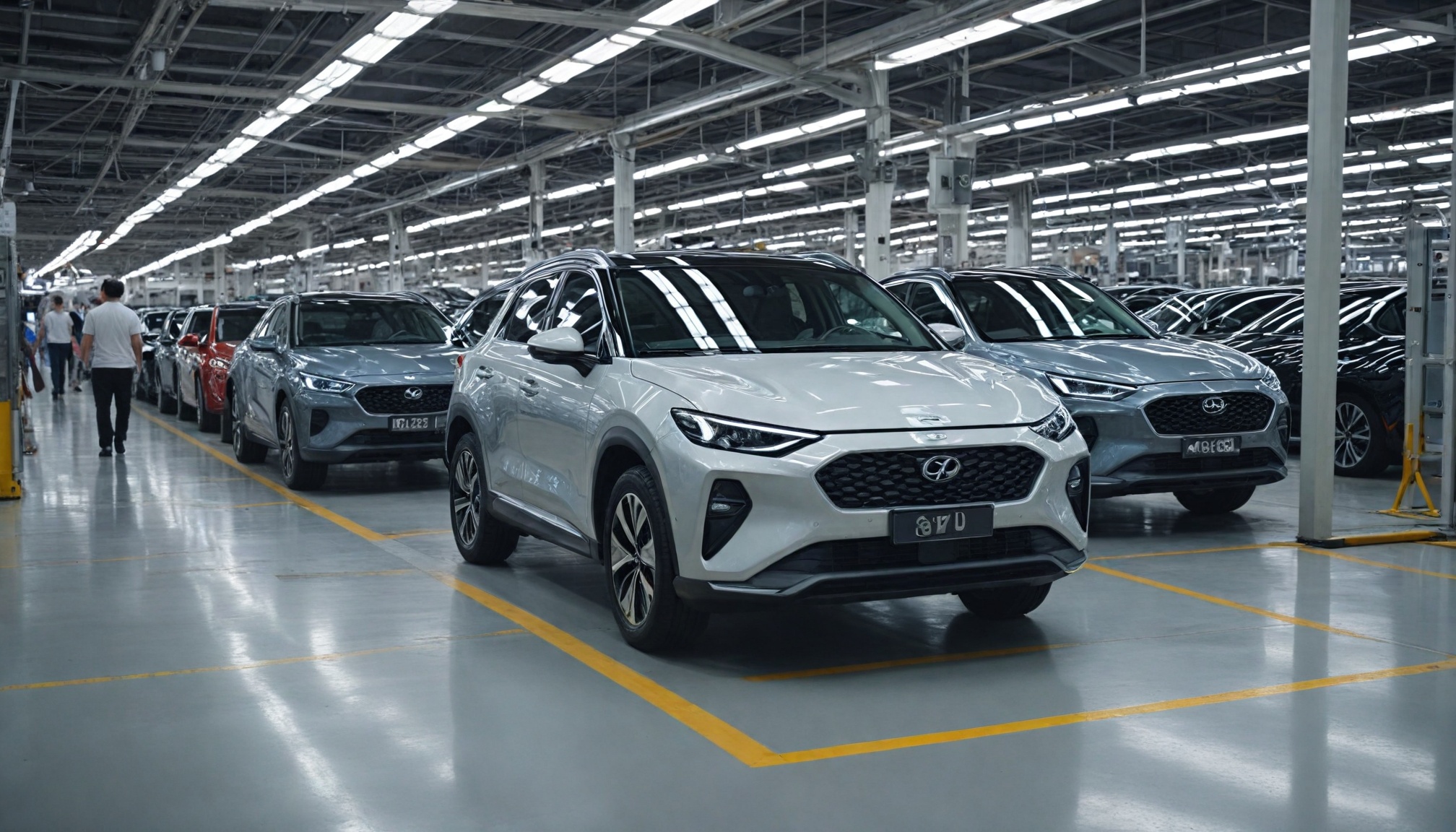
China overtakes Japan to become world's largest car exporter, leveraging NEV expertise and battery technology to redefine global markets despite rising trade barriers.

Drivetech Partners
China's ascent to becoming the world's largest car exporter in 2023 marks a historic shift in the global automotive industry. Surpassing traditional powerhouses Japan and Germany, Chinese manufacturers have leveraged their expertise in New Energy Vehicles (NEVs) and battery technology to redefine international markets, with exports surging to nearly 5 million vehicles annually despite mounting trade barriers.
Key Takeaways
- China exported 4.91-5.22 million vehicles in 2023, representing a staggering 383% increase from 2020 levels
- New Energy Vehicles constitute 24% of all exports, with China holding approximately 70% of global NEV technology patents
- Chinese brands are expanding into Europe through aggressive localization strategies, with BYD building a factory in Hungary
- A triple advantage of cost-effective manufacturing, technological innovation, and government support underpins China's export success
- Legacy automakers face mounting pressure to accelerate their EV strategies or risk losing further market share to Chinese competitors
China's Historic Rise to Global Automotive Export Leadership
In a remarkable industry transformation, China exported nearly 5 million vehicles in 2023, definitively surpassing Japan (4.42 million) and Germany to claim the title of world's largest car exporter. This achievement represents a 57.4% year-on-year increase and an extraordinary 383% jump from the 1.08 million vehicles exported in 2020.
The export breakdown reveals the comprehensive nature of this growth: 4.14 million passenger vehicles (a 156% increase from 2021) and 770,000 commercial vehicles (a 91.5% increase). More telling is the rising average unit export price, which climbed from 85,000 yuan (~$11,916) in 2018 to 122,000 yuan (~$17,125) in 2022 – clear evidence that Chinese manufacturers are moving upmarket with higher-value offerings.
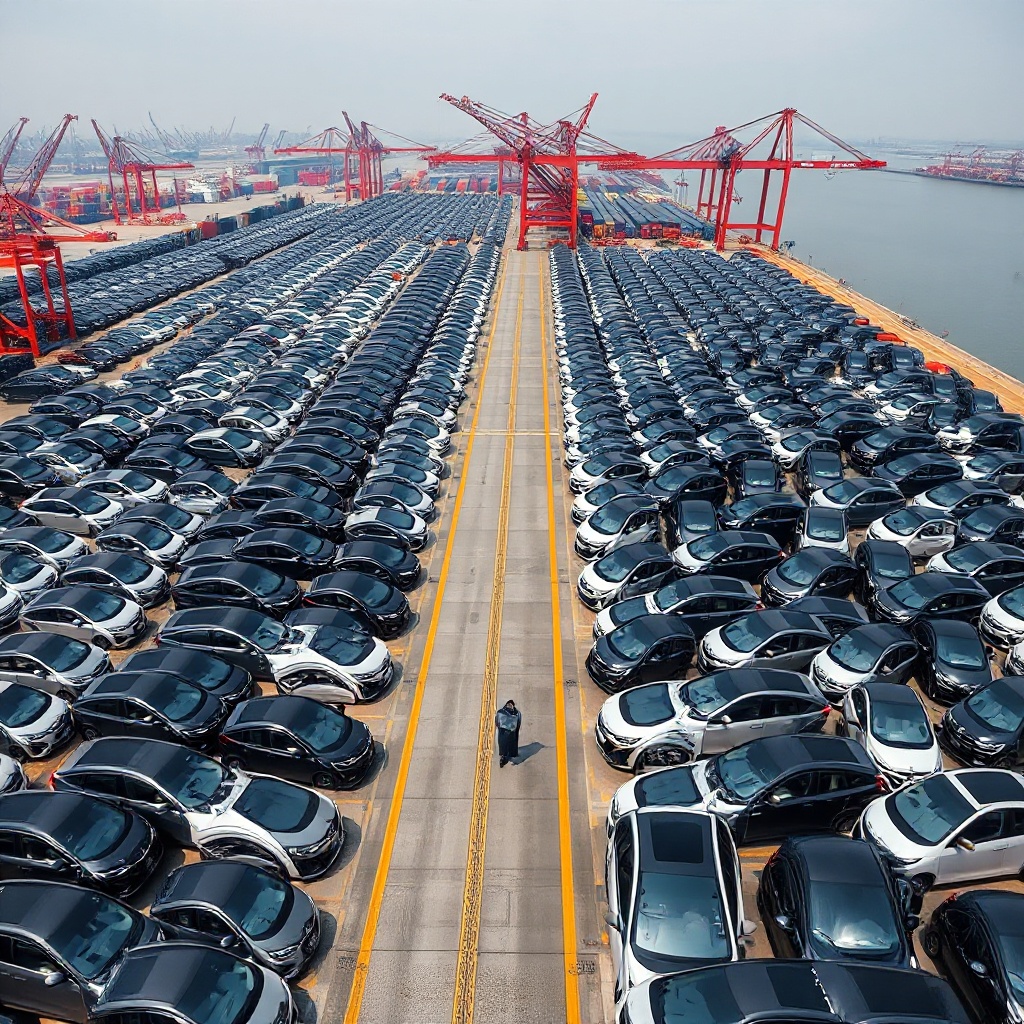
China now contributes over 32% of global passenger car production, exceeding the European Union's share. This dramatic shift has upended decades of automotive manufacturing hierarchy, setting the stage for continued Chinese dominance in the coming years.
New Energy Vehicles: The Strategic Cornerstone of China's Export Success
The driving force behind China's export revolution is its strategic focus on New Energy Vehicles. In 2023, Chinese manufacturers shipped 1.2 million NEVs, representing 77.6% year-on-year growth. These electric and hybrid vehicles now constitute 24% of all Chinese automotive exports, doubling their proportion in just twelve months.
China's technological advantage in this sector is substantial, with the country holding approximately 70% of global patents for NEV technologies and over 50% for internet-connected vehicle technologies. This intellectual property foundation provides Chinese automakers with significant competitive advantages in the rapidly growing electric vehicle market.
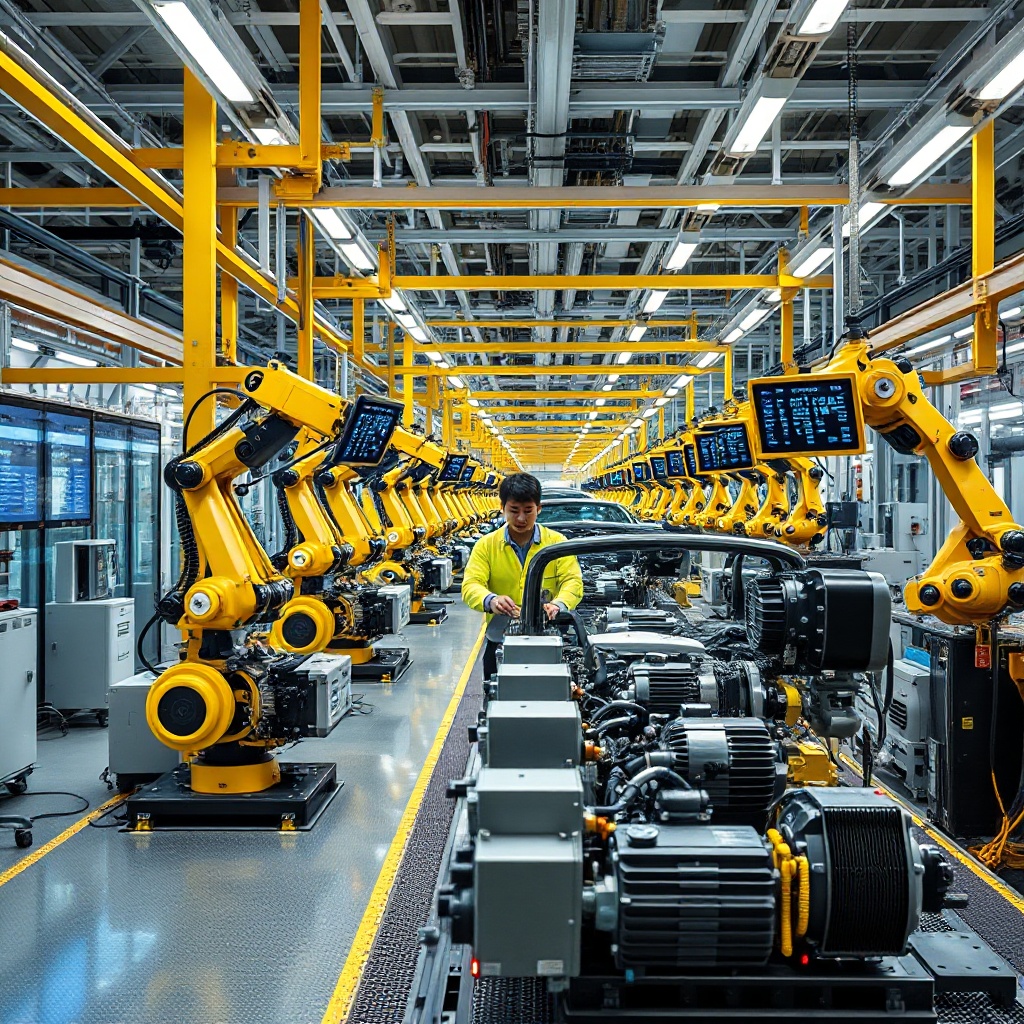
The country's battery production capabilities, led by companies like CATL and BYD, further cement this leadership position. China's innovation ecosystem has already produced 590 electric vehicle models in 2023 and is projected to reach 1,000 models by 2028 – a pace of development that Western manufacturers are struggling to match.
Chinese Automakers' European Market Offensive
Europe has become the primary battleground for Chinese automotive expansion, with companies like BYD, Geely, Chery, and SAIC aggressively targeting European consumers. BYD's strategy exemplifies this approach, with the company constructing a factory in Hungary to localize production and navigate potential tariff barriers.
Even Tesla has integrated deeply with China's manufacturing ecosystem, exporting 344,000 cars from its Shanghai factory in 2023 – representing 22% of China's total car exports. This highlights how even Western brands are leveraging China's production advantages.
The European market's receptiveness to electric vehicles makes it an ideal target for Chinese NEV manufacturers. With European EV sales reaching 3.2 million units in 2023 (25% of global sales), and countries like Norway (95% EV sales), Sweden (60%), and the Netherlands (30%) leading adoption rates, Chinese brands are finding fertile ground for expansion.
The Triple Advantage: Cost, Innovation, and Government Support
China's automotive export success rests on three key pillars that create a formidable competitive advantage. First, cost-effective manufacturing enables Chinese brands to offer vehicles at price points that Western competitors struggle to match while maintaining profitability.
Second, advanced domestic supply chains allow for rapid production scaling and seamless technology integration. This ecosystem approach, powered by major battery producers like CATL and BYD, creates technological synergies that accelerate innovation.
Third, robust government support through subsidies, tax breaks, and credit from state banks has provided Chinese manufacturers with the financial foundation needed to invest heavily in research and development. This scale of manufacturing also enables greater R&D investment and faster model development cycles than many global competitors can achieve.
Navigating Trade Barriers While Expanding Market Share
As Chinese exports surge, they're increasingly facing protectionist barriers. The United States has imposed a 100% tariff on Chinese EVs, and European regulators are scrutinizing Chinese manufacturers more closely. However, Chinese brands are adapting through localization strategies that circumvent tariffs while maintaining their competitive advantages.
Their price competitiveness and advanced technology continue to enable market penetration despite these barriers. European markets remain a key battleground, with Chinese companies focusing on localization to comply with regulations while preserving their market access.
This strategic approach to trade barriers demonstrates the adaptability of Chinese manufacturers and their commitment to global expansion regardless of regulatory challenges.
Impact on Legacy Automakers and Global Competition
The rise of Chinese automotive exports is placing unprecedented pressure on established European and Japanese automakers. These companies are being forced to accelerate their EV strategies while reconsidering their manufacturing footprints and supply chain dependencies.
Western automakers face a particularly difficult challenge in matching Chinese price points while maintaining profitability. They're also under increasing pressure to develop comparable battery technology and supply chain efficiencies.
Tesla's significant export volume from China highlights how even successful Western EV manufacturers have integrated with the Chinese manufacturing ecosystem, signaling a fundamental shift in the industry's structure and competitive dynamics.
The Future Landscape: China's Expanding Global Influence
Early 2024 data shows China exported 5.86 million vehicles, maintaining a 19.3% year-on-year growth rate. Industry experts predict Chinese exports could double or triple if trade barriers don't escalate further.
China's manufacturing overcapacity enables continued aggressive pricing strategies, while global supply chains are likely to further consolidate around China, similar to what occurred in the electronics industry.
Chinese technological leadership in EVs is creating the potential for long-term dominance in future mobility, with implications that extend far beyond current market share statistics.
Implications for the Global Automotive Industry's Transformation
China's battery technology leadership provides a sustainable competitive advantage that will be difficult for competitors to overcome. European, American, and Japanese manufacturers face difficult strategic choices between partnership and competition with Chinese companies.
We're likely to see growing Chinese influence over global automotive standards and technology development, coupled with industry consolidation as smaller players struggle to compete in this new landscape.
Perhaps most significantly, Western consumers are increasingly recognizing Chinese brands as technology innovators rather than budget alternatives – a perception shift that could permanently alter global automotive brand hierarchies.
The transformation underway represents more than just a shift in export statistics; it signals a fundamental restructuring of the global automotive industry with China at its center – not just as a manufacturing hub, but as the primary source of innovation and technology leadership in the electric mobility era.
Sources: diplomaticwatch.com - The Rise of China's Auto Industry: Now the World's Largest Exporter, cfr.org - Will China Take Over the Global Auto Industry?, yallamotor.com - China Dominates Global Car Exports in 2023, virta.global - The Global Electric Vehicle Market, thechinaacademy.org - Both China and the World Should Treat China as Global Trade Champion