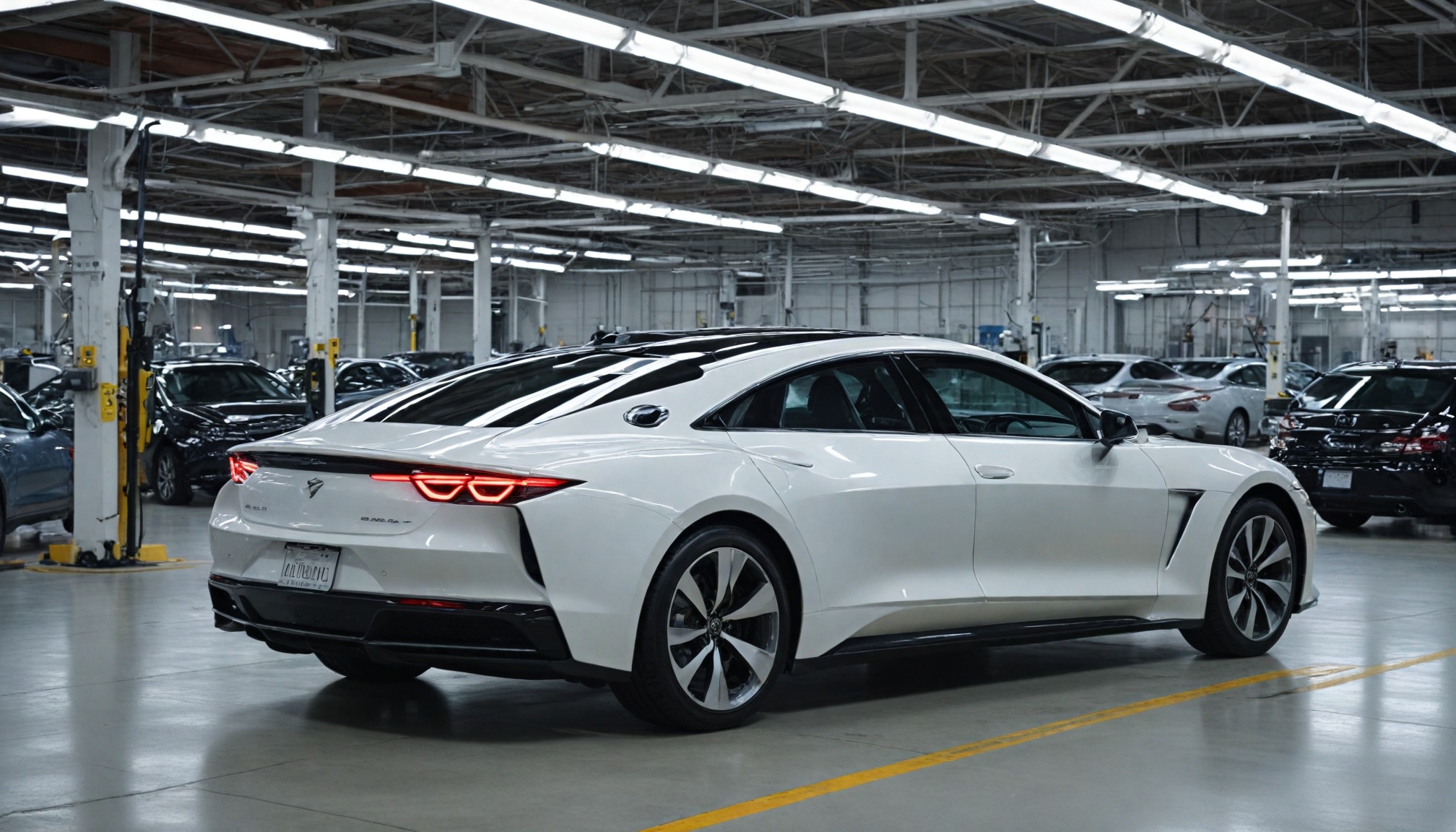
Automotive industry at crucial crossroads in 2025 as US tariffs disrupt trade, threatening jobs and driving up costs amid Chinese competition and shifting market demands.

Drivetech Partners
The global automotive industry stands at a historic inflection point in 2025, with US tariff policies creating unprecedented disruption to established trade patterns and manufacturing strategies. A perfect storm of regulatory emissions targets, geopolitical tensions, and economic pressures is forcing automakers to navigate a rapidly changing landscape where traditional business models are being fundamentally challenged.
Key Takeaways
- The 25% US tariff on imported vehicles has triggered a projected $107.7 billion cost increase for automakers and threatens 700,000+ industry jobs
- Chinese manufacturers maintain a 47% cost advantage over global competitors, driving their rapid export growth despite tariff barriers
- Vehicle prices are expected to rise 10-15% for directly impacted models, with entry-level vehicles hit hardest, potentially adding $6,400 to a $30,000 car
- Complex global supply chains are particularly vulnerable as components cross borders multiple times, facing cumulative tariff increases at each crossing
- Many manufacturers are pivoting toward hybrid vehicles as a bridge strategy amid EV transition uncertainties and challenging economic conditions

US Tariff Policies Upend Automotive Trade Dynamics
April 2025 marked a seismic shift in automotive trade with the implementation of a 25% tariff on imported vehicles. This dramatic policy change has effectively halted the free flow of finished automobiles across North America, creating ripple effects throughout the global industry. The uncertainty is compounded by monthly negotiations over tariffs with Canada and Mexico, leaving manufacturers unable to plan with confidence.
The impact extends beyond finished vehicles to vital materials, with steel and aluminum tariffs adding substantial production costs. Chinese imports face doubled tariffs from 10% to 20%, further disrupting established supply chains. The Trump administration has made it clear that the explicit goal is relocating production to US soil, regardless of the short-term economic consequences.

The impact is particularly acute for top US import sources:
- Mexico - the largest exporter of vehicles to the US
- South Korea - a major supplier of both vehicles and components
- Japan - with significant US market share through established brands
Market Contraction and Economic Fallout
The automotive industry faces a significant market contraction in coming years. Sales forecasts show a decrease from 16 million vehicles in 2024 to just 14.5-15 million annually going forward. According to BCG models, the US can expect 15.1 million passenger and light vehicles sold in 2025, with a further 7% decrease to 14 million in 2026.
The economic impact is staggering. CAR studies estimate a 2-million unit reduction in vehicles sold and over 700,000 job losses across the sector. The total cost increase to all US automakers is projected at $107.7 billion, with $41.9 billion specifically impacting D3 automakers. This affects approximately 6.8 million vehicles in D3 production volume.
Even the commercial vehicle sector, which had been anticipating recovery in 2025, now faces stalled growth. The unpredictable trade situation has created an atmosphere of caution, with manufacturers becoming increasingly hesitant to commit to major investments during this volatile period.
Vehicle Pricing Crisis Looms for Consumers
American car buyers face a significant price shock in the wake of these tariffs. With the average new vehicle price already exceeding $48,000, affordability was already a growing concern. Now, the 25% tariff directly impacts 80% of vehicles priced under $30,000, including popular models like the Honda Civic, Toyota Corolla, and Chevy Trax.
This translates to expected price increases of 10-15% for vehicles directly impacted by tariffs, and even those not subject to the full 25% tariff are projected to see 5% price increases as market forces adjust. For consumers, this means tariffs could add $6,400 to a $30,000 vehicle, increasing monthly payments by up to $120 according to industry analysis.
The impact extends beyond new vehicle purchases to repair and maintenance costs, which are expected to increase correspondingly. The lower-priced vehicle segment is particularly vulnerable, with popular compact SUVs like the Toyota RAV4 and Honda CR-V feeling the greatest impact from these tariff policies.
Supply Chain Complexity Magnifies Tariff Effects
Modern automotive manufacturing relies on incredibly complex global supply chains that have been optimized over decades. This complexity now magnifies the tariff impact, as parts often cross borders repeatedly during production. In some cases, components cross the US-Canada border up to eight times before final assembly, facing cumulative tariff increases at each crossing.
EV manufacturers face particular vulnerability due to their reliance on global sourcing for rare materials essential to battery production. German manufacturers with Mexican production facilities are under pressure as this long-established advantage diminishes under the new tariff regime.
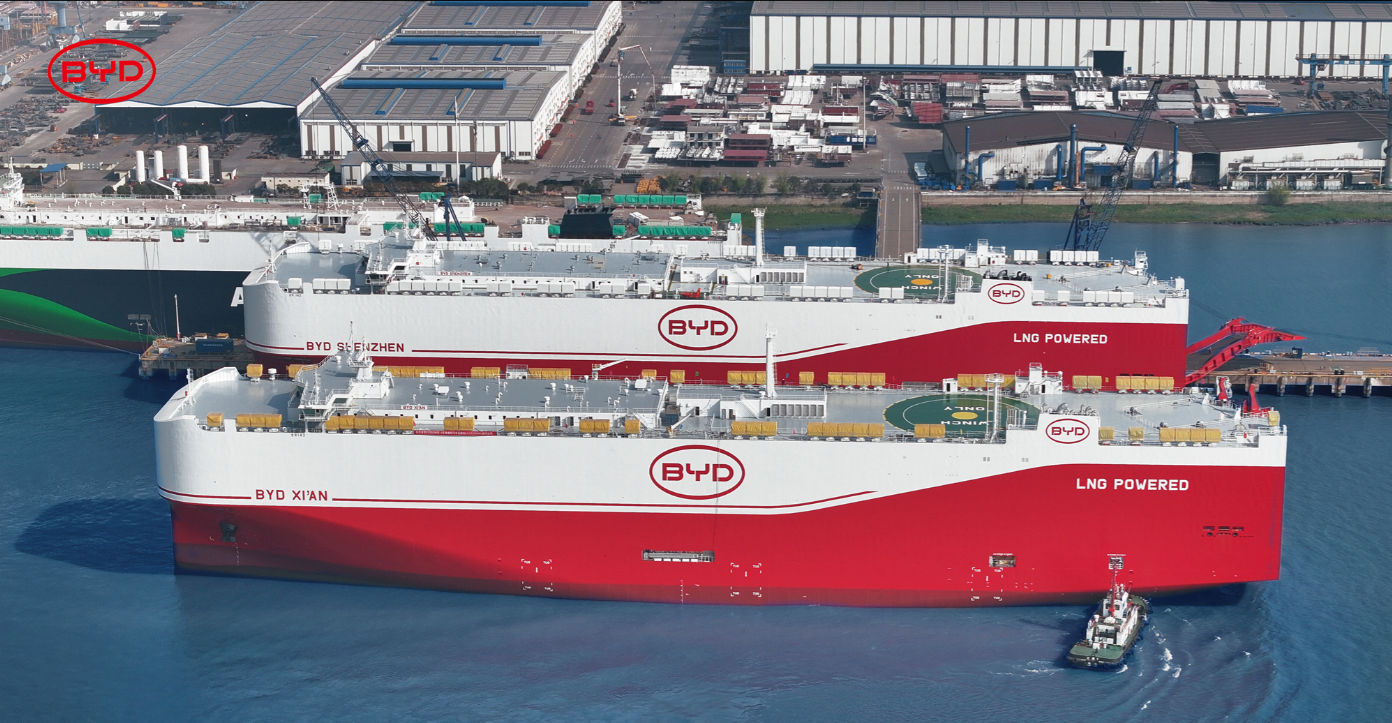
The situation has created advantages for vertically integrated companies like BYD, which can better control costs by managing their entire production chain. Meanwhile, component suppliers find themselves caught in the crossfire as OEMs reassess sourcing strategies, and just-in-time manufacturing models become increasingly difficult to maintain amid such trade uncertainty.
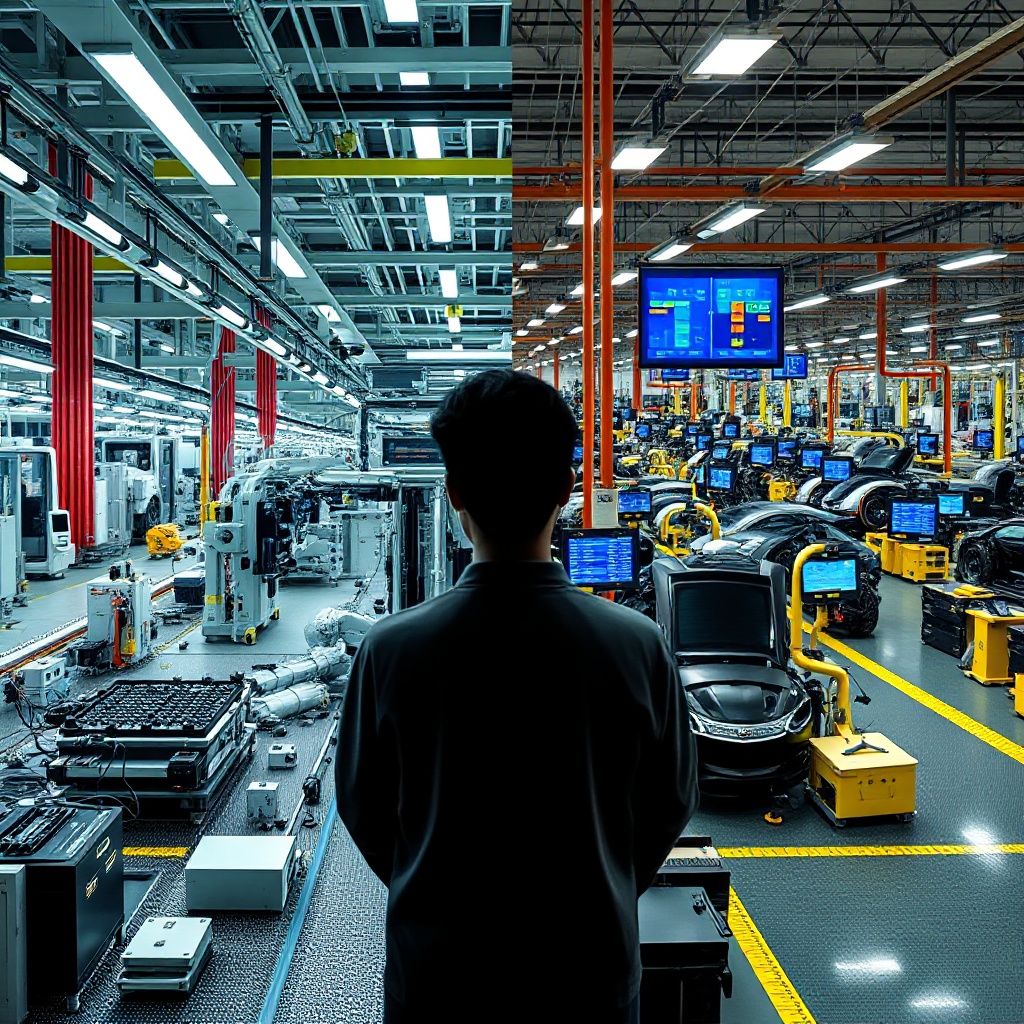
China's EV Dominance and Cost Advantage
Chinese automakers enjoy a remarkable 47% lower cost structure compared to global peers, according to Goldman Sachs research. This translates to a stark pricing disparity, with EVs selling in China for $34,400 versus the $55,242 average in the US market.
Several factors contribute to this significant cost advantage:
- Lower labor rates across manufacturing operations
- Increased production scale creating economies
- Government subsidies supporting development
- Favorable battery costs through local supply chains
The results speak for themselves. China's auto exports surged nearly 500% from 2020-2024, making it the world's leading car exporter with 5.86 million vehicles shipped in 2024 alone, including 1.3 million EVs. This export push comes as China's domestic market experiences saturation, with capacity utilization dropping to 56% in 2024.
Simultaneously, China's internal combustion engine market contracted by 17.4% in 2024, pushing manufacturers to focus on EV exports as their primary growth strategy. This combination of cost advantage and export necessity makes Chinese manufacturers a formidable competitive force in global markets.
Consumer Market Shifts and Emerging Opportunities
Despite geopolitical tensions, consumer interest in Chinese EVs remains strong, particularly when price advantages exist. Research shows consumers in the US, Germany, UK, and France would consider Chinese EVs if priced 20% lower than non-Chinese alternatives. However, significant barriers remain, as China-built vehicles face a 27.5% US tariff with threats of further increases.
Brand awareness is growing rapidly, with more than half of respondents in Western markets now familiar with at least one Chinese EV brand. This represents a significant shift from just a few years ago when Chinese automotive brands had minimal recognition outside their domestic market.
Emerging markets are increasingly driving global EV growth despite infrastructure challenges. Meanwhile, hybrid vehicles are gaining favor as economically viable alternatives amid EV transition uncertainties. Premium market segments remain less affected by tariff-driven price increases, creating uneven global demand patterns that manufacturers must navigate carefully.
Strategic Pivots: How Manufacturers Are Adapting
The industry faces significant profit margin challenges, with fierce competition and overcapacity creating thin margins among Chinese EV producers. A price war dynamic has emerged with companies like BYD, Xpeng, and Li Auto competing aggressively for market share while facing high production costs.
Government subsidy dependence creates additional sustainability concerns as incentives taper off and domestic demand slows. In response, many manufacturers are increasing investment in hybrid technology as a bridge strategy during this extended transition period.
Localization of production is accelerating to mitigate tariff impacts, while vertical integration strategies gain favor to control costs and secure supply chains. Strategic partnerships are forming at an unprecedented rate to share development costs and market access across regions, as companies recognize that going it alone in this environment carries significant risks.
The Road Ahead: Industry Transformation Amid Uncertainty
Despite economic headwinds, regulatory emission pressures continue unabated, creating a challenging environment for manufacturers caught between competing priorities. Infrastructure development has become a critical factor determining EV growth rates across different markets.
Technology development maintains momentum despite market challenges, though consolidation appears likely among smaller manufacturers unable to sustain the massive investment requirements. The value chain is undergoing significant realignment, creating new winners and losers across the supplier network.
Regional production hubs are emerging as alternatives to the globalized manufacturing model that dominated the industry for decades. The long-term impacts on innovation remain to be seen, as R&D budgets face pressure from margin compression. What's clear is that the automotive industry of 2030 will look remarkably different from what we've known, shaped by these unprecedented trade tensions, technological shifts, and market realignments.
Sources
BCG: Tariffs and the Outlook for US Automotive Demand
Cox Automotive: New Auto Tariffs Drive Industry Into Uncharted Territory
Center for Automotive Research: Tariffs