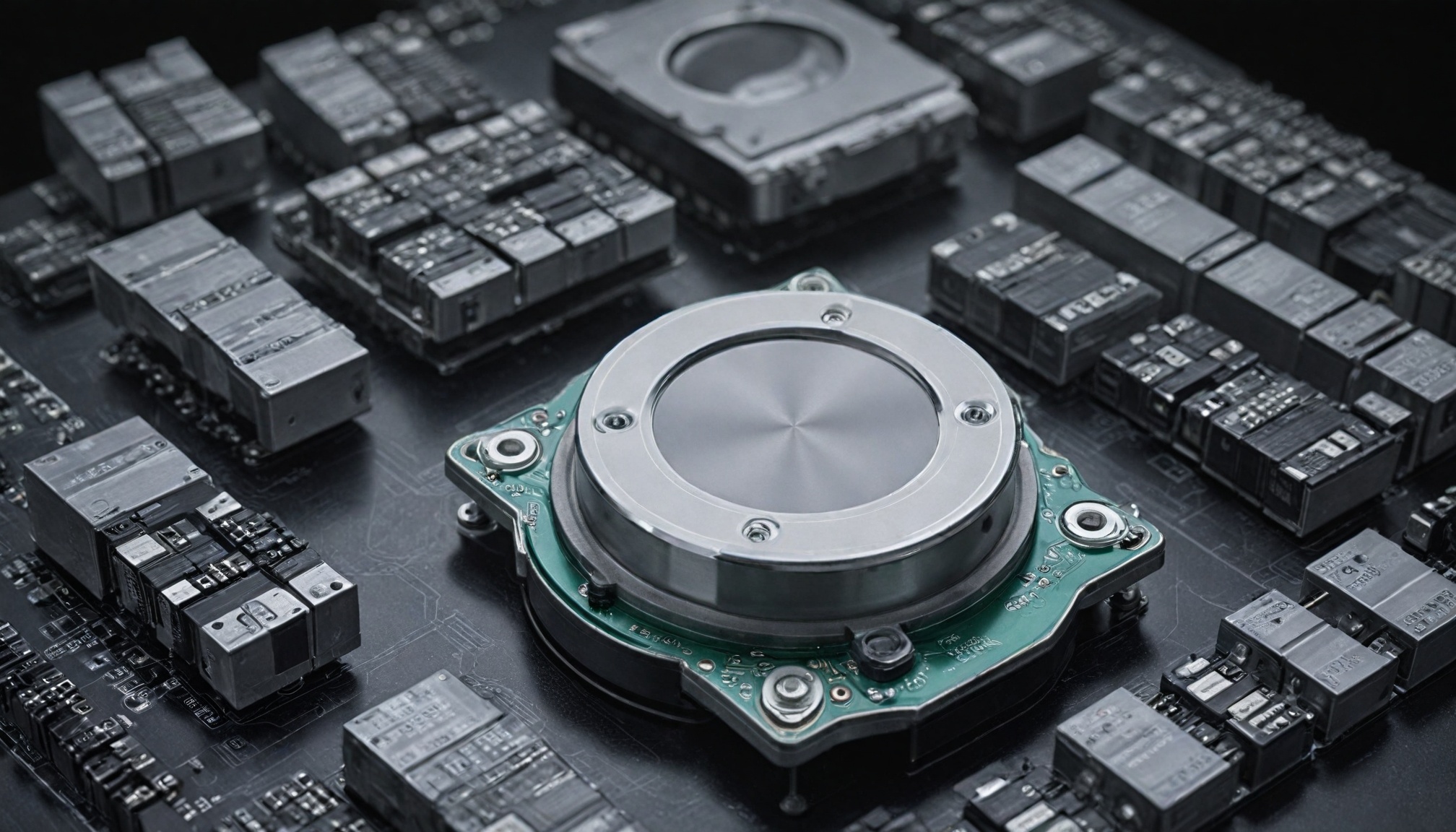
GaN technology revolutionizes motor drives with 99% efficiency, enabling 60% smaller systems that operate silently with minimal heat—ideal for robotics, EVs, and drones.
Drivetech Partners
Gallium nitride (GaN) technology is transforming motor drive systems with unprecedented efficiency and performance advantages over traditional silicon-based solutions. These next-generation semiconductor devices are enabling engineers to create smaller, more efficient motor drives with switching frequencies that were previously impossible, opening new possibilities for applications ranging from precision robotics to electric vehicles.
Key Takeaways
- GaN semiconductors conduct electrons 1,000 times more efficiently than silicon, enabling up to 60% smaller systems with >99% power efficiency
- Modular evaluation boards with GaN technology offer broad microcontroller compatibility, accelerating development cycles for engineers
- Dead times reduced to tens of nanoseconds (versus hundreds in silicon) yield cleaner waveforms and silent motor operation
- GaN-based systems support multiple motor types including BLDC, PMSM, and brushed DC without hardware reconfiguration
- Integrated protection features make GaN ideal for mission-critical applications in robotics, drones, and electric vehicles
The Future of Motor Drives: Why GaN Changes Everything
GaN semiconductors represent a fundamental shift in power electronics capabilities. These advanced materials conduct electrons with remarkable efficiency – over 1,000 times better than silicon – while becoming increasingly cost-effective to manufacture at scale. The technical advantages are substantial: GaN offers electron mobility of 2,000 cm²/Vs (compared to silicon's 1,500 cm²/Vs) and a breakdown electric field of 3.5 MV/cm (versus silicon's 0.23 MV/cm).
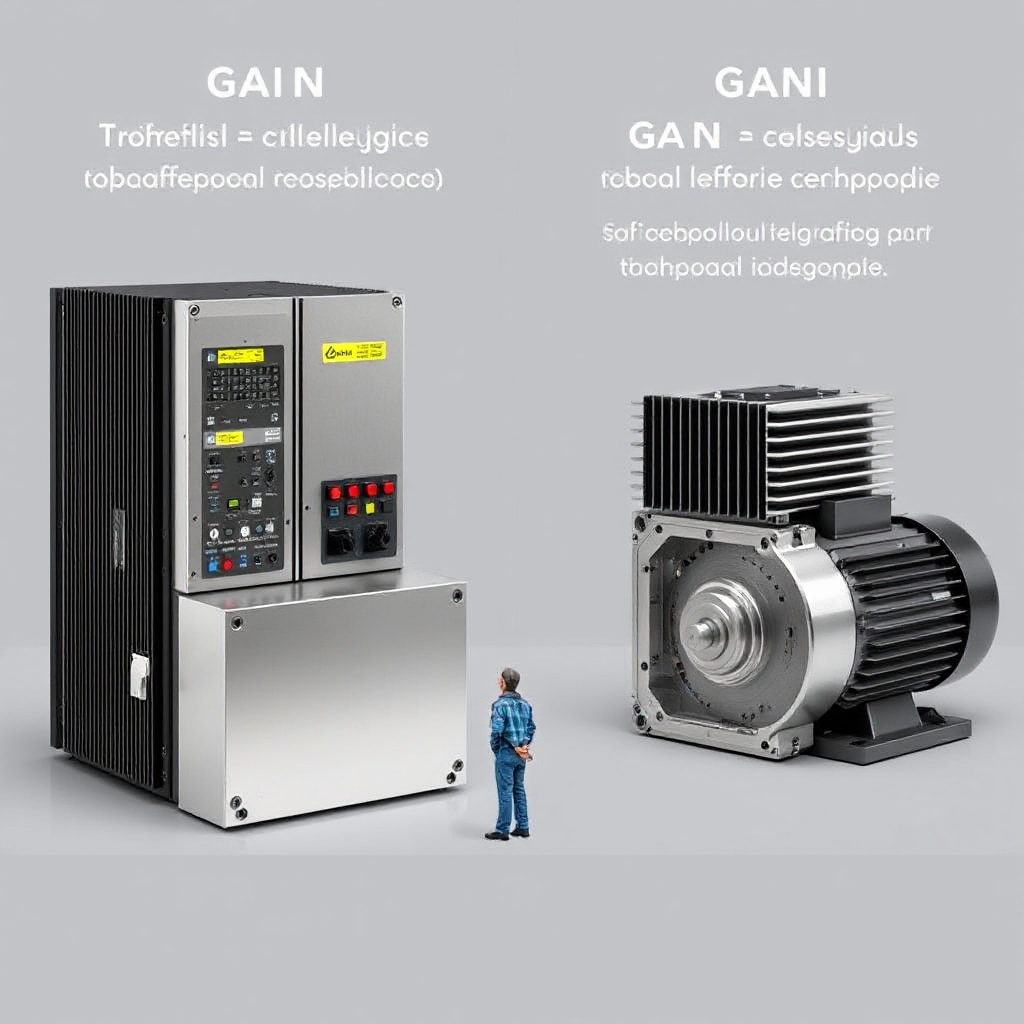
These properties translate directly into practical benefits. GaN-based motor drives can be up to 60% smaller than their silicon counterparts while delivering superior performance. This size reduction doesn't come with compromises – in fact, quite the opposite. The increased power density creates opportunities for more compact designs across applications where space and weight are critical constraints.
Unlocking Unprecedented Efficiency and Performance
One of the most compelling advantages of GaN technology is its ability to achieve power stage efficiency exceeding 99%. This remarkable efficiency eliminates the need for bulky heatsinks and dramatically reduces thermal management complexity. Engineers can design smaller, more elegant solutions without compromising on performance or reliability.
GaN enables significantly higher PWM frequencies, which allows designers to replace bulky electrolytic capacitors with smaller ceramic alternatives. This substitution improves system reliability while reducing component costs. Dead times in GaN-based systems can be reduced to tens of nanoseconds – compared to hundreds in silicon – resulting in cleaner sinusoidal voltage and current waveforms.
The improved waveform quality leads to lower total harmonic distortion (THD), contributing to silent motor operation with reduced vibration and noise. This advantage is particularly valuable in applications where acoustic performance matters, such as consumer electronics, medical devices, and premium automotive systems.
Accelerating Development with Modular System Design
Modern GaN-based evaluation boards support broad MCU compatibility, enabling seamless integration into different platforms. This flexibility allows engineers to use their preferred microcontroller architecture without compromising on motor drive performance. The modular architecture of these systems enables rapid progression from initial evaluation to deployment in real-world applications.
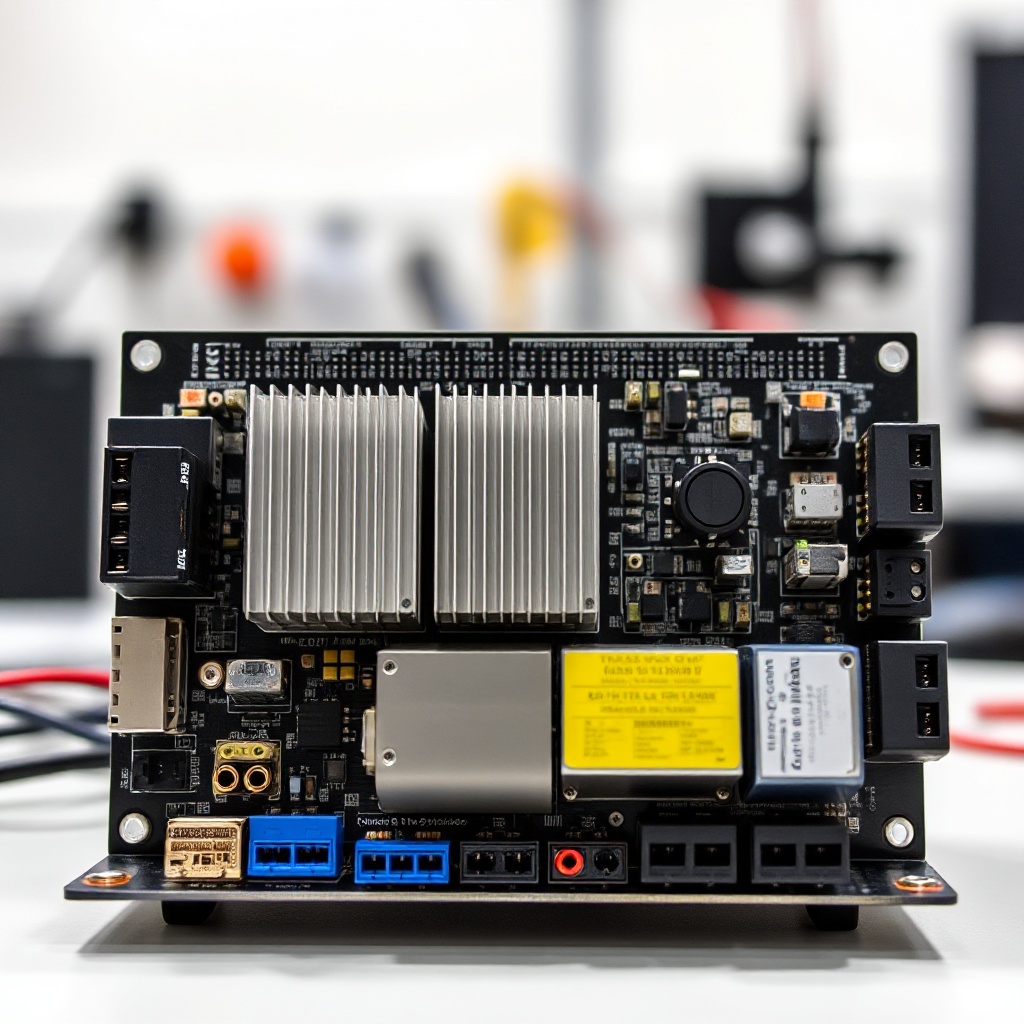
A key advantage of current GaN evaluation platforms is their out-of-the-box support for multiple motor types, including:
- Brushless DC (BLDC) motors
- Permanent Magnet Synchronous Motors (PMSM)
- Brushed DC motors
This versatility eliminates the need for different hardware configurations when testing various motor types, streamlining the development process and reducing time-to-market.
Real-World Development Workflows and Prototyping Benefits
Rapid motor bring-up features in GaN-based evaluation kits accelerate time-to-market for battery-powered motor drives. The development process is further enhanced by software stacks specifically designed for iterative design, validation, and testing. Engineers can quickly test different control strategies and motor configurations without extensive hardware modifications.
The ability to seamlessly adapt to different motor types without hardware reconfiguration offers significant time savings during the prototyping phase. This flexibility lets engineers focus on optimizing performance rather than dealing with hardware limitations, ultimately leading to better end products that reach the market faster.
Advanced Hardware Protection for Mission-Critical Applications
GaN-based motor drive systems incorporate comprehensive protection features, including overcurrent protection, overtemperature protection, and shoot-through prevention. These integrated safeguards enhance system reliability and safety for both the motor and its associated electronics, making GaN an ideal choice for demanding applications.
This robust protection is particularly crucial for mission-critical applications in robotics, drones, and electric vehicles, where system failure could have serious consequences. The ability to withstand harsh operating conditions while maintaining precise control makes GaN technology increasingly attractive for these high-stakes applications.
Practical Applications Across Industries
The benefits of GaN technology translate directly into practical advantages across multiple industries. In e-mobility applications, higher efficiency extends range and battery life in electric vehicles, addressing one of the most significant challenges in EV adoption. The compact size and lightweight nature of GaN solutions further contribute to overall vehicle efficiency.
For robotics applications, smaller and more precise motor drives enable advanced capabilities and longer operation on battery power. The combination of compact size, high efficiency, and precise control makes GaN an ideal technology for next-generation robotic systems that require both performance and endurance.
In industrial automation, higher switching frequencies allow more precise motor control and positioning. This precision enables the development of manufacturing equipment with tighter tolerances and improved throughput, contributing to overall productivity gains in factory environments.
Motor Performance Improvements with GaN Technology
GaN-driven inverters lower motor operating temperatures, potentially allowing the use of less expensive magnet grades without compromising performance. This thermal advantage can lead to significant cost savings in motor manufacturing while maintaining or even improving reliability.
Industry examples demonstrate inverter efficiencies up to 99% and power loss reductions exceeding 50% compared to traditional IGBT or MOSFET solutions. These efficiency gains directly translate into better system performance, reduced cooling requirements, and extended operating time for battery-powered applications.
Accurate current sensing with dead times below 150 ns enables audible-noise-free, precise operation over wide speed ranges. This capability is particularly valuable in applications where smooth, quiet operation is essential, such as consumer appliances, HVAC systems, and premium automotive components.

Future Outlook: The Growing GaN Ecosystem
The GaN ecosystem continues to expand, with an increasing range of motor drive evaluation platforms featuring higher integration levels. As manufacturing scales up, costs are steadily decreasing, making GaN increasingly competitive with silicon for mainstream applications. This trend is accelerating adoption across industries that were previously hesitant due to cost concerns.
Continued improvements in power density and efficiency are driving new application possibilities that weren't feasible with silicon technology. The combination of compact size, high efficiency, and precise control opens doors for innovative product designs that meet evolving market demands for smaller, more efficient, and more capable electronic systems.
The transition from silicon to GaN for motor drive applications represents not just an incremental improvement but a fundamental shift in what's possible. As the technology matures and the ecosystem grows, we can expect to see GaN become the standard solution for high-performance motor drives across industries.
Sources
EPC Co: Introduction to GaN and Motor Drives
EPC Co: GaN Transistors for Efficient Power Conversion (Chapter 1)
Texas Instruments: Gallium Nitride Power Stages Overview
Navitas Semiconductor: Gallium Nitride - The Next Generation of Power
Power Electronics News: GaN Devices for Motor Drive Applications