Solid-state LiDAR with AI and IoT creates affordable 3D sensing networks, transforming mapping and analytics across industries with projected market value of $4.5B by 2025.

Drivetech Partners
The convergence of solid-state designs, artificial intelligence, and IoT connectivity represents a transformative shift in LiDAR technology, creating affordable and intelligent 3D sensing capabilities that extend far beyond traditional applications. This technological fusion is democratizing access to high-resolution spatial data while enabling real-time processing and interpretation across interconnected systems, fundamentally changing how we map, analyze, and interact with both physical and digital environments.
Key Takeaways
- Solid-state LiDAR technology has reduced size and cost by up to 1,000 times compared to traditional mechanical systems, enabling mass adoption
- Integration of AI-powered data processing transforms raw point cloud data into actionable insights through real-time object detection and classification
- IoT connectivity creates networked sensing ecosystems that share data across vehicles, infrastructure, and cloud platforms
- Digital twins powered by LiDAR are projected to save cities $280 billion by 2030 through improved planning and infrastructure management
- The market for LiDAR technology is expected to reach $4.5 billion by 2025, expanding from autonomous vehicles to smart cities, environmental monitoring, and consumer applications
The Evolution of LiDAR: From Bulky Mechanics to Solid-State Innovation
LiDAR technology has undergone a remarkable transformation in recent years, shifting from bulky mechanical systems to compact solid-state designs. Traditional LiDAR sensors relied on physically rotating components to scan environments, making them expensive, fragile, and difficult to mass-produce. Modern solid-state LiDAR employs non-mechanical beam steering methods such as microelectromechanical systems (MEMS) and optical phased arrays, eliminating moving parts while dramatically reducing size and cost.
A groundbreaking advancement from the University of Washington demonstrates the potential of this evolution. Researchers developed a chip-integrated beam-steering LiDAR approximately 1,000 times smaller and cheaper to manufacture than conventional modules. This miniaturization breakthrough opens doors for mass production and integration into vehicles, robots, and even portable consumer devices.
The reliability benefits of solid-state designs can't be overstated. With fewer moving parts, these systems offer superior resistance to vibration and environmental factors like temperature fluctuations and moisture. This durability makes them ideal for demanding applications from autonomous vehicles operating in harsh conditions to industrial robots in manufacturing environments.

AI-Powered Intelligence: Transforming Raw Data into Actionable Insights
The true power of modern LiDAR emerges when paired with artificial intelligence. Deep learning algorithms and computer vision techniques now enable real-time interpretation of complex 3D point clouds generated by LiDAR sensors. This AI processing transforms what would otherwise be overwhelming amounts of spatial data into meaningful insights about the surrounding environment.
For autonomous systems, this intelligence is critical. AI enables sophisticated capabilities including:
- Object detection and classification (identifying vehicles, pedestrians, obstacles)
- Precise localization within environments
- Predictive tracking of moving objects
- Instantaneous obstacle avoidance decisions
Perhaps most importantly, these real-time processing algorithms allow systems to respond instantly to dynamic environments, significantly enhancing both reliability and safety. The incorporation of multi-sensor fusion techniques also addresses traditional LiDAR limitations by integrating complementary data from cameras and radar sensors. This fusion approach overcomes challenges posed by fog, rain, and low-light conditions while maintaining high accuracy through adaptive filtering techniques.
IoT Connectivity: Building a Networked Sensing Ecosystem
The integration of LiDAR with Internet of Things (IoT) capabilities creates interconnected sensor networks capable of sharing and analyzing data across vehicles, infrastructure, and cloud platforms. This connectivity transforms isolated sensing devices into collaborative systems that communicate with each other and central data repositories.
Connected LiDAR supports numerous advanced applications including:
- Smart traffic management with real-time monitoring and optimization
- Autonomous fleet coordination for delivery and transportation
- Environmental monitoring with up-to-date 3D mapping capabilities
- Infrastructure assessment for proactive maintenance
Vehicle-to-everything (V2X) communication represents a particularly powerful application, enabling coordinated navigation and hazard awareness among autonomous vehicles and smart infrastructure. Connected LiDAR sensors can alert nearby vehicles to obstacles beyond their direct line of sight or warn of road conditions around blind corners.
The IoT integration also enables practical maintenance advantages, including remote diagnostics, over-the-air updates, and predictive maintenance capabilities that extend sensor lifespans and performance. Additionally, cloud-based processing can offload computational requirements from edge devices, enabling more sophisticated analytics without requiring powerful onboard computers in every device.
The Democratization of LiDAR: Making Advanced 3D Sensing Accessible
Manufacturing innovations are projected to dramatically reduce LiDAR costs from thousands to hundreds of dollars per unit, expanding market reach beyond specialized applications. This price reduction will drive adoption across industries and enable new use cases previously constrained by prohibitive costs.
The impact of this democratization will be far-reaching. According to ABI Research, over 500 cities will adopt digital twin technology by 2025, enabled by affordable, networked LiDAR. These comprehensive 3D models of urban environments will drive efficiencies in planning, maintenance, and operations.
The economic benefits are substantial, with potential global savings of $280 billion by 2030 through more efficient planning and infrastructure lifecycle management. This figure represents not just cost reductions but transformation in how cities, businesses, and organizations manage physical assets and environments.
Beyond cost reduction, technical advancements are driving improved data quality through higher resolution scans, reduced latency, and decreased noise through AI filtering. These improvements make LiDAR data more valuable and actionable across applications. We're witnessing a transition from expensive specialty equipment to mass-market consumer and commercial applications, similar to how GPS technology evolved from military use to being standard in smartphones.
Digital Twins: Creating Virtual Replicas of the Physical World
LiDAR-generated digital twins enable precise virtual replications of physical environments and assets. These high-resolution 3D models serve as living digital counterparts that can be analyzed, modified, and tested without affecting the real-world environment.
Leading adoption examples include major European cities implementing city-scale digital twins:
- Aachen, Germany - utilizing LiDAR for comprehensive urban planning
- Milan, Italy - employing airborne LiDAR and photogrammetry
- Helsinki, Rotterdam, Tampere, and Barcelona - developing smart city initiatives based on digital twin technology
Applications extend across numerous domains including urban planning simulations, construction monitoring, and infrastructure assessment. Digital twins allow "what-if" scenario testing without disrupting physical environments - city planners can simulate traffic pattern changes, engineers can test structural modifications, and emergency services can practice response scenarios.
Unlike static 3D models, these digital twins incorporate real-time updates that evolve with changing conditions. LiDAR sensors continuously collect new data that refreshes the digital model, creating a dynamic representation that mirrors physical reality. This capability proves particularly valuable for monitoring gradual changes in infrastructure, tracking construction progress, or assessing environmental shifts over time.
Smart Cities and Environmental Monitoring: LiDAR as Critical Infrastructure
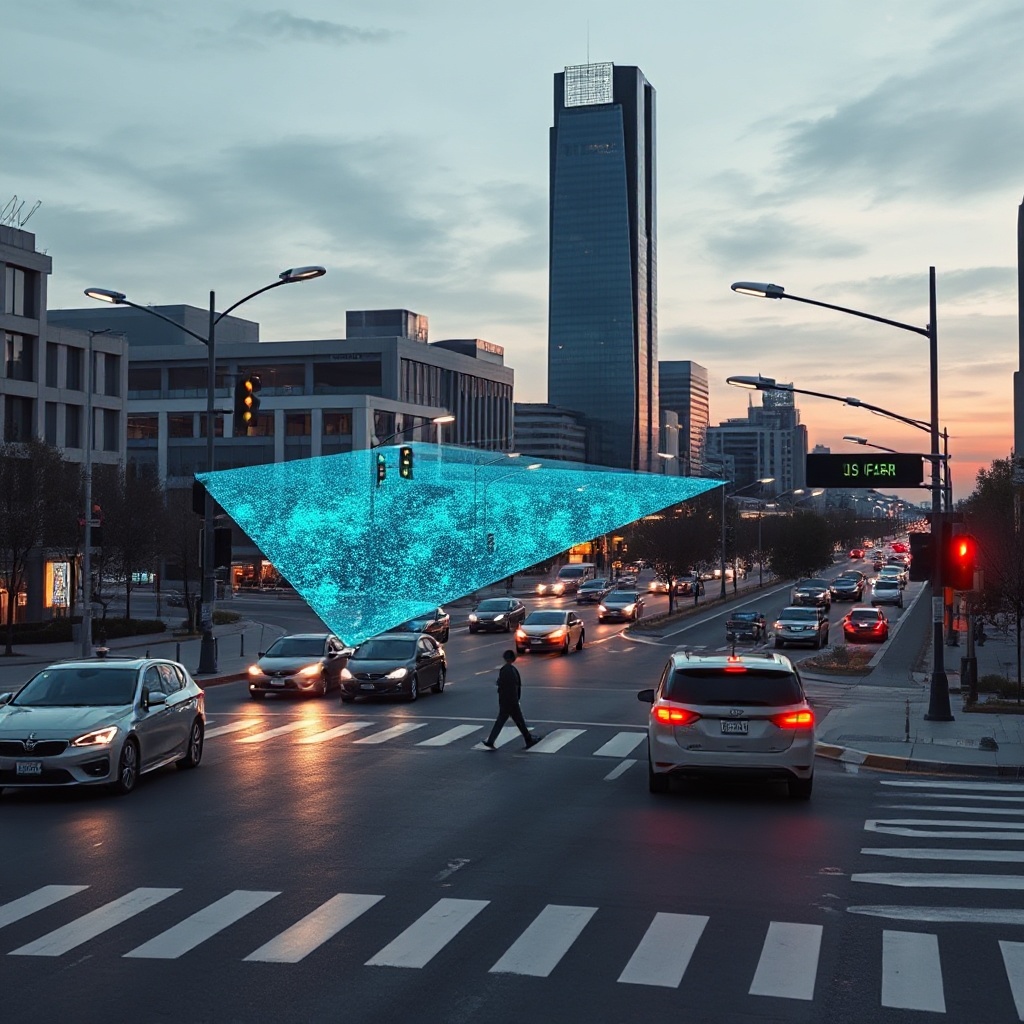
Smart traffic management systems leverage LiDAR data to optimize traffic flows, reduce congestion, and improve safety. These systems monitor vehicle volumes, speeds, and patterns to dynamically adjust traffic signals, lane assignments, and routing recommendations. The precise spatial awareness provided by LiDAR enables accurate tracking of all road users, including vehicles, cyclists, and pedestrians.
Infrastructure monitoring applications detect subtle changes in bridges, roads, and buildings for proactive maintenance. LiDAR can identify minute shifts in structural elements that might indicate developing problems before they become visible to the human eye. This capability transforms maintenance from reactive to preventative, extending infrastructure lifespan and reducing costs.
Environmental applications demonstrate the versatility of networked LiDAR systems:
- Forest management and biomass assessment
- Flood risk modeling with precise terrain mapping
- Coastal erosion tracking through regular shoreline scanning
- Air quality monitoring in urban environments
- Snowpack measurement for water resource management
Integration with municipal systems allows coordinated emergency response and resource allocation. During crisis situations, LiDAR data provides accurate, current information about affected areas, enabling first responders to navigate efficiently and identify those in greatest need. This integration represents a fundamental shift in how cities manage both routine operations and emergency situations.
Autonomous Mobility: Enhanced Safety and Performance
Solid-state, AI-enhanced LiDAR provides robust navigation, object recognition, and safety systems for autonomous vehicles. The technology creates detailed three-dimensional maps of surroundings that enable vehicles to detect and classify objects, determine their position precisely, and make safe navigation decisions.
Advanced obstacle detection capabilities function effectively in challenging conditions where other sensors struggle. LiDAR can maintain performance in low light, partial obscuration, and varying weather conditions, providing critical redundancy alongside cameras and radar. This multi-sensor approach ensures that autonomous systems have complete environmental awareness at all times.
Integration with V2X communications enables coordinated movement of autonomous vehicle fleets. Vehicles equipped with connected LiDAR can share observations with nearby vehicles and infrastructure, extending awareness beyond direct line-of-sight and enabling collaborative navigation through complex environments.
Applications are expanding beyond passenger vehicles to include:
- Delivery robots navigating urban sidewalks
- Warehouse automation with autonomous forklifts and inventory systems
- Agricultural machinery for precision farming operations
- Mining equipment operating in hazardous environments
Security applications include perimeter monitoring, crowd analytics, and industrial safety through intelligent sensing networks. These systems can detect unauthorized access, analyze crowd movements for safety concerns, and monitor industrial processes to prevent accidents - all while maintaining privacy through object classification rather than personal identification.
Industry Leaders and Emerging Technologies
The LiDAR industry features established players alongside innovative startups pushing technological boundaries. Leading manufacturers include Velodyne with their Puck VLP-16, Ultra Puck, and Alpha Prime products; LeddarTech offering the M16-Laser/M16-LED series; Ouster developing digital lidar solutions; and Leica with the CityMapper-2 for urban scanning applications.
Digital twin solutions are provided by specialized companies including Esri Italia, Leica Geosystems (part of Hexagon), and various European urban project partners developing city-scale implementations. These companies combine hardware expertise with sophisticated software platforms for data visualization and analysis.
Emerging technologies generating excitement in the field include:
- Photonic integrated circuits for ultra-compact LiDAR systems