Malaysia races to install 6,646 EV charging stations by 2025, with only 33.54% of its 10,000-station target achieved amid regulatory hurdles and uneven distribution.

Drivetech Partners
Malaysia's ambitious plan to deploy 10,000 electric vehicle charging stations by the end of 2025 is facing serious implementation challenges, with only 33.54% of the target achieved as of October 2024. This significant infrastructure gap threatens Malaysia's broader green mobility goals as the nation races against time to install approximately 15 charging points daily to meet its self-imposed deadline.
Key Takeaways
- Malaysia has installed only 3,354 charging stations as of October 2024, leaving 6,646 stations to be deployed in less than 8 months
- Current EV-to-charging point ratio stands at 20.7, lagging behind regional leaders like Singapore (2.9) and China (7.5)
- A complex regulatory landscape requiring approvals from up to nine different technical agencies is hampering deployment
- Government has implemented tax incentives and public-private partnerships to accelerate installation rates
- Success of this infrastructure rollout is critical to Malaysia's Low Carbon Mobility Blueprint and 2050 net-zero emissions goal
The Growing Infrastructure Gap
With less than 8 months remaining until the end of 2025, Malaysia faces a daunting infrastructure deficit in its electric vehicle charging network. Only 3,354 charging stations have been installed nationwide, representing just 33.54% of the ambitious 10,000-station target. This installation base currently consists of 956 DC fast chargers and 2,398 AC chargers.
Despite Deputy PM Fadillah Yusof's earlier comments suggesting a possible extension to 2030, the government has firmly maintained the original 2025 deadline. This commitment requires a dramatic acceleration in deployment rates to approximately 15 charging points daily if the target is to be met on schedule.
Regional Comparisons and Distribution Challenges
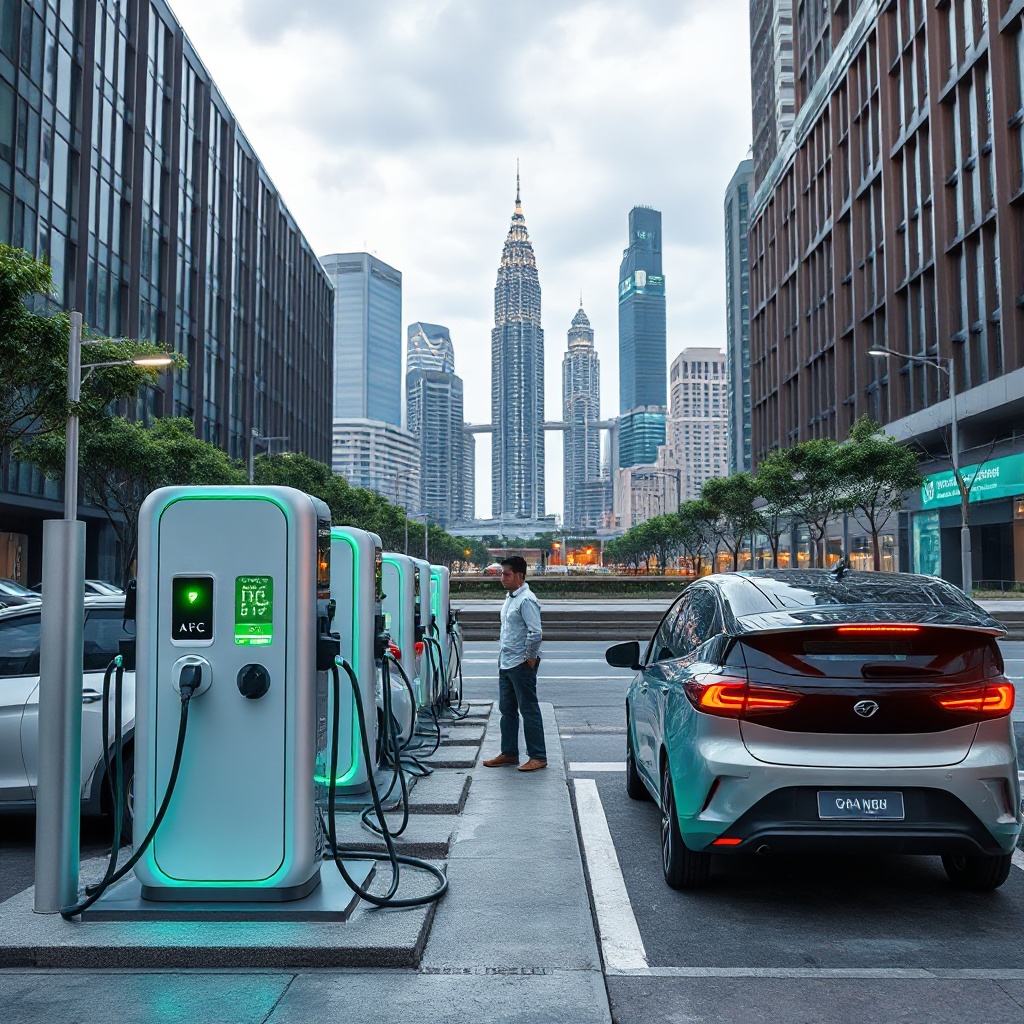
Malaysia's current ratio of EVs to public charging points stands at 20.7, significantly underperforming compared to the global average of 15.3. This places Malaysia behind regional leaders like Singapore (2.9) and China (7.5), highlighting the urgent need for infrastructure expansion.
The government has slightly revised its target breakdown to 8,500 AC chargers and 1,500 DC fast chargers, adjusted from the original plan of 9,000 AC and 1,000 DC chargers. This shift reflects a greater emphasis on faster charging technologies to better serve EV users.
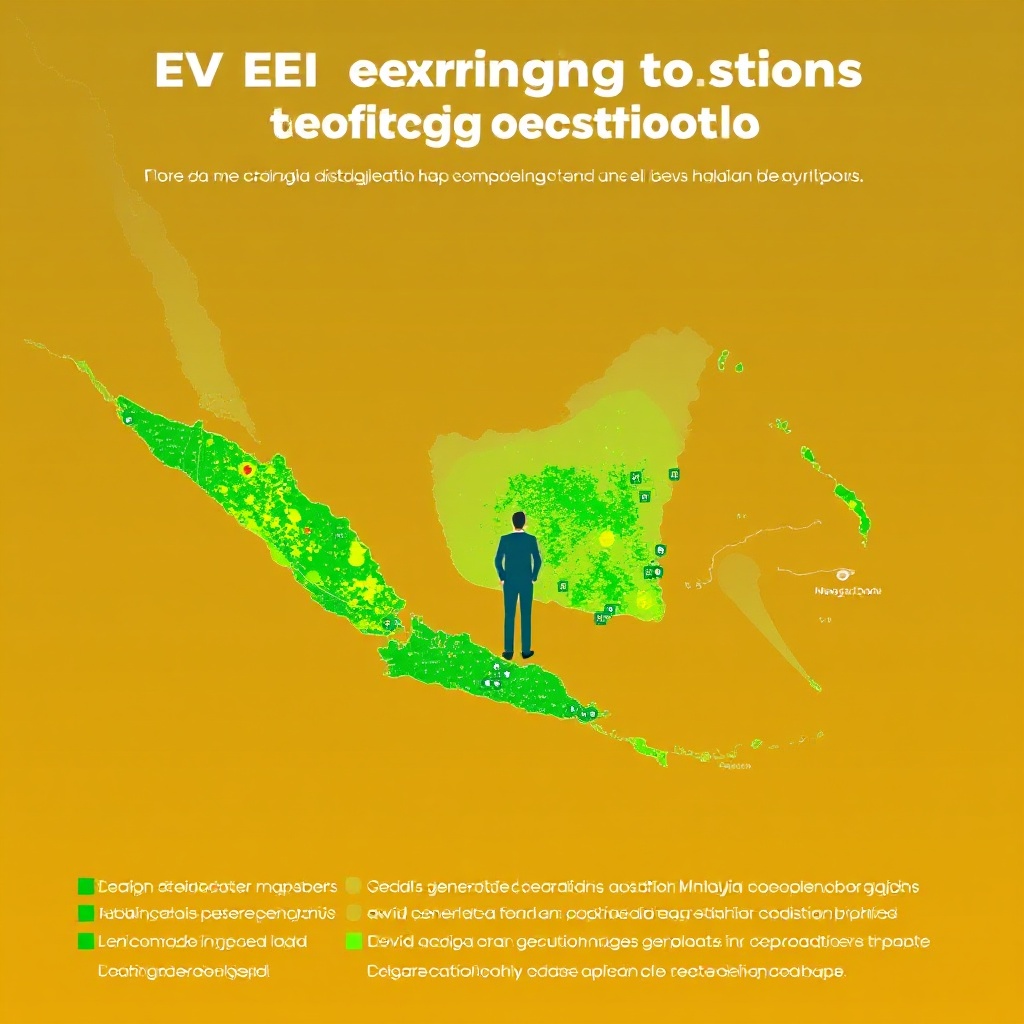
A key challenge in Malaysia's charging network is the uneven distribution between urban centers and rural areas. Major cities like Kuala Lumpur enjoy relatively good coverage, while rural regions face significant accessibility gaps. ChargeSini, Malaysia's largest Charge Point Operator with over 900 charging points as of Q4 2024, has focused primarily on high-traffic urban locations.
Implementation Hurdles Slowing Deployment
Several significant challenges are threatening Malaysia's ability to meet its ambitious timeline. The high installation costs, particularly for DC fast chargers in rural areas, present a major financial hurdle. A complex regulatory landscape requiring approvals from up to nine different technical agencies further complicates and delays deployment efforts.
Grid stability concerns are also emerging as EV adoption increases nationwide. The current electrical infrastructure in many areas requires upgrades to support the additional load from charging stations, especially high-power DC fast chargers.
For charge point operators, the lack of standardized licensing and clear regulations creates business uncertainty. Additionally, rural deployment remains economically challenging due to lower immediate demand, creating a chicken-and-egg problem for EV adoption outside urban centers.
Government Initiatives to Accelerate Installation
Recognizing the urgency, the Malaysian government has implemented several initiatives to speed up charging infrastructure deployment. These include enhanced tax incentives for individual home charging installations and the Green Technology Incentive (GITA) for businesses investing in EV charging infrastructure.
The government has approved RM81.3 million for EV charging component investments in 2024 and committed to allocate 30% of ultra-fast chargers to brands beyond Tesla, ensuring a diverse charging ecosystem. Strategic engagement with highway concession companies, hypermarkets, shopping malls, and hotels aims to secure prime locations for charging stations.
A key coordination tool in this effort is the Malaysia EV Charging Network (MEVnet), developed jointly by the Ministry of Housing and Local Government (KPKT) and Malaysian Green Technology and Climate Change Corporation (MGTC). This platform coordinates nationwide charging infrastructure planning and provides a public dashboard for tracking installation progress.
Private Sector Contributions
The private sector is playing a crucial role in expanding Malaysia's charging network. ChargeSini's Q4 2024 expansion added 16 new charging ports (6 AC and 10 DC) at key locations including Vila Vista, Hartamas Regency, Wisma Chuang, Sogo KL, and Great Eastern Mall.
Notable partnerships are emerging in the sector, including ChargeSini's collaboration with UNITEN and Kevin Lab for smart energy management solutions. Major international players like Tesla and Shell are also contributing significantly to network expansion through their own installation programs.
These public-private partnerships are increasingly recognized as critical to meeting the ambitious timeline. By leveraging private sector expertise and capital alongside government incentives, Malaysia hopes to accelerate deployment rates significantly in the coming months.
Strategic Importance for Malaysia's Green Future
The success of Malaysia's EV charging infrastructure rollout is critical to the country's broader environmental goals. It forms a cornerstone of the Low Carbon Mobility Blueprint (LCMB) 2021-2030 and supports the National Energy Transition Roadmap (NETR).
These initiatives align with Malaysia's commitment to achieve net-zero greenhouse gas emissions by 2050. The EV market in Malaysia is showing promising growth, with sales reaching over 10,000 units in 2023—a 286% increase from the previous year.
Looking ahead, the government has set ambitious targets for EV adoption: 20% of new car sales by 2030, increasing to 80% by 2050. However, these goals can only be realized with a robust and accessible charging infrastructure that gives consumers confidence to make the switch to electric vehicles.
Sources
Bernama - Malaysia on track to build EV chargers
MIDA - Powering the Future: Accelerating Malaysia's EV Charging Revolution
Roland Berger - EV Charging Index Expert insight from Malaysia
ChargeSini - Malaysia's top CPO ChargeSini hits 900 charging points in Q424
EV Guru - How New Regulations Are Shaping Malaysia's EV Charging Network
The Star - Malaysia on track to build EV chargers but faces cost, speed bumps in rural areas
SoyaCincau - Is Malaysia delaying 10K EV chargers target?
MPC - Robust EV Ecosystem to Power Up Productivity