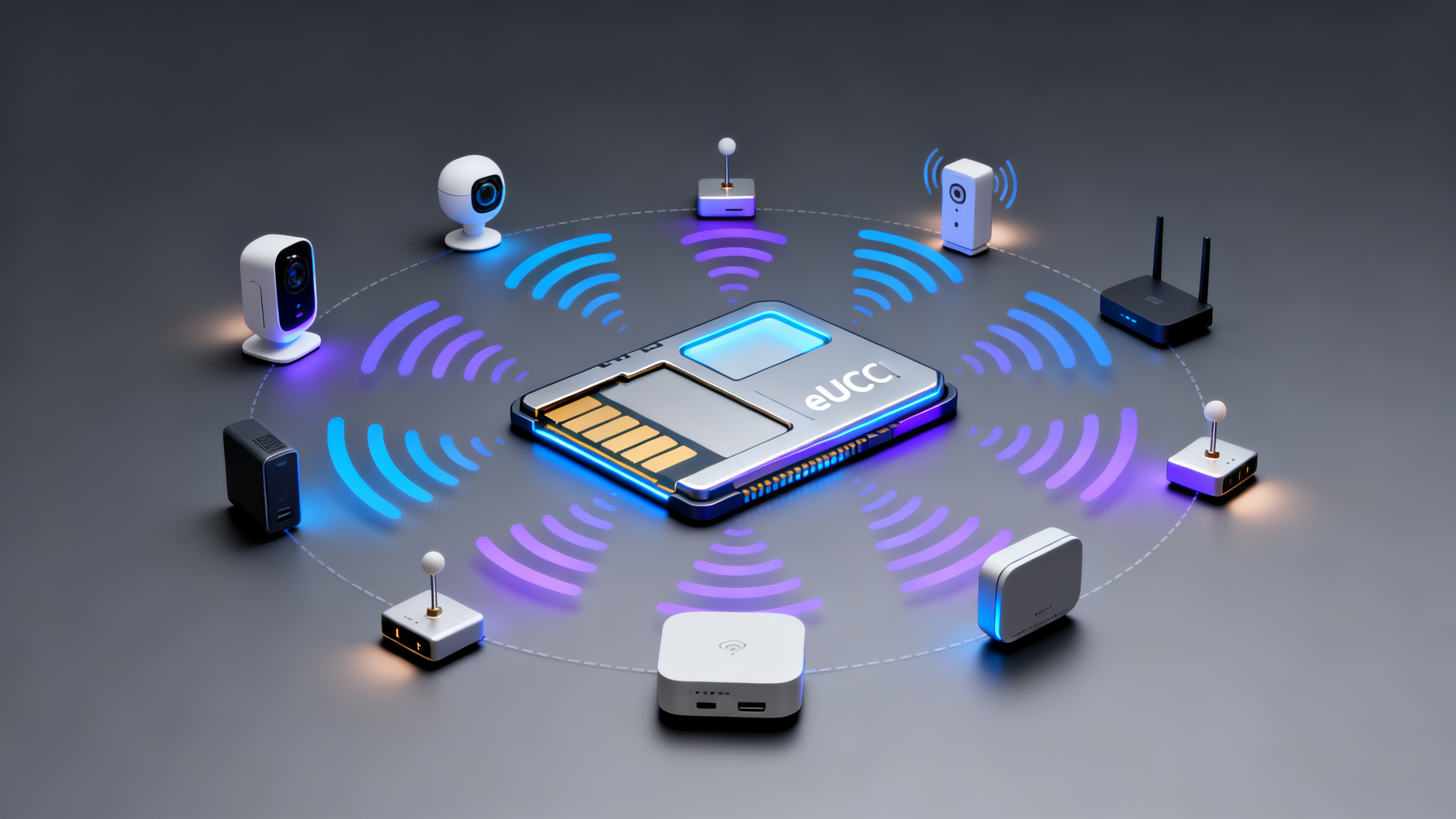
Hybrid NB-IoT uses cellular first and switches to satellite when needed, all on one SIM, closing coverage gaps for logistics, farming, maritime and energy.

Hybrid cellular-satellite NB-IoT lets a device use terrestrial cellular wherever towers exist and switch to satellite Non-Terrestrial Networks (NTN) when they don't. That cellular-first approach, delivered through a single SIM, is helping logistics, agriculture, maritime and remote energy teams close many coverage gaps and adopt satellite with far less cost and effort.
Key takeaways
- Hybrid NB-IoT uses cellular first and satellite only when needed, so satellite extends your coverage rather than replacing cellular.
- One single SIM can carry devices from cellular to satellite and back, with one profile and one management interface.
- Standards-based NTN lets you reuse familiar modules and platforms, but satellite messages aren't automatically cheaper.
- The strongest cases are mobile and remote assets in logistics, agriculture, maritime and energy.
- Check hardware support, battery life and regulations in a realistic pilot before you scale.
Cellular-first, satellite-when-needed
NB-IoT is a low-power network technology built for small, infrequent messages. Think location, pressure, temperature, equipment status and alarms. Hybrid connectivity adds a second access layer. Devices stay on terrestrial networks in cities, ports and industrial zones. They move to satellite in deserts, mountains, forests and open ocean.
The market is moving fast. Counterpoint Research, via IoT Now, forecasts satellite IoT connections will grow from about 8 million in 2025 to over 80 million by 2032. That's a tenfold jump in seven years.
The practical impact is simple. When an asset leaves coverage, it no longer has to go dark. You avoid tracking gaps, missed temperature readings and undetected faults. I'd still say "reduces" or "closes many" gaps, never "eliminates every dead zone." Satellite service still depends on sky visibility, antenna performance and local rules.
Network reach is improving, too. A Semtech announcement described Skylo's network as covering 36 countries and 60 million square kilometers.

How one SIM enables seamless roaming
The logic is straightforward. Devices stay on LTE-M or NB-IoT when a suitable network exists. If cellular drops, they fall back to satellite. When they re-enter coverage, they return to cellular. That sequence keeps cost and power under control, because satellite only handles what cellular can't.
Vodafone IoT and Skylo described exactly this kind of cellular-to-satellite and satellite-to-cellular switching on a standard global Vodafone SIM. Vodafone IoT's platform was also reported to connect over 240 million devices. So satellite access can plug into an existing ecosystem instead of forcing you to build a separate stack.
Compare that with the old model:
- Old model: a separate SIM, satellite terminal, contract, portal and invoice.
- Hybrid model: one profile, one SIM and one management interface.
Fewer suppliers mean simpler provisioning, support and billing. That matters most for fleets that cross borders.
I'd add one caveat. "Seamless" doesn't mean uninterrupted or high-bandwidth. Expect registration time, satellite visibility limits, higher latency and queued messages. Design your application to tolerate those delays.
Easier and cheaper satellite adoption, within limits
Standards-based NB-IoT NTN changes who can use satellite. You can reuse cellular modules, SIM processes, APIs and IoT platforms. You don't need proprietary satellite terminals or specialist engineering for every project.
Semtech and Skylo pitched this idea with satellite plus terrestrial access through one SIM and the AirVantage platform. Their stated aim is to cut operational complexity and total cost of ownership. On the hardware side, Semtech's HL7810 was described as supporting LTE-M, NB-IoT and NTN. The HL7812 adds 2G fallback.
Be realistic about price, though. Satellite messages aren't automatically cheaper than cellular ones. The savings come from three places:
- Using satellite selectively, so cellular carries routine traffic.
- Skipping separate hardware and contracts.
- Avoiding losses from assets that go silent.
So measure total cost of ownership, not price per megabyte. Count hardware, site visits, downtime, battery replacement and missed alerts. That's where hybrid setups usually show their value.
Where the business case is strongest
The best fit is any asset that moves between covered and uncovered areas, or sits where towers don't reach. Here's how it plays out across four industries.
Logistics
Containers, trailers, railcars and cold-chain loads cross borders and coverage zones constantly. With satellite fallback, a tracker can send location, temperature excursions and door-open alarms right away. It doesn't have to store them until coverage returns. One forecast cited by Satellite Markets put transportation and logistics at 37.8% of satellite IoT. I'd verify the methodology before quoting that figure.
Agriculture
Low-power sensors for soil, weather, irrigation, pumps and livestock can sit where they're most useful, not only near towers. NB-IoT's low-power design suits battery-operated sensors that report small readings periodically. Devices should still log locally and sync when a link returns.
Maritime
Cellular serves ports and coasts. Satellite carries position, safety alerts, engine alarms and cargo temperature offshore. Large files should wait for broadband access. Weather, antenna placement and vessel motion all affect performance, so test on the water.
Remote energy
Pipelines, wells, solar and wind farms and substations get low-bandwidth monitoring without a dedicated communications build at every site. Hybrid links also give you an independent alarm path if local backhaul fails. Critical control shouldn't rely solely on satellite NB-IoT unless the design is certified for it.
What to verify before deploying
A few checks will save you from expensive surprises. I'd work through this list before any large rollout:
- Payload size: NB-IoT suits small, infrequent messages such as location, pressure, status and alarms. It doesn't suit video or large firmware transfers.
- NTN support: Not every NB-IoT device has it. Check the module, firmware, bands, antenna, SIM profile and operator certification.
- Sky visibility: Satellite needs a clear view. Repeated acquisition attempts and higher latency can drain batteries, so test under realistic fallback conditions.
- Commercial and legal terms: Roaming depends on commercial agreements and regulation. Check spectrum rules, data residency and maritime requirements. Compare pricing by provider, volume and region.
Then run a pilot in difficult locations. Think mountain routes, offshore areas, remote fields and border crossings. Define which messages are satellite-authorized and classify data by priority. Track fallback frequency, delivery rate and cost per asset.
Finally, keep your claims honest. Avoid promises of "100% coverage," "zero latency" or "free roaming." Say "broader coverage" and "automatic fallback" instead. Those phrases are accurate, and your customers will trust them.
The model works because it's simple: use cellular for routine, low-cost traffic and keep satellite for gaps and high-priority alerts. If you follow that rule and test properly, hybrid NB-IoT turns satellite from a specialist project into a natural extension of the IoT stack you already run.
Sources
- IoT Now: Who leads the satellite IoT race?
- Vodafone IoT: Vodafone IoT and Skylo launch commercial satellite connectivity service
- Semtech: Semtech Launches Industry's First Single Vendor Device-to-Cloud Cellular and Satellite IoT Solution with Skylo
- Satellite Markets: Satellite IoT in 2026: A Two-Track Market