
eSIM technology revolutionizes IoT by enabling remote connectivity management, enhancing security, and ensuring regulatory compliance for mission-critical devices worldwide.

Drivetech Partners
eSIM technology is revolutionizing mission-critical IoT deployments across industries by eliminating physical SIM cards and enabling remote management of connectivity profiles through embedded hardware. This shift to digital SIM technology is creating unprecedented opportunities for enterprises to maintain continuous connections for essential devices while simplifying global deployment, enhancing security, and ensuring regulatory compliance across diverse markets.
Key Takeaways
- The global eSIM market is projected to reach $10.8 billion by 2025, with over 30% of IoT devices connected via eSIM technology
- Remote provisioning capabilities allow businesses to instantly switch carrier profiles for entire device fleets without physical intervention
- eSIM's hardware-based security elements provide tamper-resistant protection for device credentials, critical for sensitive applications
- By facilitating compliance with local connectivity regulations, eSIMs enable global deployments even in markets with strict roaming restrictions
- The technology enables new business models built on guaranteed connectivity and real-time data services across healthcare, utilities, logistics, and smart cities
The Rapid Evolution of eSIM Technology in IoT
The IoT landscape is experiencing a significant transformation with eSIM technology leading the charge. With an installed base of 650 million eSIM-capable IoT modules in 2023 and shipment volumes exceeding 503 million units in 2024 (growing 35% year-on-year), the momentum is unmistakable. Industry projections indicate the global eSIM market will reach $10.8 billion by 2025 before expanding to $17.5 billion by 2030.
This growth is partly driven by new technical standards from GSMA – specifically SGP.31 and SGP.32 – that are streamlining IoT-specific provisioning and management processes. These standards address the unique requirements of IoT deployments, moving away from consumer-focused implementations to solutions tailored for industrial and enterprise applications.

As global connected devices are expected to surpass 75.44 billion by 2025, with over 30% connected via eSIM technology, businesses across sectors are recognizing the strategic advantages of embedded SIM solutions for their mission-critical applications.
How Remote Provisioning Transforms Device Management

The game-changing feature of eSIM technology lies in its remote provisioning capabilities. This advancement eliminates the need for physical SIM swaps or manual intervention when deploying devices anywhere in the world. By 2024, approximately 40% of mobile operators are expected to adopt advanced Remote SIM Provisioning systems, fundamentally changing how IoT devices connect to networks.
For enterprises managing large device fleets, the benefits are substantial. Organizations can instantly switch carrier profiles across their entire fleet, supporting rapid expansion into new territories without complex logistics or field visits. This capability is particularly valuable when:
- Entering new markets with different carrier requirements
- Responding to network service degradation
- Optimizing connectivity costs across regions
- Implementing backup connectivity options
The dynamic profile switching inherent to eSIM technology enables critical failover capabilities, ensuring devices maintain connectivity even when a primary network experiences issues. For mission-critical applications – from medical equipment to industrial controls – this redundancy can be the difference between successful operation and costly downtime.
Securing IoT Ecosystems with Hardware-Based Protection
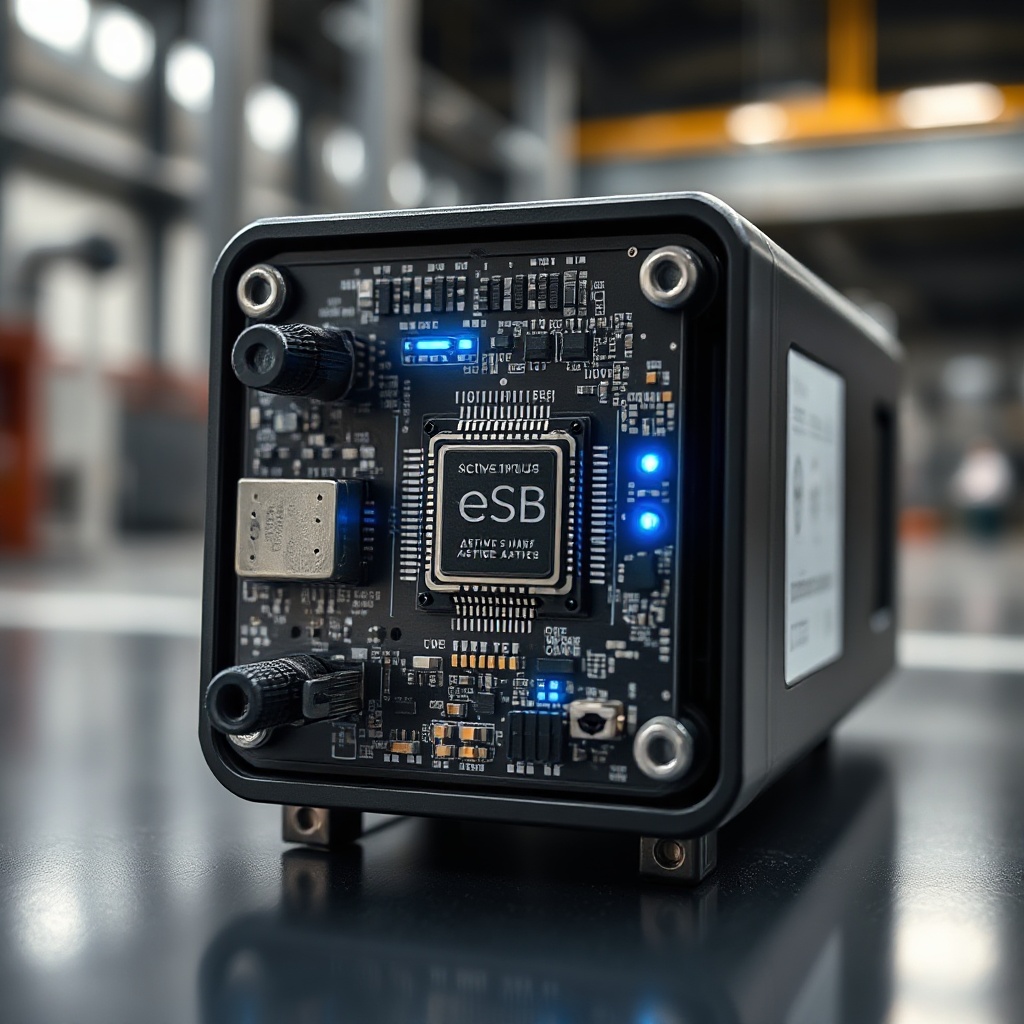
As IoT deployments grow in scale and importance, security becomes paramount. eSIM technology addresses this through built-in hardware security elements that protect device credentials and communication channels. Unlike traditional SIM cards that can be physically removed or tampered with, eSIMs are permanently embedded within devices, offering superior protection against physical attacks.
This hardware-based approach to security aligns with emerging standards like SGP.32, which is laying the groundwork for zero-trust security models expected to become standard by 2030. The evolution from manual to fully automated lifecycle management tools further reduces operational risk by minimizing human error in security-critical processes.
The tamper-resistant hardware element in eSIMs provides a secure foundation for protecting:
- Device identity and authentication credentials
- Encryption keys for secure communication
- Network access credentials and permissions
- Application-specific security tokens
This comprehensive security approach makes eSIM-enabled devices significantly more resilient against cyberattacks, a crucial consideration for mission-critical IoT applications in healthcare, utilities, and industrial environments.
Navigating Global Regulatory Landscapes
One of the most challenging aspects of global IoT deployments is managing the complex patchwork of telecommunications regulations across different countries. Many regions impose strict permanent roaming restrictions that can disable devices using foreign SIM cards after specific time periods – a major hurdle for IoT deployments.
eSIM technology elegantly solves this problem by enabling devices to download and activate local carrier profiles in each market. This capability facilitates compliance with local connectivity regulations without requiring physical replacement of SIM cards or device recalls. By 2025, over 400 operators globally are expected to offer eSIM services for international deployments, further simplifying global compliance.
The practical benefits of this approach include:
- Prevention of service suspensions due to regulatory violations
- Elimination of costly device recalls or field reconfiguration
- Ability to deploy identical hardware across multiple regulatory environments
- Simplified entry into markets with strict localization requirements
For multinational IoT deployments, particularly in heavily regulated sectors like healthcare, utilities, or critical infrastructure, this regulatory flexibility represents a significant operational advantage and risk reduction.
The Business Case: Reduced Costs and Operational Efficiency
Beyond technical capabilities, eSIM technology delivers compelling economic benefits that improve the business case for IoT deployments. The elimination of physical SIM inventory and manual provisioning significantly reduces total ownership costs, while smaller device footprints (no SIM tray) lead to streamlined manufacturing and assembly processes.
These efficiencies translate into tangible operational advantages:
- Reduced logistics costs for SIM card distribution and inventory management
- Fewer field service visits for connectivity-related issues
- Faster time-to-market for new connected products
- Simplified device design with smaller form factors
- Reduced downtime through remote troubleshooting and profile switching
The ability to remotely switch carriers without physical intervention is particularly valuable for remote or inaccessible installations, such as utility infrastructure, agricultural monitoring systems, or maritime applications. The resulting cost savings and operational flexibility make IoT deployments financially viable in use cases where traditional SIM solutions would be impractical or prohibitively expensive.
Seamless Global Connectivity: The Always-Connected Promise

For mission-critical IoT applications, continuous connectivity isn't just desirable – it's essential. eSIM technology enables this through native connectivity in any region via local carrier profile activation. Unlike traditional roaming solutions that often suffer from latency, compliance issues, or lower network prioritization, eSIMs allow devices to connect as local subscribers on the strongest available network.
This capability creates a foundation for truly always-connected solutions that can automatically switch between networks based on:
- Signal strength and quality
- Network congestion or performance issues
- Pricing and data usage optimization
- Regulatory compliance requirements
The enhanced reliability resulting from this seamless connectivity is crucial for applications where data transmission interruptions could have serious consequences – from patient monitoring in healthcare to critical infrastructure management in utilities and smart cities.
Industry Transformations: Real-World Applications
The impact of eSIM technology on mission-critical IoT applications is already evident across multiple industries. In healthcare environments, remote patient monitors and medical devices with real-time telemetry rely on failover capabilities to ensure continuous data transmission for patient safety and care quality.
Utility companies are deploying smart meters that transmit usage data securely without requiring manual reads or SIM replacements. These devices can operate for years without intervention, even as network technologies evolve, thanks to remote profile updates.
In logistics, cross-border shipment trackers with auto-switching network capabilities provide continuous monitoring regardless of geographic location. This ensures valuable or sensitive cargo remains connected throughout its journey, even when crossing multiple international borders.
Smart city applications represent another major adoption area, with public transport, lighting, and parking systems maintaining full-time connectivity to central management platforms. These systems require consistent real-time communication to function effectively and deliver the promised efficiencies and service improvements.
Unlocking New Business Models Through Guaranteed Connectivity
Perhaps the most transformative aspect of eSIM technology is its ability to enable entirely new business models built on guaranteed connectivity and real-time data exchange. The network agility provided by eSIMs allows companies to offer service level agreements with guaranteed uptime – something previously challenging with traditional connectivity solutions.
This capability is creating opportunities for:
- Pay-as-you-go service models tied to actual device usage
- Subscription services with guaranteed performance metrics
- Dynamic pricing based on connectivity quality and data throughput
- Value-added services built on continuous data streams
Mission-critical applications in emergency response, autonomous vehicles, and industrial automation increasingly rely on these "always-connected" solutions to deliver their core value proposition. The ability to guarantee connectivity – not just promise it – represents a fundamental shift in how IoT services can be packaged, sold, and monetized.
As eSIM technology continues to mature and adoption accelerates, we can expect to see further innovation in business models that leverage this technology's unique capabilities to deliver new value to customers across industries.