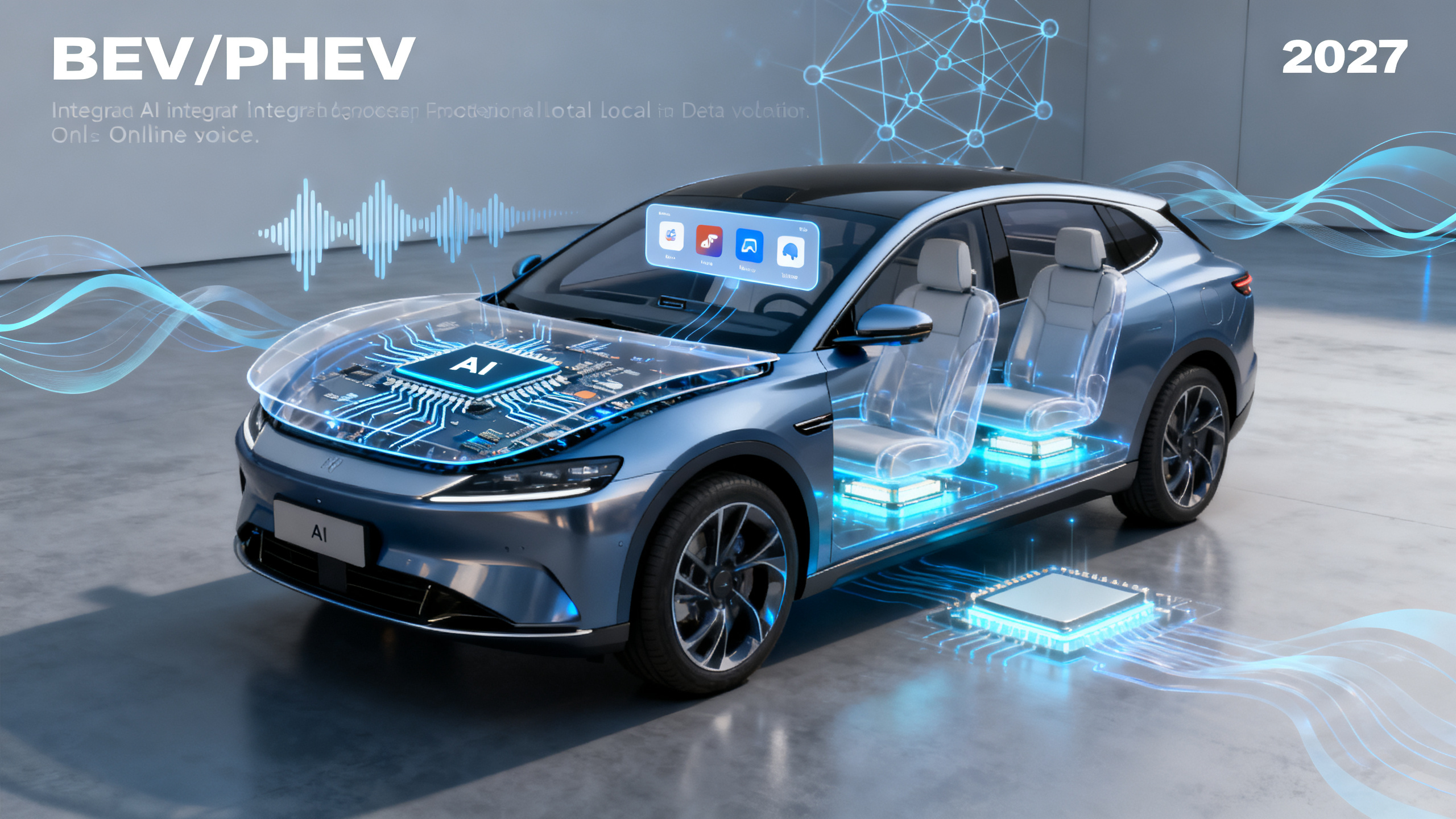
DSAT and Volcano Engine team up on on-device AI for 2027 BEV and PHEV cockpits, with offline voice, local processing and joint SoC planning.

DSAT and Volcano Engine have signed a deal to build on-device AI into the smart cockpit, so core voice functions can run inside the car instead of in the cloud. The plan covers voice, local data processing, apps and chip planning for DSAT's BEV and PHEV models arriving from 2027.
Key Takeaways
The agreement covers cockpit development, app co-creation, SoC planning and emerging-technology research, and DSAT says its future lineup will adopt Volcano Engine's AI cockpit solutions.
Voice wake-up and intent recognition run locally, and Gasgoo reports that more than 90% of core functions work without a network.
Local processing can cut latency and reduce data leaving the car, but it also adds an onboard attack surface that needs strong security.
Joint SoC planning means the chips and the AI software are being considered together, not one after the other.
Model names, chips, AI-model sizes and pricing aren't confirmed, so I'd treat the 2027 promise as direction, not specification.
DSAT and Volcano Engine make AI a platform decision for 2027 models
The agreement was signed in Wuhan on November 11, 2026. Gasgoo reports that it covers smart-cockpit development, application co-creation, SoC product planning and emerging-technology research.
DSAT is described as the first joint-venture automaker to integrate Volcano Engine's AI cockpit assistant. It also says its future lineup will adopt these solutions. That makes this a platform program, not a single-model feature.
DSAT is Dongfeng Stellantis Automotive Technology (Wuhan), with about RMB 8.2 billion in registered capital. Dongfeng is expected to lead new-energy and intelligent-connected technology. Stellantis brings its brands and global sales network, according to Gasgoo.
DSAT has mapped four new-energy models, both BEV and PHEV, to roll out "from 2027." Names, specifications, pricing and exact dates haven't been confirmed. I wouldn't assume they all arrive at once.
Offline voice interaction and local processing reduce cloud dependence
Voice wake-up and intent recognition will run on local computing. The car won't send every request to a remote server. Gasgoo reports that more than 90% of core functions stay available without a network.
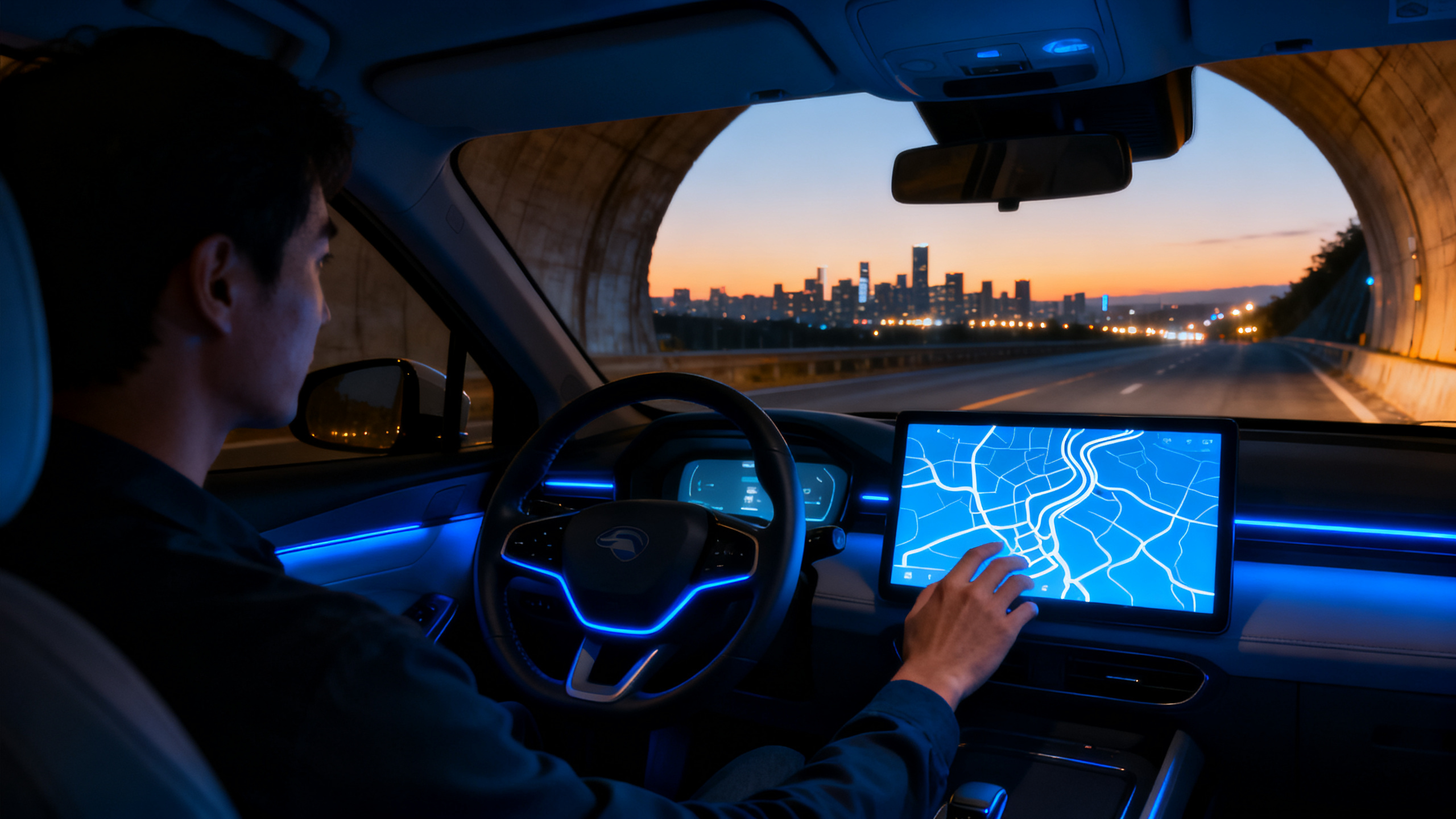
That figure refers to core functions, not every app, map, entertainment feature or cloud service. Still, it matters in tunnels, underground garages and rural areas. Local inference should also cut the round-trip delay of sending speech to a server and waiting for an answer.
Local processing can reduce the voice, cabin and intent data that leaves the vehicle. DSAT hasn't published a data-flow policy, though. I won't claim that all data stays onboard, and you shouldn't assume it either.
Local AI also creates a new target for attackers. A sound design needs these safeguards:
Secure boot and encrypted storage
Authenticated software updates
App sandboxing
User controls for voice-history deletion, microphone permissions and cloud-versus-local preferences
App integration could turn the assistant into the vehicle's control layer
App co-creation is an explicit part of the agreement, alongside cockpit systems and SoC planning, per Gasgoo. A conversational assistant could front navigation, media, climate, charging, calls and vehicle settings. You'd talk to one assistant instead of hunting through menus.
Volcano Engine's wider Doubao in-vehicle work gives a hint of the direction. 36Kr reports that it links vehicle control, navigation and cockpit services in one AI architecture. It also reports full-duplex dialogue and phone-app interoperability. These are platform capabilities, not confirmed DSAT specifications.
Consider a request like "Find a fast charger near a restaurant and check whether the battery is sufficient." That's a natural-language request, not a rigid command. It depends on vehicle state, location and route context all at once.
Control needs clear boundaries. I'd want the assistant to separate three actions: reading information, suggesting an action and executing one. Payment, unlocking, data deletion and driving-related settings should require explicit confirmation. Every third-party app must also fit the vehicle's OS, display rules and permissions model.
SoC planning will decide how much AI runs in the car
Joint SoC product planning means the computing hardware is being considered alongside the AI software, according to Gasgoo. That's the right order. Chips picked for conventional infotainment often struggle once AI workloads arrive.
Early planning should cover several needs:
NPU acceleration for speech and language tasks
Enough memory bandwidth
Low-latency audio
Secure execution and virtualization
Thermal stability and energy efficiency
Bigger onboard models can respond faster. They also raise cost, heat, power draw and validation effort. A tiered design looks sensible. Wake-word, speech and vehicle control stay local, while heavier or nonessential tasks go to the cloud when a connection exists.
Cars stay on the road for many years. Chips must therefore allow model updates and security patches across a long ownership cycle. 36Kr reports high-performance onboard computing in Volcano Engine's wider work. Don't read that as confirmed DSAT hardware.
BEVs and PHEVs need different kinds of intelligence
In a BEV, the assistant could combine destination, battery state, temperature, traffic and charger availability. The result would be smarter charging stops. It could also handle range estimates and battery preconditioning.
A PHEV adds another job: choosing between electric and engine operation. The assistant might suggest electric mode in the city and hybrid mode on highways. It could also compare fuel and electricity costs for a given trip.
Offline fallback suits cabin controls, stored preferences and basic voice commands. Live traffic, real-time charger availability, remote services, online media and cloud account authentication will likely still need connectivity. I'd expect a hybrid experience, not a fully offline one.
Open questions will determine whether the promise holds
The cited reporting doesn't confirm 2027 model names, SoCs, AI-model sizes, operating systems, RAM levels or the app catalog. Any talk of subscriptions or premium AI features is speculation for now.
Natural-language systems can also stumble. They may misread accents, dialects, noise, children's speech or overlapping conversations. A cockpit assistant doesn't imply advanced automated driving either. It controls the cabin, not the road.
Once the cars launch, I'd watch these metrics:
Offline command coverage and recognition accuracy
Response latency and execution success
Thermal performance and unintended actions
Update cadence
Charging-stop and range-prediction accuracy
I'd sort every claim into four buckets: confirmed facts, reported platform direction, potential use cases and unresolved questions. Success will depend on hardware, software reliability, permissions, cybersecurity and transparent specifications. The architecture looks right. Delivery will prove it.