China's autonomous vehicle sector thrives through strategic government backing, corporate innovation, and smart infrastructure, positioning it to reach $170B by 2033 and challenge global rivals.

Drivetech Partners
China's autonomous vehicle sector is rapidly evolving into a global powerhouse through an unprecedented integration of government backing, corporate innovation, and smart infrastructure deployment. The nation's cohesive approach to AV development has created an ecosystem where domestic manufacturers like BYD and tech giants such as Baidu are setting new benchmarks that challenge Western competitors while reshaping the future of global transportation.
Key Takeaways
- China's AV market is projected to reach US$170.57 billion by 2033, growing from US$17.23 billion in 2024
- The government has invested over $230 billion in subsidies to the EV sector between 2009-2023
- Chinese tech giants like BYD and Baidu are pioneering commercial self-driving services ahead of Western markets
- Nationwide deployment of 5G networks and V2X communications creates robust infrastructure supporting AV operations
- China's integrated ecosystem approach enables it to set global benchmarks for AV deployment and regulation

The $170 Billion Opportunity: China's Booming AV Market
China's autonomous vehicle market represents one of the most promising growth sectors in the global economy. Projected to reach US$170.57 billion by 2033, up from US$17.23 billion in 2024, the market is expanding at a remarkable compound annual growth rate between 21.5% and 29%. This explosive growth trajectory positions China as the epicenter of autonomous driving innovation and commercialization.
The numbers tell a compelling story about China's dominance in the electrified vehicle space. Chinese automakers sold nearly 11 million EVs and hybrids in 2024 alone, marking a 40% increase from the previous year. BYD, China's EV champion, sold 4.2 million electric and hybrid vehicles in 2024, surpassing Tesla's quarterly revenue for the first time – a clear signal of the shifting balance of power in the global automotive industry.
By 2035, forecasts indicate the AV market will expand further to US$45.47 billion, with major growth drivers including ride-hailing services, autonomous logistics, public transit solutions, and commercial AV applications. These sectors are already seeing faster commercial deployment in China than in most Western markets, creating a first-mover advantage that's difficult to overcome.
Strategic Government Support: The $230 Billion Backbone of China's AV Revolution
The Chinese government's strategic approach to autonomous vehicle development forms the foundation of the country's success in this sector. From 2009 to 2023, China invested more than $230 billion in subsidies to the EV sector, including tax exemptions, buyer rebates, and state-led R&D funding – creating an environment where innovation can flourish.
The "Made in China 2025" initiative specifically targets intelligent and electric vehicles, identifying autonomous and connected vehicles as priority technologies for national development. This focus is further reinforced by China's "Transportation Great Power Strategy," which positions AV development as a core component of national economic and technological advancement.
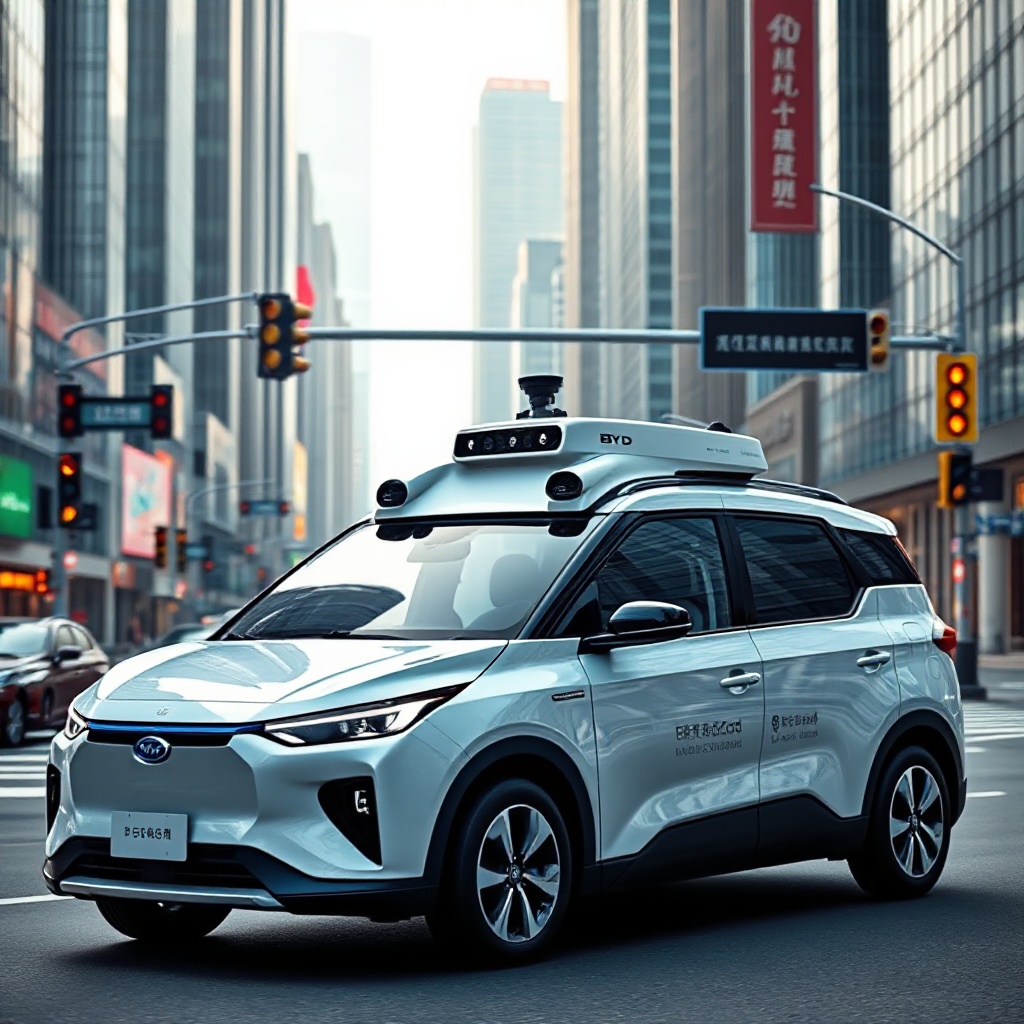
Regulatory frameworks are being actively shaped to support AV deployment, with extensive pilot programs in Beijing and Shanghai enabling real-world testing and validation. These regulatory sandboxes allow companies to refine technologies in actual traffic conditions, accelerating the path from research to commercial deployment. The government's coordinated approach ensures that technical innovation, infrastructure development, and regulatory frameworks evolve in parallel – creating a holistic ecosystem that's difficult for other countries to match.
Tech Giants Leading the Charge: Baidu, BYD, and Beyond
Chinese tech leaders are investing at unprecedented levels to secure leadership in autonomous driving technologies. BYD has committed over RMB 100 billion (USD 14 billion) to intelligent driving R&D, including RMB 20.2 billion in H1 2024 alone. This massive investment is yielding significant technical breakthroughs that are rapidly incorporated into production vehicles.
Baidu Apollo and Pony.ai are pioneering commercial self-driving taxi services ahead of most Western markets, demonstrating China's lead in AV commercialization. These services aren't just technical demonstrations – they're fully functioning commercial operations that transport passengers daily, generating real revenue and valuable real-world data.
The competitive landscape includes other tech giants such as Tencent, Huawei, and Alibaba, all driving rapid innovation in AV-related AI, sensor technologies, and digital platforms. This creates a vibrant ecosystem where companies compete and collaborate, accelerating the overall pace of innovation.
One of the most significant advantages of China's approach is the democratization of autonomous features. BYD's intelligent driving systems like "God's Eye" are available across price points, from the 69,800 yuan Seagull hatchback to luxury models, making advanced AV features accessible to consumers at all income levels. This contrasts with Western markets, where such features are often limited to premium vehicles.
Smart Infrastructure: The Digital Backbone Supporting China's AV Ecosystem

China's approach to autonomous vehicles extends far beyond the vehicles themselves to encompass comprehensive smart infrastructure development. The country is deploying nationwide 5G networks and V2X communications (vehicle-to-everything) at a pace unmatched globally, creating robust digital foundations for AV operations.
Major cities like Beijing and Shanghai host large-scale AV pilot zones where companies test and refine technologies with real users in live traffic environments. These zones function as living laboratories where the interplay between vehicles, infrastructure, and urban environments can be studied and optimized.
The BeiDou satellite navigation system provides precise location services specifically optimized for autonomous vehicle applications, giving Chinese AVs centimeter-level positioning accuracy that's critical for safe operation. This proprietary system gives Chinese manufacturers a significant advantage over competitors relying on other global navigation systems.
The integration between AVs, urban traffic management, and cloud platforms creates a comprehensive ecosystem that accelerates adoption and capability development. This synergy enables faster innovation cycles, as insights from vehicle operation can immediately inform improvements to both vehicle systems and infrastructure design.
Next-Generation Features: Setting New Standards in Autonomous Technology

Chinese autonomous vehicles are redefining what consumers can expect from their transportation experience. Advanced features including AI-powered smart cabins with voice-controlled interfaces and personalized in-cabin experiences are becoming standard offerings rather than luxury extras.
High-level driver assistance systems (ADAS) with highway and city navigation, adaptive cruise control, and automated parking are increasingly common even on entry-level models. This widespread availability is accelerating consumer familiarity and comfort with autonomous features, creating a positive adoption cycle that builds momentum for more advanced capabilities.
Proprietary technologies like BYD's DiPilot, Yisifang, and DiSus integrate advanced LiDAR, radar, and AI for safer, more responsive driving. These systems represent significant technical achievements that match or exceed the capabilities of systems from established Western automotive technology providers.
Over-the-air software updates, standard in Chinese vehicles, ensure continuous improvement of AV capabilities, creating an evolution cycle that keeps vehicles current with the latest developments. This approach treats vehicles as software platforms that evolve over time, a paradigm shift that many traditional automakers are still struggling to implement.
The Global Impact: Exporting Standards and Challenging Western Dominance
Chinese companies are not just exporting vehicles but establishing digital infrastructure and standards for AVs globally. International collaborations leverage BeiDou navigation, Huawei's telecom capabilities, and national traffic management systems to create comprehensive AV solutions that can be deployed worldwide.
China's integrated ecosystem approach enables it to set global benchmarks for commercial deployment, affordability, smart city integration, and regulatory frameworks. As Chinese manufacturers expand internationally, they bring with them not just vehicles but entire technology stacks and operational models that reshape local markets.
This comprehensive strategy is challenging established mobility paradigms in the US, Europe, and other markets, positioning China as the reference point for AV standards. The speed at which Chinese companies can develop, test, and deploy new technologies gives them a significant competitive advantage over Western counterparts who often face more fragmented regulatory environments and less coordinated infrastructure development.
Winning the AV Race: How Chinese Brands Are Out-Innovating Tesla
With comprehensive government support, a competitive landscape, and massive investments, Chinese brands are overtaking Western competitors like Tesla on home ground. The combination of technical innovation, manufacturing scale, and ecosystem integration creates advantages that are difficult for foreign companies to match.
BYD and Baidu are driving the pace of innovation, transforming China into a global reference point for AV standards and regulation. Their rapid development cycles and close collaboration with government agencies allow them to bring new technologies to market faster than most Western competitors.
The accessibility of autonomous features across price points—from budget to luxury vehicles—is accelerating mass adoption in China ahead of other markets. This democratization of technology creates a virtuous cycle of adoption and improvement that builds momentum for the entire ecosystem.
China's holistic approach to AV development, combining hardware, software, infrastructure, and policy, creates advantages difficult for foreign competitors to match. While Western companies often focus on vehicle technology in isolation, Chinese players benefit from an integrated ecosystem where every component is designed to work together seamlessly, creating a more cohesive and effective autonomous mobility solution.
Sources
Grand View Research - China Autonomous Vehicle Market Size & Outlook
Statista - Autonomous Vehicles in China
Globe Newswire - China Forecasts Strong Growth in Autonomous Vehicle Market
Statista - Autonomous Sensor Technology China